God created woman equal with man, not inferior. My Christian, you must love your wife as your companion, and not consider her as your slave, for she is a creature of God, just as you are.
God was crucified for her as much as you. You call God ‘Father,’ she calls Him ‘Father’ too.
Both of you have the same Faith, the same Baptism, the same Book of the Gospels, the same Holy Communion, the same Paradise to enjoy.
God does not regard her as inferior to you.
Saint Kosmas Aitolos
http://agapienxristou.blogspot.ca/2012/10/god-created-woman-equal-with-man.html

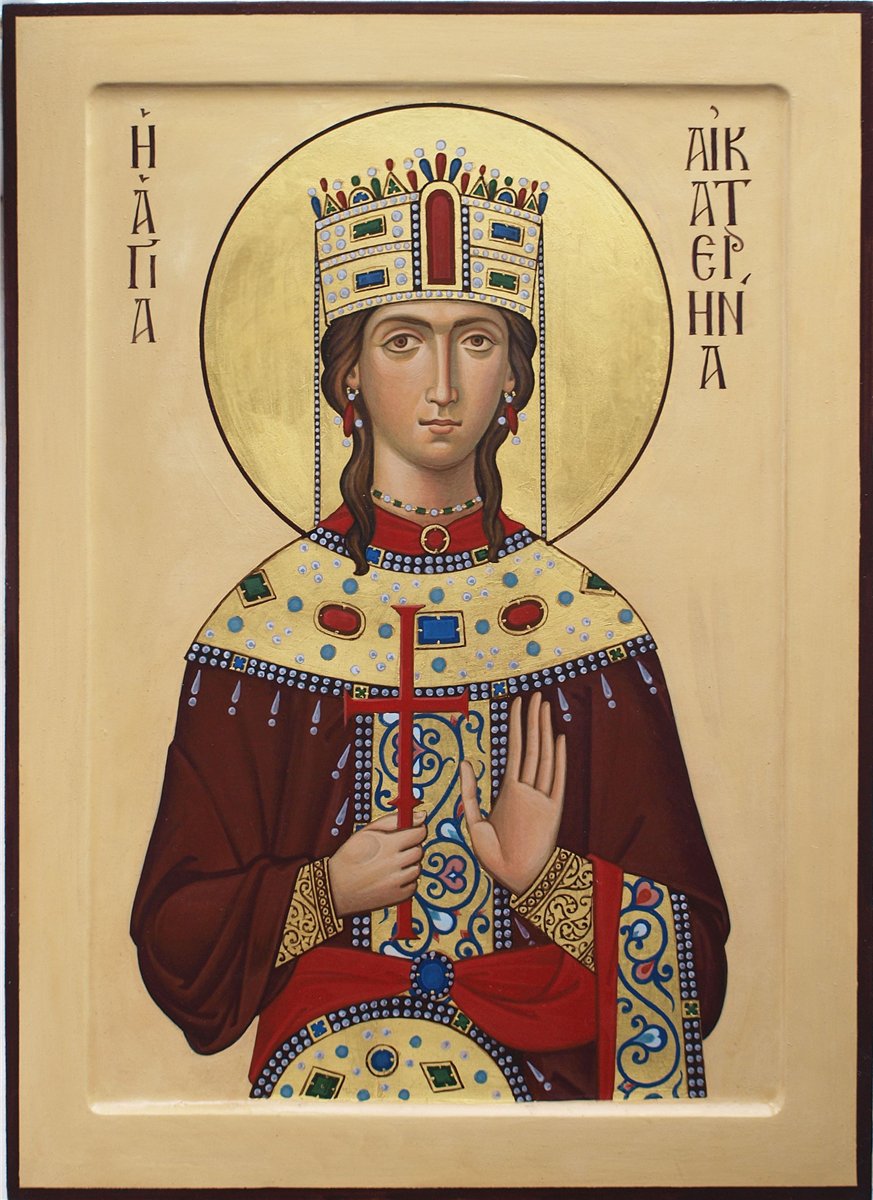
St. Catherine the Great Martyr; in the center is depicted Christ revealing Himself to her, and to either side, her martyrdom, and the Holy Angels taking up her body
The ring of St. Catherine the Great Martyr
"This ever-memorable daughter of the earthly ruler of Alexandria, Konstas (Kestou), was tall in stature, incomparably beautiful, and exceedingly kind. She was instructed in the wisdom of the Greeks, learning all the works of the poets and philosophers, including Homer, Virgil, Aristotle, and Plato. Not only was she well-versed in philosophy, but in the medical writings of Aesculapius, Hippocrates, and Galen. Indeed, the maiden was a master of all the nuances of many languages, surpassing all others in rhetoric and logic. All who saw and heard Catherine marvelled at her scholarship. Many of the wealthy and leading men of the Senate besought Catherine's mother for her hand in marriage. Now her mother was a Christian in secret, because of the great persecutions brought about by the followers of Maximian. Both the maiden's relatives and mother counseled her to marry, so that her father's estate would not fall to another, thus cutting her off altogether. Now Catherine, on account of her many philosophical studies, cherished her viriginity and protested, giving many excuses, for she had no wish whatsoever to wed. However, when she saw that they troubled her greatly over the matter, she proposed the following--actually to divert them--so as not to be further importuned. "Present unto me a young man who is like unto me in the four virtues in which you claim that I am peerless among women, and I will take him as my husband, for I will not condescend to be yoked to one who is unworthy or inferior. Therefore, search here and abroad for one who is equal to me in rank, wealth, wisdom, and beauty--if such an individual exists. Furthermore, if he is deficient in any of these areas, he is unsuitable."
Now they knew that it would be quite impossible to find such a qualified suitor. They suggested the son of the Roman emperor and other possible candidates of exalted rank and even greater wealth, but they were inferior to her in the categories of erudition and appearance. She stubbornly persisted in her refusal to contract a marriage with an unlettered man. However, her mother had a most holy spiritual confessor who was in hiding outside the city limits. She took her daughter to visit the elder to seek his counsel. The ascetic, perceiving her modesty and proper deportment, gave close attention to her judicious and well-spoken words. He resolved to bring her to the knowledge of Christ the heavenly King, and began, saying: If I am acquainted with a unique Man Who incomparably transcendeth all those attributes thou hast mentioned and countless others. His comeliness eclipseth the radiance of the sun; His wisdom governeth those things both perceptible by the sense and the intelligence; the world of His treasures is distributed to the ends of the earth, yet never diminisheth, rather increases; His nobility is indescribable, infinite, inconceivable, and incomprehensible!

St. Catherine the Great Martyr, painted by the Fathers of Vatopedi Monastery
The venerable elder expounded on this many other salutary things. Now the maiden presumed all the while that he referred to an earthly prince; whereupon, her expression changed and she questioned him in detail if all the commendations and praises were indeed true concerning this Man. He reinforced his praises further, extolling His other attributes. The maiden asked: "Whose Son is this Man whom thou dost laud?" He asserted: "He hath no father on earth, but was born of a most noble and holy grace-filled virgin in a manner surpassing our understanding and transcending the nature of generation; she was deemed worthy by her sublime sanctity to remain immortal both in soul and body, being assumed to the highest heavens, wherein our Lady is venerated by the holy angels as Queen of all creation." Further interested, Catherine continued: "Is it possible to see the Youth?" The old man responded: "If thou wilt do as I say, thou shalt be deemed worthy to behold the radiant splendor of His splendid countenance!" Catherine replied: "I perceive thee to be a faithful witness and a venerable elder. I believe all thou hast revealed to me; therefore, I am prepared to follow thine instructions implicitly." Then, the ascetic gave her an icon depicting the most holy Theotokos holding the divine Child. He then called to Catherine's attention: "This is the Ever-virgin Mother of the One Whose wonders I have extolled . Take this sacred image and close the door to thy bedchamber; pray all night with profound reverence to her whose name is Mary. Implore her to condescend to reveal her Son and, I believe, if thou wilt pray with faith, she will hearken and show to thee Him Whom thy soul desireth."
The maiden then took the holy icon and returned to the palace. She closed herself in her inner room as the elder directed. From the tremendous effort exerted in her supplications, she fell asleep and beheld in a vision the Queen of the angels, as portrayed in the icon, holding the holy Child, Whose Person emitted rays more radiant than the sun; yet His face was turned towards His Mother. Thus, Catherine saw His back only. She yearned to behold His countenance, and so went to the other side; but once again He turned His face away. This happened thrice. She then heard the most holy Mother say: "My Child, look upon Thine handmaiden Catherine! How beautiful and comely she is!" But He answered: "Nay, rather she is somber and so repugnant that it is not possible for Me to look upon her!" The most holy Theotokos continued: "Is she not more wise than all the orators, wealthy, and the most elegant in all the cities?" But Christ replied: "My Mother, I tell thee that she is ignorant, poor, and contemptible! Whosoever is in like condition, I do not wish to look upon!" Again, the Theotokos spoke: "I beg Thee, my sweet Child, despise not the work of Thy Hands! But, advise and guide her as to what she should do, so as to have a share of Thy glory and behold Thy face resplendent with light, which the angels long to gaze upon!" Christ then said: "She should go to the elder who gave her the icon. Whatever instructions he giveth, she should do. Then, when she desireth to see, she will receive joy and benefit."
Having beheld this vision, she awoke and pondered deeply on the matter. In the morning, she hastened with a few other women to the elder's cell. Falling at his feet in tears, she related the vision and implored him to advise her how to proceed, that she might attain her heart's desire. The blessed one explained in detail the sacraments and mysteries of our true Faith, commencing with the the creation of the universe and the making of man. He catechized her thoroughly as to the Second Coming of our Lord Christ and the ineffable glory of paradise in contrast to the all-grievous and neverending torments. Intelligent and quick of mind, Catherine grasped, within a short period of time, all the fine points of the Faith. She believed with all her heart and was received into the Faith through holy baptism at his hands. Afterwards, he instructed her to entreat the most Holy Theotokos to appear once again.
The holy maiden, having thus put off the "old man" and put on a garment woven by God, went to the palace and kept vigil all night, fasting and praying with tears. Finally sleep overcame her, and she beheld the heavenly Queen with the divine Child, Who looked upon Catherine with a gracious eye. This time the Mother of God inquired of the Master Christ if the virgin pleased Him. Our Lord answered: "She who was formerly unillumined and unsightly is now resplendent and glorious to behold! The poor and ignorant one hath become wealthy and enlightened; the contemptible and undistinguished hath become noble and eminent, possessed now of so many good blessings and graces that I am well-disposed and desire to betrothe her to Myself as Mine undefiled bride!" At that moment, catherine fell prostrate weeping: "0 exceeding glorious Lord, I am unworthy to look upon Thee! Make me worthy to be numbered among Thy servants! " The Theotokos then took the right hand of the maiden and said: "My Child, give her a ring as a token of Thy betrothal to her, so as to deem her worthy of Thy Kingdom." The Master Christ then gave her a beautiful ring, saying: "Behold, this day I take thee as Mine unsullied bride forever. Diligently preserve this troth inviolate, taking no man to thyself!" And with these words the vision came to an end. Catherine arose and, verily, a ring was on her right finger! At that moment, her heart was enraptured with the divine love of our Lord Christ."

"The marble chest containing the relics of Saint Catherine is located at the south side of the sanctuary in the catholicon of the holy monastery. It is the construction of Procopius the stonecutter, who took nine years to complete the shrine in honor of Saint Catherine. This shrine replaced the earlier marble chest, which is preserved today in the monastery’s treasury. Inside are to be found two precious reliquaries given by the Russian Empire for this purpose, the one enshrining the precious head of the martyr, and the other her left hand. The relics of Saint Catherine are brought out for the veneration of the faithful on special occasions, at which time each pilgrim is given a silver ring bearing the monogram of the saint, in honor of the ring that Saint Catherine received from Christ. These are preserved by pilgrims as a blessing from the saint."

A picture of the ring given as a blessing to pilgrims to the Holy Monastery of St. Catherine, in memory of the ring that she received from Christ
Through the prayers of our Holy Fathers, Lord Jesus Christ our God, have mercy on us and save us! Amen!
http://full-of-grace-and-truth.blogspot.ca/2012/11/the-ring-of-st-catherine-great-martyr.html
Ἡ ἀληθινὴ ταπείνωση εἶναι δῶρο τοῦ Θεοῦ Σοῦ ἔχει δώσει πολλὰ χαρίσματα ὁ Θεός. Σὲ προίκισε μὲ δῶρα σπάνια. Τὸ νιώθεις; Νὰ τὸν εὐχαριστεῖς συνεχῶς καὶ νὰ ταπεινώνεσαι στὴν Ἀγάπη Του. Παρακάλει τὸ Θεό, νὰ σοῦ στείλει τὴν ἁγία ταπείνωση. Ὄχι αὐτὴ ποὺ λέει, εἶμαι τελευταῖος, εἶμαι τιποτένιος. Αὐτὴ εἶναι σατανικὴ ταπείνωση. Ἡ ἁγία ταπείνωση εἶναι δῶρο τοῦ Θεοῦ. Ἀκοῦς; Δῶρο, χάρισμα. Ὄχι ἀπὸ δικές μας προσπάθειες. Ἐσὺ προετοίμαζε τὸν ἑαυτό σου, καὶ ζήτα ἀπὸ τὸ Θεὸ αὐτὸ τὸ ἅγιο δῶρο. Μὴ λές, ἔχω αὐτὸ τὸ ἐλάττωμα, τὸ προσφέρω στὸ Θεό. Τίποτα. Ἐσύ, ἀγωνίσου, ἐξουθένωνε τὸν ἑαυτό σου, καὶ τὰ ἄλλα εἶναι τοῦ Θεοῦ. Ἀγωνίζου νὰ εἰσέλθομε ἀπὸ δῶ, εἰς τὴν Ἄκτιστον Ἐκκλησίαν τοῦ Θεοῦ. Ἀπὸ τὸ βιβλίο “Ἀνθολόγιο Συμβουλῶν Γέροντος Πορφυρίου” ΚΑΤΑΛΟΓΟΣ: ΒΙΒΛΙΑ ΓΙΑ ΤΟΝ ΟΣΙΟ ΠΟΡΦΥΡΙΟ
Άγιος Πορφύριος
http://www.porphyrios.net/?p=7064

Arhimandritul Efrem: Hristos a înviat!
Părintele Macarie: Adevărat a înviat! Bine aţi venit, luaţi loc. Aţi venit tocmai de la Sfântul Munte, de la liman, de la linişte. Noi suntem în vâltoare…
Arhim. Efrem: Liniştea este în inima omului.
Pr. Macarie: Da, dar contează şi locul. Mai ales că acolo este Grădina Maicii Domnului.
Arhim. Efrem: Sfântul Grigorie Palama a fost un mare isihast. Însă a avut o viaţă tare neliniştită, tulburată.
Pr. Macarie: Şi a ajuns la cea mai înaltă rugăciune. Ne‑a apărat împotriva Apusului.
Arhim. Efrem: Aţi fost la Sfântul Munte?
Pr. Macarie: N-am fost.
Arhim. Efrem: Să veniţi!
Pr. Macarie: Nu ştiu, mi se pare că e târziu acum. Eu am vrut cândva, mi-am făcut toate actele să plec şi nu s-a putut pentru că nu mi-a dat voie. Da. Ce să facem…
Arhim. Efrem: Părinte Macarie, câţi ani aveţi?
Pr. Macarie: Şaptezeci şi şase de ani. Cum vrea Pronia de sus. Nu prea mă gândeam să ajung vârsta aceasta.
Arhim. Efrem: Şi locuiţi permanent aici?
Pr. Macarie: Da. Am douăzeci şi şapte de ani aici.
Arhim. Efrem: Sunteţi şi preot slujitor?
Pr. Macarie: Suntem doi preoţi şi facem cu rândul, cu săptămâna.
Maicile: Din ’90 până în ’95 a slujit aproape cinci ani singur, în fiecare zi.
Pr. Macarie: Nu aveam preot şi slujeam. Dar m-a ajutat şi Dumnezeu. Ce poate omul dacă nu are ajutor de sus? Asta este.
Arhim. Efrem: Maică Stareţă, v-am adus o icoană, Maica Domnului „Mângâietoarea”.
Maica Stareţă: Cât este de frumoasă! Ce mare bucurie! Maica Domnului să ne fie ocrotitoare şi sprijinitoare pentru mântuirea sufletelor noastre. Sărut mâna! Ce mare bucurie!

Un părinte dela Antim: Părinte Macarie, noi suntem de la Antim. Ce viaţă trebuie să ducem noi în lume, ca să fim în unitate şi în acelaşi duh cu părinţii de la Athos?
Pr. Macarie: Aveţi acolo model pe întemeietor, pe Sfântul Antim, care a întemeiat acea oază acolo. M-am bucurat şi mă bucur mereu de câte ori o văd şi-mi aduc aminte de mănăstirea aceasta, pentru că a rezistat în timpurile acelea mai grele, în vremea ateismului. A fost un stareţ mare, un stareţ sfânt. Şi a fost un mare dar dat de Dumnezeu nouă românilor, pentru că ne-a ajutat foarte mult. După cum ştim, el a murit martir. Şi a avut mănăstirea o lucrare foarte mare chiar în timpurile cele mai grele. Am cunoscut-o când eram începător, la 1950. Avea atunci personal bun şi se folosea şi de părinţii de la Teologie care erau acolo cazaţi şi ajutau mănăstirea la slujbă. Aşa dragoste aveau încât ne-au mişcat mult pe noi, care atunci eram începători. Am fost acolo cu ocazia examenului de seminar. Ne-a predicat acolo părintele exarh şi apoi am mers la Neamţ. Antim-ul pentru noi e scump şi dorim să fie tot la înălţime, aşa cum a fost întotdeauna. Şi ne rugăm să ajungă aşa cum a fost demult. La Vatopedi câţi monahi sunt?
Arhim. Efrem: Şaptezeci şi cinci.
Pr. Macarie: Personal bogat. Trebuie să fie foarte frumos! Mă gândesc ce rânduială aveţi acolo… Parcă aş trăi acolo, cu slujbe frumoase de noapte… Acolo părinţii se roagă mult noaptea. Şi trebuie să fie o armonie frumoasă… Le doresc ca Dumnezeu să crească personalul, să sporească duhovniceşte şi să ne ajute şi pe noi, cei din valuri de aici. Ducem şi noi viaţa noastră aşa după cum suntem chemaţi.
Arhim. Efrem: E nevoie de multă rugăciune. Să vă rugaţi pentru noi.
Pr. Macarie: Da, este nevoie. De fapt Sfinţii Părinţi de acolo erau cei care se ocupau cu rugăciunea şi îndrumau mereu numai la rugăciune.
Arhim Efrem: Noi avem pe „Bunicul” nostru, care a fost isihast, Gheron Iosif. Şi avem pe „Bătrânul” nostru, Iosif Vatopedinul, care se linişteşte lângă mănăstire. Prezenţa lui ajută foarte mult mănăstirea.
Pr. Macarie: Un om mare, virtuos, ajută foarte mult pe cei mai mici.
Arhim. Efrem: Oricum, trebuie ca şi mănăstirile din România să se întoarcă la Tradiţia cea veche. Să nu fie chinovii doar în acte, ci adevărate chinovii.
Pr. Macarie: Aşa ne luptăm şi noi, ne trebuie vreme şi posibilităţi materiale.
Arhim. Efrem: Încet-încet va veni ceasul acela…
Pr. Macarie: Aşa nădăjduim.
Arhim Efrem: Eu vă proorocesc că lucrurile vor merge bine! Deşi nu sunt prooroc.
Pr. Macarie: Da. Le aşteptăm… Când am intrat în monahism, la anul 1950, am zis c-am intrat în rai! Aşa era viaţa pe vremea aceea în mănăstire; mănăstire cu viaţă de obşte, foarte săracă, dar viaţa mergea de minune. Un stareţ bun şi un program bun. Dar lucrul acesta s-a pierdut. Acum îl dorim şi-l aşteptăm…
Arhim Efrem: S-a pierdut pentru păcatele noastre. Suntem acum sub canon…
Pr. Macarie: Aşa este.
Arhim Efrem: Astăzi, Gheronda, sunt mulţi tineri în România care Îl caută pe Dumnezeu.
Pr. Macarie: Da, şi ne bucură mult acest lucru. Tineretul nostru, care a fost oarecum dat pe o linie greşită cu credinţa, s-a întors bine şi aşteptăm multe de la el.
Arhim Efrem: Maica Domnului nu va lăsa lucrul neîmplinit.
Pr. Macarie: Da, Maica Domnului ne ajută foarte mult.
Arhim Efrem: Iar noi ne rugăm ca pe cei care sunteţi acum în vârstă, să vă mai ţină încă Dumnezeu aici, pentru că sunteţi temelie pentru reînnoirea Bisericii. Pentru că înnoirea vieţii Bisericii nu vine de la ierarhi, de la episcopi, ci de la Bătrânii duhovniceşti.
Pr. Macarie: Aşa este.
Arhim Efrem: Bătrânii sunt „nervii” vieţii duhovniceşti. Sfântul Pahomie spune că apostolii Bisericii sunt Bătrânii duhovniceşti. Vedeţi, Bătrânul nostru, „Bunicul” Gheron Iosif, care a adormit în anul 1959, a fost o mare putere şi lui i se datorează reînnoirea de astăzi a Sfântului Munte. Astăzi, şase mănăstiri de la Sfântul Munte se trag din această rădăcină. Un om pe care nu-l ştia nimeni, care nu se arăta nimănui. Aici mănăstirea aceasta este idioritmică? Şi la Vatopedi a fost, vreme de cinci sute de ani, viaţă idioritmică. A revenit la viaţa de obşte acum zece ani. Oricum, aşa cum este la mănăstirea dumneavoastră aici, să facă maicile la chilii ascultare la cea mai mare şi toate la maica stareţă, e un lucru bun.
Pr. Macarie: La noi mănăstirile au fost toate de obşte până când li s-au luat posibilităţile materiale, până la Alexandru Ioan Cuza. Până atunci toate au fost de obşte. Mănăstirile aveau posibilităţi mari: pe lângă faptul că hrăneau personalul, care era foarte mare, îngrijeau şi de cei de afară, de mireni. De atunci însă nu s-a mai putut, deşi s-au luptat monahii să revină rânduiala de obşte. Maicile făceau mereu rapoarte la Mitropolie, să le dea voie să fie de obşte. Mulţi ani nu le-au aprobat, şi când au văzut că nu se poate, le-a dat voie să fie de sine. Iar în timpul nostru au mai rămas de obşte unele mănăstiri de maici prin Oltenia, dar acolo au personal redus, nu au putut întreţine toate maicile. Monahismul feminin s-a păstrat mai bine în viaţa de sine, unde se ajutau una pe alta.
Părintele dela Antim: Părinte, povestiţi-ne despre unii părinţi duhovniceşti pe care i-aţi întâlnit atunci la început.
Pr. Macarie: Părinţi duhovniceşti am întâlnit în Moldova. Eu acolo am făcut seminarul trei ani de zile şi acolo am cunoscut părinţi duhovniceşti. Pe unii i-am uitat, pentru că au plecat cu toţii la Domnul. Părintele Cleopa, Părintele Paisie, Părintele Varsanufie, erau mulţi atunci. Au avut favoarea asta mare să aibă un stareţ bun, care i-a crescut astfel, pe Părintele Ioanichie Moroi. A fost un stareţ mare şi el i-a crescut pe toţi. Erau mănăstiri mari, şi Neamţu, şi Secu, însă aveau Părinţi mari, ascunşi, nu erau cunoscuţi. Erau sfinţi, dar se ascundeau, ştiau să păstreze bine taina aceasta a duhovniciei. În anul 1950, la Mănăstirea Secu, un coleg al meu de seminar a venit să-mi arate un părinte duhovnicesc de acolo, un Părinte Damian, care numai când l-am văzut mi‑am dat seama că este din rândul celor după Dumnezeu. Avea o nevoinţă foarte aspră: lucra şi toată ziua ajuna şi postea. Apoi au fost alţii pe care nu i-am prins la mănăstire, căci erau duhovnici la maici. Au fost mănăstiri cu personal foarte duhovnicesc. Mănăstirea Sihăstria a dat cei mai mari duhovnici.
Arhim Efrem: Despre Sihăstria aşa ştim şi noi şi aşa auzim în Grecia şi în Sfântul Munte. Este Sfântul Munte al României. Acum însă nu ştiu în ce stare se află.
Pr. Macarie: Nici noi nu mai ştim, că n-am mai fost acolo de mulţi ani… În ’60 am trecut la Căldăruşani. Acolo eram casierul mănăstirii. Acolo casierul îl înlocuia pe stareţ, aşa era acolo. Din cauza lipsei personalului eram şi contabil şi ghid al mănăstirii. Simţeam nevoia să ies de acolo. Toamna, prin noiembrie, de Sfântul Dumitru, luam vreo douăzeci de zile şi fugeam în Moldova, să iau putere. Luam bilet cu circuit închis care costa şi puţin şi îmi dădea posibilitatea să stau unde voiam. Stăteam la Sihăstria cel puţin opt zile… Părintele Cleopa ne lua cel puţin două-trei zile din cele opt, pe munte. Făceam călătorie pe munte o zi sau o jumătate de zi şi tot timpul ne vorbea. Asta ne-a ajutat deosebit de mult. În acele opt zile intram în ascultarea mănăstirii, parcă eram de acolo. Îmi dădea stareţul o chilie şi intram la slujbe, la ascultare. Asta ne-a ajutat foarte mult, văzând viaţa îmbunătăţită a părinţilor de acolo.
Arhim Efrem: Este şi Părintele Cleopa un sfânt al zilelor noastre.
Pr. Macarie: Da, şi ne bucurăm de dânsul foarte mult.
Arhim. Efrem: Mântuirea României va veni de la sfinţi! Noi acum, părinte, ar trebui să plecăm. Mai avem de mers pe la Christiana.
Pr. Macarie: Ne bucurăm că ne-aţi vizitat! Ne-aţi înnoit, după cum se spune, speranţa noastră că, uite, sunt părinţi mai buni la Sfântul Munte. Noi aici avem lipsă de duhovnici…
Arhim. Efrem: Hristos a înviat!
Pr. Macarie: Adevărat a înviat!

“In the spring of 1985,” relates Abbess Theodosia of the Holy Monastery of Saints Theodore, Kalavryta, “I was at our monastery, and one night around 2:30AM I heard outside the window of my cell, in the monastery courtyard, that someone was digging. To confirm this, I blew out the light in my cell, and I looked out the window. I saw the flashes of a flashlight. Then I prayed to our wonderworking Saints to protect us.
I checked the windows and secured the doors to the courtyard of the deserted monastery, so that no one would be able to enter, and as I confirmed that the area was silent, I returned to my cell.
In the morning, we had a special liturgy. At the time that I was getting ready to go to church, around 5:55AM, the telephone rang. I thought that this was maybe some pained soul with some problem—something which occurs frequently—so I picked up the phone. To my great astonishment I heard:
“Listen, my child, this is Elder Porphyrios. Don't go outside when you hear them digging, they will attack you. Infernal people are surrounding your monastery.”
I asked him: “Elder, why are they digging? Did they find anything?”
He answered: “No, my child, it was taken by others earlier.”
I asked him again: “Elder, have you ever been to our monastery?”
He replied to me: “No, my child, but now I am there. Ask me whatever you want.”
Taking advantage of the opportunity, I asked him of the historical significance of the caves at our monastery. He replied: “Which caves? Because there are two caves near you. The one where the first nuns stayed?”
I replied: “Yes, Elder.”
He told me: “It would be good, my child, to do that, because the cave is holy. But will the villagers allow you? They will protest.”
I remained on the phone, without speaking due to my astonishment, because he spoke to me about real events. It should be noted that there are truly two caves, but we had not seen the second cave until we were in the monastery for over a year. The shepherds of the area had told us that there was a second cave.
That time when I remained speechless, with the phone in hand, I heard the Elder tell me: “Fish, O Abbess, fish!”
I asked him: “What fish, Elder?”
“My child.” he told me, “isn't the water in those springs perfect for fish? Put some fish in there, so that the people can eat. Difficult times are coming!”
In truly, when we came to the monastery, I tested the chemical status of the water that ran from two springs within the courtyard of the monastery to see if it was potable and correspondingly if it could support fish, to support the needs of the monastery and for the pilgrims that we show hospitality to. Truly, the water was clean, and corresponding to raising fish...
The presence of Elder Porphyrios, I sensed clearly, because in every dilemma that we would face, he was with us and gave us a solution. Once, he told me over the phone: “My child, you have a great struggle, but don't be afraid, I am praying with you every night.”
It should be noted that I had never met the Elder, nor had I ever seen him. I only had heard of his gift of foresight from others, but neither had I ever called him over the phone. I was astonished as to how he knew our problems and how he found our telephone number. Because of this, I called the Abbess of another monastery who knew the Elder, and I asked her: “Did you, by any chance, O Abbess, give our number to Elder Porphyrios?”
She replied” “Did I need to give it to him? The mind of Fr. Porphyrios is a [spiritual] television.”
Once, I and some of the sisters of our monastery were visiting another monastery. Elder Porphyrios, because it was a pertinent and important matter, called there, and asked for me, saying: “My child, the five men that want to be witnesses against the monastery's property, let them go to court. The truth must be heard, and they must know that this belongs to the monastery, because difficult times are coming, and the world will need help from the monasteries.”
In reality, five older individuals, who were very generous to the monastery, sought the truth regarding an injustice that had been done at the expense of the monastery. Thus, the monastery was justified.”
Through the prayers of our Holy Fathers, Lord Jesus Christ our God, have mercy on us and save us! Amen!
http://full-of-grace-and-truth.blogspot.ca/

Εμφανίσεις του Κυρίου μας έχουμε και σε νεώτερα χρόνια, σε απλούς αλλά πιστούς και καθαρούς στην καρδιά ανθρώπους. Ο Κύριος εμφανίστηκε σ’ αυτούς είτε για να βραβεύσει την πίστη τους είτε για να βοηθήσει δι’ αυτών μερικούς άλλους ολιγόπιστους ή και απίστους, ώστε να θεραπευθεί η φοβερή ασθένεια της απιστίας ,που οδηγεί στον πνευματικό θάνατο.
Τα ακόλουθα περιστατικά συνέβησαν μέσα στη δεκαετία 1980-1990.
Ένας νέος , πιστός Χριστιανός από ευσεβή οικογένεια, πήγε να εκπληρώσει την στρατιωτική του θητεία. Παρουσιάστηκε σ’ ένα από τα εκπαιδευτικά στρατιωτικά κέντρα της Πελοποννήσου, όπου παρέμεινε τον πρώτο καιρό.
Ήταν χειμώνας – διηγήθηκε – και είχα σκοπιά τη νύχτα. Επειδή έκανε πολύ κρύο, στον προθάλαμο του θαλάμου υπήρχε μία ξυλόσομπα και εμείς οι φρουροί στα πεταχτά μπαίναμε λίγο μέσα , παίρναμε λίγη ζέστη και ξαναβγαίναμε.
Στον προθάλαμο εκείνο το βράδυ, περασμένα μεσάνυχτα, ήταν τρεις-τέσσερις στρατιώτες και ένας υπολοχαγός και συζητούσαν χαμηλόφωνα καπνίζοντας.
Ένας από τους στρατιώτες ήταν κουμπάρος μου και υπηρετούσαμε μαζί. Καθώς μπήκα για μια στιγμή στον προθάλαμο, τους άκουσα να συζητούν περί της υπάρξεως του Θεού. Ο υπολοχαγός αρνείτο με πείσμα την ύπαρξή Του, ενώ κάποιος άλλος ομολογούσε Πίστη και οι υπόλοιποι παρακολουθούσαν σιωπηλοί τον διάλογο.
- Αφού , λοιπόν, υπάρχει Θεός, πού είναι; Γιατί δεν μας παρουσιάζεται;
Μην αντέχοντας την άρνηση αυτή του Θεού και την πρόκληση, μπήκα στη συζήτηση και είπα:
- Ο Θεός είναι παντού και κοντά μας. Δεν έχετε διαβάσει στο άγιο Ευαγγέλιο το λέει ο Χριστός; “Οὗ γάρ εἰσι δύο ἢ τρεῖς συνηγμένοι εἰς τὸ ἐμὸν ὄνομα, ἐκεῖ εἰμι ἐν μέσῳ αὐτῶν” (Ματθ. 18,20) .
Δεν πρόλαβα να τελειώσω τη φράση μου και ανάμεσά μας φάνηκε να περνάει η Θεία Μορφή του Ιησού σαν άυλο φως, αλλά σχηματισμένη όπως Τον βλέπουμε σε μερικές εικόνες! Πέρασε ανάμεσά μας σαν αέρας, αλλά εμφανώς! Τον είδαν όλοι!!!
Μας κατέλαβε δέος και συγκίνηση. Ο κουμπάρος μου έπεσε στα γόνατα ,έκλαιγε και ζητούσε συγχώρηση, γιατί ήταν αθυρόστομος και μερικές φορές βλαστημούσε. Εγώ έτρεμα από τη συγκίνηση και έκλαιγα, έκλαιγα από αγάπη… Ο υπολοχαγός είχε γίνει άσπρος σαν τον τοίχο! Την άλλη μέρα ημέρα τον μετέθεσαν για αλλού. Δεν γνωρίζω τί απέγινε.»
Αυτά τα αφηγήθηκε ο σεμνός νέος κατόπιν παρακλήσεως ,γιατί αποφεύγει να ομιλεί γι’ αυτό το συνταρακτικό γεγονός της ζωής του, μάλλον για λόγους ταπεινοφροσύνης.
Ευτυχισμένοι όσοι Σε αντίκρισαν , Κύριε! Τον αληθινό όμως μακαρισμό τον πήραν από Εσένα αυτοί που δεν είδαν κι όμως πίστευσαν. “Μακάριοι οἱ μὴ ἰδόντες καὶ πιστεύσαντες”. (Ιωάν. Κ, 29).
Πηγή: «ΝΕΩΤΕΡΑ ΘΑΥΜΑΤΑ
ΤΗΣ ΠΑΝΑΓΙΑΣ ΣΤΗ ΒΑΡΝΑΚΟΒΑ
&ΙΣΤΟΡΙΕΣ ΓΙΑ ΤΗΝ ΑΙΩΝΙΟΤΗΤΑ»
ΕΚΔΟΣΙΣ ΙΕΡΑΣ ΓΥΝΑΙΚΕΙΑΣ ΜΟΝΑΣΤΙΚΗΣ
ΑΔΕΛΦΟΤΗΤΟΣ ΠΑΝΑΓΙΑΣ ΒΑΡΝΑΚΟΒΑΣ
ΔΩΡΙΔΑ 2007

A Gerondas from the Holy Mountain Athos enumerated the following points about the difference of the Jesus prayer from Yoga.
1. The Jesus prayer express faith in God through His Son Jesus as part of a trinitarian God. It emphasizes that salvation is attained through God which is why we ask for His mercy. Salvation cannot be attained by our own efforts.
2. We are not attempting to find some impersonal God or absolute truth through the Jesus Prayer. The Jesus Prayer focuses on a personal relationship with the God-Man Jesus.
3. We cannot fall into the sin of pride through the unceasing prayer of Jesus because in the prayer we continually seek mercy for our weaknesses. We consider ourselves unworthy of God’s grace and recognize our sinfulness in His eyes.
4. Salvation is about union with God. In this union we do not eliminate our personality. The human factor is not denied as it is in some Eastern yoga practices. We are not assimilated in this union, but retain our personhood.
5. As we progress in the prayer we gain the ability to discern error. We learn the movements of the devil and enhance our ability to distinguish between good and evil.
6. The struggle in the practice of the Jesus Prayer is connected with the cleansing of our body and soul from the negative effect of passions. We do not seek apathy or to destroy our passions, but to transform them into help to seek a relationship with God. Our salvation depends on this struggle of transformation, which requires the help of God’s grace.
7. We do not try and attain absolute nothingness, but seek to turn our heart so it brings the grace of God into our soul, so it can be spread throughout our body. We make no effort to negate or destroy the body, but see it as the temple of the Spirit. We practice the prayer because we want to live with God eternally.
8. We are not indifferent to the world. We continually pray for all beings. Salvation is a union with Christ, while we are in communion with other persons. It is not an individual goal.
9. We do not put great emphasis on psychosomatic methods or on body postures. They can only assist us in concentration.
(Metropoitan of Nafpaktos Hierotheos, A Night in the Desert of the Holy Mountain, pp 48 -50)
The difference from “New Age” practices or Eastern yoga meditation has been described by using the analogy of a framed masterpiece. We can admire the beautiful frame of a masterpiece, but the frame is not the masterpiece.
The similarities between the Jesus Prayer and various meditation practices can be considered to be like the frame of a masterpiece. The masterpiece in the practice of the Jesus Prayer is union with Jesus Christ. The frame is only the methods used. There may be similarities with postures, techniques and other acts of the outer form of this prayer, but the content and aim is totally different and uniquely Christian.
http://agapienxristou.blogspot.ca/2012/10/jesus-prayer-not-eastern-yoga.html

What are the demands on a Christian parent? How are we to bring up our children as Christians? The main thing is to act like Christians ourselves.
Here is some wisdom from Elder Paisios.
Parents must live like true Christians and be careful of their behavior. Children are like computers; since a very early age, they register in their minds everything they see, or hear happening in their homes. If they see their father and mother quarreling, cursing and using bad language, they record everything in their mind's tape.
So, when they grow older, they start cursing and quarreling using their parents language. They behave this way, without really wanting to, but because they have inherited the pathetic behavior of their parents. Later on, when they realize their mistakes, they find it difficult to correct them.
As a parent every action you take is important when you raise children. It is not necessarily what you say but how you act that teaches them the Orthodox way of life. It's essential to show them the virtues as well as the way to practice their faith Parents should pray with their children, attend Church regularly, participate with them in the sacraments, especially Confession and Holy Communion. A parent's habit becomes the child's habit. This is the way to raise Christian children.
Reference: Elder Paisios of the Holy Mountain, p 124

Ο ΑΓΙΟΣ ΓΑΒΡΙΗΛ Ο ΔΙΑ ΧΡΙΣΤΟΝ ΣΑΛΟΣ ΚΑΙ ΟΙ ΜΑΡΤΥΡΕΣ ΤΟΥ ΙΕΧΩΒΑ.
Μια φορά πήγαν στον Γέροντα δύο γυναίκες Μάρτυρες του Ιεχωβά. Τις έστειλαν για να δουν αν ο π. Γαβριήλ θα τις έφερνε στην οδό της αληθείας. Όταν μπήκαν στο κελί, ο π. Γαβριήλ, με ένα μυστηριώδες ύφος στη φωνή του, φώναξε:
— Ήρθε το χαλάζι και βρήκε την πέτρα!
Μετά άρχισε να κλαίει για πολλή ώρα. Οι γυναίκες, μην αντέχοντας άλλο, τον ρώτησαν γιατί έκλαιγε.
— Πώς να μην κλαίω; Για όλους τους χριστιανούς η πόρτα της Βασιλείας των Ουρανών είναι ανοιχτή, όμως εγώ από τις αμαρτίες μου δεν μπορώ να μπω! Κι αυτοί οι Ιεχωβάδες, πέντε εκατομμύρια στον κόσμο, λένε ότι θα σωθούν μόνο 144 χιλιάδες. Αυτοί έχουν πιάσει όλες τις θέσεις, κι εμένα ποιος θα με βάλει μέσα;
Οι γυναίκες τα έχασαν. Δεν ήξεραν τι ν’ απαντήσουν.Ύστερα τους μίλησε για την πλάνη στην οποία βρίσκονταν, τους δίδαξε την ορθή πίστη και, τέλος, έγιναν μοναχές στο μοναστήρι Μπόδμπε.
Η Μτσχέτα και η γύρω περιοχή είναι γεμάτη με εκκλησίες και μοναστήρια, όπου οι προσκυνηματικές εκδρομές είναι συνηθισμένες. Μια μέρα η αυλή του μοναστηριού Σαμτάβρο γέμισε παιδικές φωνές. Η ανυπόμονη φύση των παιδιών τα έκανε να τρέχουν παντού. Οι δάσκαλοι δυσκολεύονταν να τα συμμαζέψουν. Ένα μόνο παιδί στεκόταν παράμερα. Πλησίασε την πόρτα της εκκλησίας, γύρισε αμέσως προς την πύλη για να βγει, και μετά πάλι, σαν κάποιος να το τραβούσε πίσω, κοίταζε την εκκλησία με βουρκωμένα μάτια. Ο π. Γαβριήλ καθόταν πάνω στις σκάλες και τα παρακολουθούσε όλα. Ξαφνικά έβαλε μια δυνατή φωνή και τα παιδιά από την τρομάρα τους μπήκαν στο ναό. Τότε ο Γέροντας είπε στην Ταμάρη που ήταν δίπλα του:
— Το παιδί αυτό που κάθεται μόνο του είναι Ιεχωβάς, όπως και οι γονείς του. Και βλέπεις τι κάνει ο Πονηρός; Δεν το αφήνει να μπει στην εκκλησία! Αλλά ούτε η χάρις του Κυρίου το αφήνει να βγει έξω.
Τότε ο Γέροντας το σταύρωσε, και το παιδί, σαν να ελευθερώθηκε από βαριές αλυσίδες, ξέγνοιαστο και χαρούμενο, μπήκε στο ναό. Αφού όλα τα παιδιά προσκύνησαν, βγήκαν ήρεμα από την εκκλησία. Ο π. Γαβριήλ, γελώντας, είπε τότε στην Ταμάρη:
— Ήρθαν αγριοκάτσικα και φεύγουν αρνιά!
Ο π. Γαβριήλ δεν επέτρεπε στα πνευματικά του παιδιά να μιλάνε με αιρετικούς γιατί έτσι άνοιγαν επικοινωνία με το κακό. Μια μέρα, δύο Ιεχωβάδες πήγαν σε ένα γειτονικό μου σπίτι κι οι γείτονες κάλεσαν εμένα να τους μιλήσω. Τους μίλησα, αλλά αυτοί δεν ήθελαν να καταλάβουν τίποτα. Εγώ βιαζόμουν να πάω στον π. Γαβριήλ και τους άφησα. Στον Γέροντα δεν έκανα λόγο καθόλου γι’ αυτό. Κάποια στιγμή όμως μου είπε:
— Ποιος σου έδωσε το δικαίωμα να κάνεις κήρυγμα στους Ιεχωβάδες; Δεν είσαι απόστολος. Όποιος επιτρέπει σε αιρετικό να μπει στο σπίτι του, για να του μιλήσει για την ορθή πίστη, βάζει μέσα τον Πονηρό, και πώς μετά θα βγει από εκεί; Εσύ είχες καμιά ευλογία από ιερέα να κάνεις κήρυγμα; Όταν μιλάς με αιρετικούς, πρέπει να αποκαλύπτεις τα λάθη τους. Όμως εσύ άρχισες να μιλάς αλαζονικά, λέγοντας πως εμείς οι Ορθόδοξοι είμαστε πιο δυνατοί. Έτσι οδηγήθηκες από τον Πονηρό στην αμαρτία της περηφάνιας. «Μη δώτε το άγιον τοις κυσί μηδέ βάλητε τούς μαργαρίτας υμών έμπροσθεν χοίρων, μηδέ καταπατήσωσιν αυτούς έν τοις ποσίν αυτών καί στραφέντες ρήξωσιν υμάς».
Στους αιρετικούς δεν κάνει να μιλάς, γιατί τους δίνεις αφορμή να βλασφημούν περισσότερο τον Κύριο. Αν ο μουσουλμάνος τηρεί τις δέκα εντολές, θα τον ευλογήσει ο Θεός και θα του φανερώσει το δρόμο προς την αλήθεια και έτσι θα στραφεί προς την Ορθοδοξία. Όπως ο απόστολος Παύλος που τηρούσε τις εντολές της Παλαιάς Διαθήκης ειλικρινά, καρδιακά και όχι φαρισαϊκά. Κι ο Θεός τον ελέησε και τον ξεχώρισε.
Σ’ ένα πυκνό δάσος ζούσε μια φυλή. Οι άνθρωποι αυτοί, όταν χρειαζόταν, έφερναν βροχή με την προσευχή τους κι ότι άλλο ζητούσαν ο Θεός τούς το ικανοποιούσε. Στο τέλος τους έστειλε και δύο ιεραποστόλους, οι οποίοι όταν είδαν τα θαυμαστά που συντελούνταν απόρησαν και είπε ο ένας στον άλλον: «Βλέπεις αυτοί πόσα μεγάλα θαύματα κάνουν μόνοι τους; Αυτοί δεν προσκυνούν τον ήλιο, το φεγγάρι και τ’ άλλα είδωλα, αλλά προσεύχονται ενώπιον Εκείνου που δημιούργησε τον ήλιο, το φεγγάρι, τον ουρανό και όλα. Ο Θεός βλέπει την καθαρή καρδιά τους και γι’ αυτό ακούει τις παρακλήσεις τους. Γι’ αυτό έστειλε και μας εδώ, για να κηρύξουμε την αλήθεια και να τους βαπτίσουμε. Το γράφει το Ευαγγέλιο: «Ζητείτε και εύρήσετε»».
Μια φορά έτυχε να περπατήσω στις παλιές περιοχές της Τιφλίδας. Προσπέρασα τους αρμένικους ναούς και μέσα μου τους κατηγόρησα ως αιρετικούς. Στη συνέχεια, επισκέφτηκα τον Γέροντα. Κάθισα αλλά δεν του είπα τίποτα. Εκείνος όμως είπε:
— Ναι, αλλά τι σου φταίει το Ετσμιαδζίνι; Όπως για μας είναι το Σβετιτσχοβέλι, έτσι γι’ αυτούς είναι το Ετσμιαδζίνι. «Ετσμιαδζίνι» σημαίνει «Ένας που ήρθε». Εκεί εμφανίστηκε ο Θεός, και είναι σπουδαίο και άγιο μέρος. Και πού ξέρεις πότε χτίστηκαν αυτοί οι ναοί; Μήπως τους έχτισαν πριν γίνουν οι Αρμένιοι μονοφυσίτες;
ΒΙΒΛΙΟΓΡΑΦΙΑ . Ο ΑΓΙΟΣ ΓΑΒΡΙΗΛ (1929-1995) Ο ΔΙΑ ΧΡΙΣΤΟΝ ΣΑΛΟΣ ΚΑΙ ΟΜΟΛΟΓΗΤΗΣ
http://agiameteora.net/index.php/paterika/3767-gios-gavriil-dia-xriston-salos-kai-o-martyres-to-exov.html

Ήταν ένα γεροντάκι που μόλις άκουγε τ’ όνομα της Παναγίας έκλαιγε σαν μικρό παιδί.
Ήταν ένας Καυσοκαλυβίτης που όποτε γύριζε πλευρό τη νύχτα έψελνε το «Άξιον εστί».
Ήταν ένας Γρηγοριάτης ηγούμενος πού ΄χε «φάει» την εικόνα Της από τους πολλούς ασπασμούς.
Ήταν ένας Νεοσκητιώτης που παρακαλούσε όποιον έβλεπε να μιλήσει, να γράψει, να εκδώσει, ότι υπήρχε για την Παναγία.
Ήταν ένας μακαρίτης Ιβηρίτης που έπασχε από αγάπη προς την Πορταΐτισσα.
Ένας Φιλοθεΐτης έλεγε: «Έχομεν βεβαίας τας ελπίδας εις την Γλυκοφιλούσαν»
Παναγία· η μάνα των Αγιορειτών.
Η Παναγία. Πάνω απ’ όλες τις αγίες. Μητέρα Θεού και ανθρώπων. Η καλύτερη παραμυθία. Η πιο σίγουρη πρέσβειρα των πιστών. Η πιο ταπεινή, η πιο καλή, η πιο σεμνή, η πιο υπάκουη, η πιο υπομονετική, η σιωπηλή, η γενναία, η πρώτη, η βασίλισσα, η Κυρία, η Έφορος, η Οικονόμισσα, η φωτοφόρος νεφέλη και μανναδόχος στάμνα.
Χαρά να την αντικρύσεις. Ευχαρίστηση να την επικαλείσαι. Ευλογία να σ’ επισκέπτεται. Ελπίδα βέβαιη να την παρακαλάς. Βοήθεια μεγάλη η σκέπη της.
Που να βρεις τα ωραία λόγια να την εγκωμιάσεις; Πόσο φτωχή είναι η γλώσσα για τα μεγάλα ονόματα; Πόσο έχει φθαρεί η γλώσσα από την κατάχρηση. Έτσι σιωπάς και τα λες όλα. Όπως σιωπηλή ακολουθούσε παντού τον αγαπητό Υιό Της. Μέχρι Σταυρού.
Αθωνίτισσα Θεοτόκε, το ακοίμητο κανδήλι, το αγνό κερί, οι Χαιρετισμοί, η Παράκληση, το Θεοτοκάριο, τα Θεοτόκια δεν σου αρκούν. Μήτε γονυκλισίες και τάματα και προσφορές και κομποσχοίνια. Την καθαρότητα της καρδίας ζητάς για νάλθει ο Υιός σου να κατοικήσει και να φέρει θεοτόκες και θεοφόρες ώρες αγίας θεοψίας και φωτοχυσίας…
Μητέρα του Θεού, μητέρα των ανθρώπων, μητέρα του πόνου, μητέρα της αγωνίας, μητέρα των θλιβομένων, σύντροφε των μονομάχων του Θεού, των καλογέρων.
Όπως και να το κάνουμε είναι ανώτερες ψυχές οι Αγιορείτες, αφού επέλεξαν ν’ αφοσιωθούν μόνιμα στην Αθωνίτισσα Θεοτόκο.
Υπεραγία Θεοτόκε σώσον ημάς· του Άξιον εστί του πάνσεπτου ναού του Πρωτάτου της πρωτεύουσας των Καρυών, της Κουκουζέλισσας της Μεγίστης Λαύρας, της Βατοπεδινής Εσφαγμένης, της Πορταΐτισσας των Ιβήρων, της Τριχερούσης του Χιλιανδαρίου, του Ακαθίστου της Διονυσίου, της Φοβεράς Προστασίας του Κουτλουμουσίου, της Γερόντισσας του Παντοκράτορος, της Γοργοϋπηκόου της Δοχειαρίου, της Μυροβλύτισσας του Αγίου Παύλου, της Οδηγήτριας του Ξενοφώντος και τόσες άλλες, σ’ εκκλησίες και παρεκκλήσια, κελλιά και καλύβια...
Από το βιβλίο «Αθωνικό απόδειπνο» του Μοναχού Μωϋσέως Αγιορείτου
http://agiameteora.net/