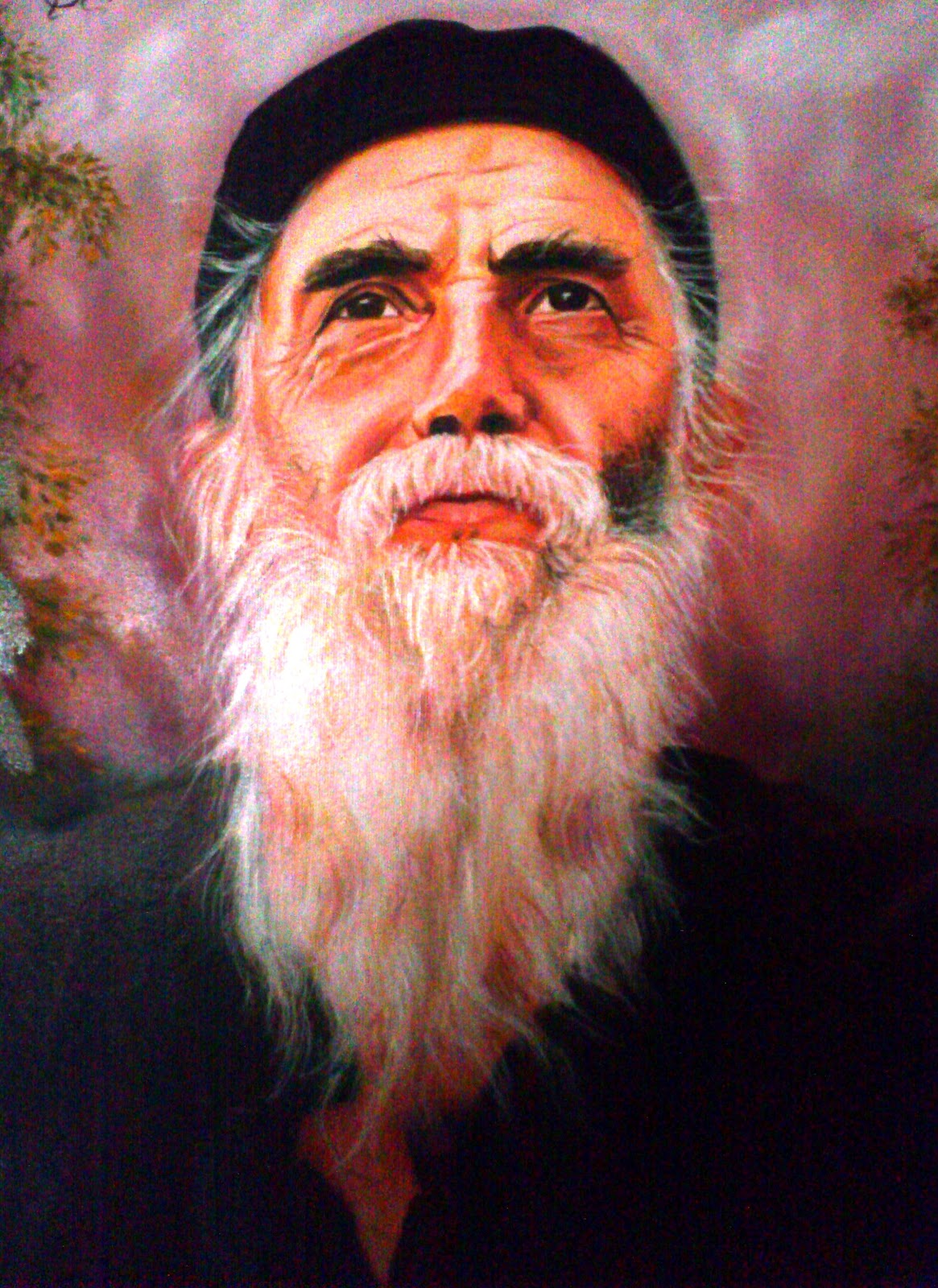
Από νωρίς, από τότε που οι δαίμονες τον χτυπούσαν και τον άφηναν αναίσθητο, άρχισε να του παρέχεται κι ένα άλλο χάρισμα. Να εκβάλλει δαιμόνια από ανθρώπους. Παλιά η μεθοδεία του Σατανά. Ταλαιπωρεί αφάνταστα και μεταβάλλει τον άνθρωπο σε απαίσιο τυφλό του όργανο. Ιδιαίτερα στη δεκαετία του 1980 φέρνανε συχνά δαιμονισμένους στη Μονή, για να τους διαβάσει εξορκισμούς ο π. Ιάκωβος και να τους σταυρώσει με την κάρα του οσίου Δαβίδ.
Στις 13 του Σεπτέμβρη, το 1987, δαιμόνιο ενόχλησε το Γιώργο Λ., ένα παληκάρι 22 ετών. Κάθε μέρα και η κατάστασή του χειροτέρευε. Τον Οκτώβρη η μητέρα του και ο αδερφός του φέρανε το Γιώργο στη Μονή. Παρακάλεσαν τον π. Ιάκωβο να προσευχηθεί και να διαβάσει εξορκισμούς. Μπροστά στο ναό το δαιμόνιο αντέδρασε φοβερά. Έβριζε κι αισχρολογούσε, χειρονομούσε και απειλούσε. Μέσα στο ναό συνέχισε πιο έντονα την αντίδραση. Άνοιξε τη λειψανοθήκη ο π. Ιάκωβος, κατέβασε την κάρα του οσίου και άρχισε να διαβάζει εξορκισμούς. Τότε, από τη μητέρα, που κι αυτή μπήκε στο ναό, ακούστηκε μια κραυγή:
–Θεέ μου, τι βλέπουν τα μάτια μου, ας γίνει καλά το παιδί μου! Τελειώνοντας οι εξορκισμοί, ο Γιώργος ελευθερώθηκε από το δαιμόνιο και ηρέμησε. Η μητέρα του, μόλις βγήκε από το ναό, εξήγησε σε μοναχό πως είδε τον π. Ιάκωβο όταν εκείνη έβγαζε τη φωνή. Τον είδε είπε, όσο διάβαζε τους εξορκισμούς, υψωμένον περίπου μισό μέτρο πάνω από τη γη και να πατάει σ’ ένα μαύρο νάνο με κέρατα και ουρά (στο δαιμόνιο).
Στη Μονή έφερναν δαιμονισμένους, έφερναν και ψυχοπαθείς, με διαφόρων βαθμών και τύπων σχιζοφρένειες. Τις περισσότερες φορές είναι πολύ, μα πάρα πολύ, δύσκολο να διακρίνει κανείς πότε ο δυστυχής άνθρωπος πάσχει από σχιζοφρένεια και πότε κατέχεται από δαιμόνιο. Ο π. Ιάκωβος είχε το χάρισμα να διακρίνει και ανάλογα με την περίπτωση, έλεγε:
–Αυτός (ο ψυχοπαθής) πρέπει να πάει στο γιατρό.
–Αυτός, παιδί μου, έχει δαιμόνιο (άρα χρειαζόταν εξορκισμούς).
Πολλοί παρακολουθούσανε τους εξορκισμούς αυτούς και κάποιοι καταγράψανε διαλόγους μεταξύ του π. Ιακώβου και των δαιμόνων. Οι δαίμονες μιλούσανε με το στόμα των δαιμονισμένων, που βρίζανε άσχημα και συχνά, ως δαίμονες, δείχνανε γνώση πραγμάτων, που δεν τα γνωρίζουν οι άνθρωποι. Η δαιμονισμένη Παναγιώτα χτυπιόταν και δεν ήθελε να πάει στον π. Ιάκωβο, τον οποίο έλεγε ότι θα τον τυφλώσει τη νύχτα, να μην μπορεί να διαβάζει. Το πρωί ο γέροντας τη ρώτησε το όνομά της και αυτή απάντησε: Οσμάν. Άλλη μία δαιμονισμένη απάντησε ότι τη λένε Βελιάρ. Τότε ο γέροντας:
–Εσύ, Βελιάρ, και ο πατέρας σου είστε ψεύτες. Βεελζεβούλ ο πατέρας σου.
Εκείνη βεβαίωσε:
–Ναι, έτσι λέγεται και μου δίνει ξύλο για να κάνω κακό, δεν αντέχω άλλο.
–Τώρα –επιτάσσει ο γέροντας– θέλω να φύγεις από την Παναγιώτα.
–Να φύγω –προλαβαίνει η Παναγιώτα– να φύγω, παλιόγερε κοκαλιάρη.
–Να πας στα όρη –συνεχίζει ο γέροντας.
Και η Παναγιώτα με παράπονο κι επιμονή:
–Να μην πάω στα όρη, να πάω σε άνθρωπο…
Ο γέροντας βάζει την κάρα του Οσίου στο κεφάλι της.
–Μου σπας τα κέρατα… Σε πολεμάω εξήντα πέντε χρόνια. Δεν μπορώ να σε ρίξω σε κάποια αμαρτία, να σε πάω στην κόλαση. Να εύχεσθε σ’αυτόν το Γέρο (=τον όσιο Δαβίδ), αλλιώς θα σας είχα λιώσει…
Έπειτα το δαιμόνιο άλλαξε τακτική και φώναζε στο γέροντα:
–Είσαι άγιος… Έχετε άγιο εδώ και δεν το καταλάβατε.
Ο γέροντας αποστόμωνε αμέσως:
–Τα λες να με παρασύρεις, αμ’ δε σ’ακούω… γη και σποδός είμαι… εγώ είμαι ταπεινός…
Το δαιμόνιο ήξερε καλά, ομολογούσε και αντιδρούσε:
–Αυτή η ταπείνωση, ρε κερατά, με καίει… φύγε ρε…
Την ίδια εποχή, πήγανε οι γονείς στην Μονή την κόρη τους, που δεν έμπαινε στο ναό. Βγήκε ο γέροντας με την κάρα του Οσίου, οπότε η δαιμονισμένη ξέσπασε:
–Σκάσε, να μη σ’ακούω παλιόγερε. Να ψοφήσεις (και χτυπιότανε φοβερά η κοπέλα). Είμαι κοσμοκράτωρ (φώναζε με το στόμα της ο δαίμονας). Κρατώ την Αθήνα στα χέρια μου… Εκείνο που ήθελα το’κανα, τους παπάδες τους κούρεψα…
Πολεμάω χρόνια το μοναστήρι× σας φυλάει ο μεγάλος εδώ μέσα. Δεν μπορώ να σε παγιδέψω. Να τα πόδια σου! Σαπίσανε τα πόδια σου (= πράγματι σάπιες ήτανε οι φλέβες των ποδιών του γέροντα και το αίμα δεν κυκλοφορούσε). Ν’απελπιστείς, πες ότι είσαι άγιος να σε κολάσω.
Επεμβαίνει ο γέροντας:
–Δεν είμαι άγιος, αλλά ο Κύριος είπε: «άγιοι γίνεσθε». Ότι μπορώ κάνω, είμαι άνθρωπος χοϊκός.
Με νέα αγανάκτηση η δαιμονισμένη:
–Τι να σου κάνω, τραγόπαπα, έχεις ταπείνωση κι έχεις μέσα σου το Χριστό× αλλιώς θα σε είχα διαλύσει. Τόσες αρρώστιες (= σου έβαλα) κι εσύ επιμένεις…
Άλλος δαιμονισμένος πληροφόρησε με καύχηση:
–Οχτώ χιλιάδες μάγους έχω στην υποταγή μου.
Τον ρώτησε ο γέροντας πως μπαίνει σε ανθρώπους και απάντησε ότι μπαίνει σ’ αυτούς που «δεν έχουν πίστη. Μπαίνω έτσι, σαν καπνός».
Κάποτε διάβασε τους εξορκισμούς για δαιμονισμένη, που την πήγε στο γέροντα ο αστυνόμος σύζυγός της .Φάνηκε να ηρεμεί, και ο γέροντας έτεινε το χέρι του να τη χαιρετήσει. Τότε αυτή με θυμό:
–Πιάνουν οι δαίμονες το χέρι του παπά που λειτουργεί;
Δυο παληκάρια φέρανε από τη Βέροια τη δαιμονισμένη μητέρα τους. Συνέβη να είναι στη Μονή και ο μητροπολίτης Σάμου. Τη μια στιγμή φερόταν ήρεμα κι έλεγε περιπαιχτικά:
–Κοκαλιάρη Ιάκωβε… Πάτερ Ιάκωβε, είσαι άγιος. Ο κόσμος σε τιμάει για άγιο.
Με υψωμένη φωνή έλεγε και ξανάλεγε ο γέροντας:
–Χοϊκός, αμαρτωλός άνθρωπος, είμαι.
Μετά από λίγο γινόταν επιθετική και με τα νύχια τραυμάτιζε στο πρόσωπο πολλούς. Το ίδιο προσπάθησε και για το γέροντα, που τη σταμάτησε με την κάρα του Οσίου.
Άλλος δαιμονισμένος, αντιδρώντας και τρέμοντας στις προσευχές του γέροντα, φώναζε:
–Σκάσε Ιάκωβε, σκάσε κοκαλιάρη… σαν καπνός εισέρχομαι στον άνθρωπο και σαν καπνός εξέρχομαι… φοβάμαι, τρέμω το Σταυρό… άμα τον κάνουν φεύγω… φεύγει η χάρη του Θεού και μπαίνουμε μεις (= οι δαίμονες).
Σε όλες ανεξαιρέτως τις περιπτώσεις δαιμονισμένων ο γέροντας διάβαζε τους εξορκισμούς, έχοντας την κάρα του Οσίου. Έτσι προστάτευε και τον εαυτό του ενώπιον των ανθρώπων. Δε θα μπορούσανε να ειπούν ότι τους δαίμονες εκβάλλει ο ίδιος ο γέροντας, εφόσον πρόβαλλε πάντα τον Όσιο Δαβίδ ως ενεργούντα.
Δραματική, για όλους τους παρόντες, γινόταν η κατάσταση, όταν οι δαιμονισμένοι παίρνανε άλλες μορφές. Τρομαγμένοι και απελπισμένοι από τις προσευχές του π. Ιακώβου, παίρνανε ξαφνικά τη μορφή άγριου μαύρου σκύλου, φοβερού λύκου ή σαρκοβόρου πτηνού. Άλλοτε πάλι γαυγίζαν ή βρυχώνταν σαν θηρία και σκορπούσανε παντού τρόμο.
Όσοι δαιμονισμένοι απελευθερώνονταν από το Σατανά, επισκέπτονταν συχνά τη Μονή για ευχαριστίες και προσκύνημα. Μόνο που οι ευχαριστίες δεν είναι τόσο απλό πράγμα. Παραξενεύτηκαν οι μοναχοί μία μέρα, που ο γέροντας δεν πήρε χρήματα για το ταγαράκι του από τη μητέρα ενός παιδιού, το οποίο ελευθέρωσε από δαιμόνιο. Το δαιμόνιο είχε πάει στα χρήματα, το διέκρινε ο γέροντας:
–Εγώ έβγαλα το δαιμόνιο από το παιδί σου κι εσύ πας να τα βάλεις σ’εμένα!
Το χάρισμα τούτο, να ελευθερώνει τον άνθρωπο από τους δαίμονες είναι πολυσήμαντος θρίαμβος. Αποτελεί την τρανή απόδειξη ότι η κυριαρχία του Σατανά στον κόσμο, τον άνθρωπο και τη φύση, είναι προσωρινή και μπορεί να καταργηθεί. Κι εφόσον με το θαύμα του Οσίου καταργείται ενδεικτικά –στην περίπτωση εκδίωξης δαιμόνων από ανθρώπους– σημαίνει ότι ο Όσιος βιώνει τη βασιλεία αυτής στον κόσμο. Άρα η βασιλεία του Θεού και υπάρχει και μπορεί να πραγματώνεται καθημερινά, έστω και μερικά.
Στυλ. Γ. Παπαδόπουλος Ομότ. Καθ. Παν. Αθηνών
Ο Μακαριστός Ιάκωβος Τσαλίκης

Silence for the monks is a rule of life. It protects them from uncontrollable and unrestrained talk as well as from impugnation and slander, which result in the death of the soul. It delivers them from wrangle and strife and preserves in them internal peace which is necessary for inwardness. Silence is the fruit of quietude, an internal state which gives birth to spiritual discourse.

-When does the monk ought to keep quiet and when does he ought to talk?
Abbot Pimen offers a solution to the issue with great discernment: “A brother asked Abbot Pimen saying: ‘which is best: to talk or to keep quiet?’And the Elder tells him: ‘Whoever talks for the sake of God, does well. Whoever keeps quiet for the sake of God, does equally well’”.
Silence is not the goal but the means. One uses it either to approach God or to talk about Him.
The Elders, those old warriors and much experienced strugglers in the spiritual arena, are forced to become spiritual teachers and coaches for those Christians who approach them either out of curiosity, or interest, or because of a deeper spiritual need. They fire at them demanding questions on serious and basic spiritual issues. “Father, tell me something. How can I be saved? Give me a word! What shall I do about my passions? Give me a command and I will obey! To what shall I adhere in order to please God?”
Often the Elders give a brief, general reply like an apothegm. Their words are not philosophical- i.e. the result of an intellectual process. They are ripe and full of pain, direct, forceful and without frills, which pierce the internal depths of the soul of the inquirer.
They use simple words, without adorned intellectual rhetoric; they reveal the hidden treasure of spiritual life and hand out messages which are always contemporary. Thus, they become beacons to those who are wrangling in the dark seas of confusion and delusion.
The Elders- humble, unknown and undetected ascetics- penetrate the souls of their interlocutors with discernment and their replies are in accordance to their real needs. The purpose of their talk is “such as is good for building up, as fits the occasion, that it may give grace to those who hear” (Ephesians 4, 29).
They avoid replying to inquiries if those who ask are able to see their deeds and their example. Once, when a brother asked Abbot Sisoeh: “Tell me something”, he replied: “Why do you force me to engage in idle talk? Do as you see.”
The words which come out of the Elders’ mouths are practical and have practical aims- to assist in the attainment of perfection and sanctification “in Christ”. They are words filled with love. As one may discern from the tradition of the Church, the Elders confess that “this give and take is a matter of love to me”. The practical implementation of the most crucial virtue, that of love, has created the term “act lovingly” («ποιείν αγάπην») for monasticism.
When Abbot Theodore of Thermis approached Abbot Pamvo to ask for counsel, he replied: “Go and show mercy to everyone, since mercy has found favor in the face of the Lord”.
In the first part of this book, our most holy Elder Joseph, moved by sheer love, has written the replies to the queries and worries posed by our cherished visitors. In the second part, which is titled “Philokaliko Apanthisma” we have translated into Modern Greek short excerpts from passages from the book of Philokalia and the Fathers of the Church, which are relevant to the questions posed.
We wish that this book assists those devout brothers, who are engaged in the spiritual struggle while still in the outside world, to accomplish sanctification without which “no one will see God”.
The Abbot of the Great and Holy Monastery of Vatopedi,
Archimandrite Efrem
Sunday of the Myrrh bearing women, 2003
*** Excerpts from the book ‘Discourse on Mount Athos’ by Elder Joseph of Vatopedi.

“Εάν θέλεις να “πιάσεις” τον Θεό, για να σε ακούσει, όταν προσευχηθείς, γύρισε το κουμπί στη ταπείνωση, γιατί σ’αυτήν την συχνότητα εργάζεται ο Θεός”
Άγιος Παΐσιος

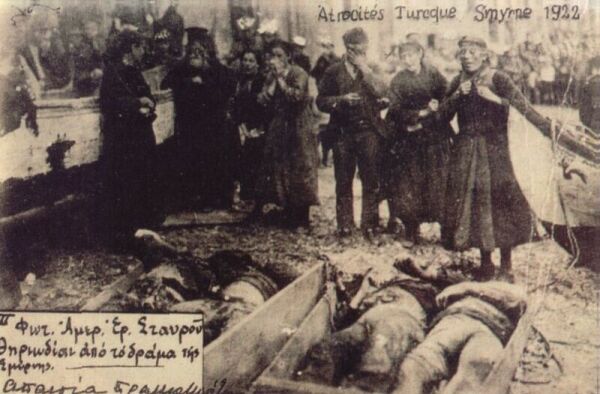
Jihad has killed over 60,000,000 Christians. The destruction of the Christians in Smyrna is told here. Islam attacked the Christians of Smyrna in 1922. It was an annihilation that took place as the Christian Europeans stood aside. Before jihad exploded out of Arabia, Turkey (Asia Minor) was a Christian nation of primarily Greek culture called Anatolia. Today Turkey is 99.7% Islamic and increasing. How did this happen?
Islam tried for centuries to crush Christianity and the Greek culture in Turkey. Constantinople, the capital, fell to jihad in 1453. Christians became dhimmis, second-class citizens. The slow grind of discrimination was punctuated by outbursts of violence. Christian Greek Anatolia was painfully changed into Islamic Turkey.
The background for these stories is that in World War I Turkey sided with the Germans (Islam sided with the Nazis in WWII). In this political chaos, Kamal Attaturk rose to power as head of the military and political government. The Allies were exhausted and did not want to get involved with another war, so they gave money to support the Greeks to fight the Turks. Long story made short, the Greeks lost.
The old Ottoman empire had fallen and a new government was arising. The leader, Attaturk, was determined to destroy the last of the kafirs in Turkey. But what he talked about to the Westerners was the possibility of business in a new country. World War I was over and America was becoming a world power. America wanted trade and influence.
The war had brought about new technology and a fusion between industry and government. A concept called Dollar Diplomacy was practiced. Trade and diplomacy became two ends of the same stick. To show how far this concept went, the American ambassador took the funds that had been raised by Christians to help the Armenians persecuted in northern Turkey and gave it to the Turks. When the Christians protested to the media, the media would not report it because of State department pressure.
The Muslim Turks killed both Greeks and Armenians that day, but this lesson will focus on the murder and theft of the Armenians. Armenia was one of the first Christian nations and has suffered monstrously at the hands of Islam. Armenia was well educated and prosperous and had always been especially despised by Islam.
Over a million Armenians were killed in Turkey in the 20th century. There are two forms of evil in this story. The first evil is what was done by jihad. The second evil was what was not done by the dhimmi kafirs.
As you read this story of the destruction of Smyrna, know that this same story is repeated today by the same players and with the same results.
It starts
Smyrna was in what was once called Asia Minor, also Anatolia. It was one of the oldest communities of Christians left in Turkey. Islam had already destroyed the other six.
Revelation 1:11 saying, “What you see, write in a book and send to the seven assemblies: to Ephesus, Smyrna, Pergamum, Thyatira, Sardis, Philadelphia, and to Laodicea.”
Smyrna, Turkey, in 1922 was a dazzling city. It was a fusion of Christian, Armenian, Greek, and Mediterranean, with some Muslims. (It was like Beirut, Lebanon, before it fell to jihad. All multicultural politics that includes Islam will fall to Islam. There have never been any exceptions.)
The West had given the Greeks the responsibility of containing the Turkish army and then turned around and prevented its victory by interference. Now the Turks, lead by Attaturk [a Muslim military leader who became ruler], began to enter the city.
The Armenians were afraid. They had experienced Islam in their old homeland in northern Turkey where the Turkish genocide had killed their ancestors. There were many warships from England, America, France and Italy in the harbor. Large numbers of commercial freighters were there from every country. The Armenians began to crowd down to the harbor.
None of the freighters would take them on. They, along with the Allied warships in the harbor, were declared to be neutral and did not want to interfere with the politics of the rising Turkish power. They were in Smyrna for business and refugees were political. Other Armenians were unafraid; they believed that the warships from Christian nations would protect them.
Thirteen lessons on islam for christians
The Turkish army entered Smyrna and began to loot the shops of the Greeks and the Armenians. Then the army turned from looting to armed robbery. Then the Turks began to rob and kill the Armenians.
Aboard the American ship Litchfield, Captain Hepburn wrote that the Turks deserved high marks for discipline and high military standards. The cover-up had started.
The Turkish army surrounded the Armenian quarter and all Muslims were told to leave the area.
Killing the christian leader
Chrysostomos was the leader of the Orthodox Christians and went to see the local commanding officer to try to arrange the evacuation of Christians. He approached the general and extended his hand. The general spit on him. He pushed Chrysostomos out the door and yelled at the Muslim crowd, “Treat him as he deserves.”
The crowd dragged him down the street until they reached a barbershop.
Chrysostomos needed a shave the crowd decided. They pulled his beard out and rubbed dog excrement on him. The man with the straight razor cut off an ear and, at the sight of blood, the mob went mad trying to get close to Chrysostomos, who was barely able to murmur, “Receive my soul into Thy Kingdom, O Lord,” before he died. They cut out his eyes, ears and nose.
There were French marines standing by and their officer forbade them to defend the Christian. The body was dragged further down the street, when they stopped and cut off his privates and put them in his dead mouth.
When they reported his murder to the French Admiral Dumesnil, he said, “He got what was coming to him.”
Nowhere to run
In the harbor small boats carried refugees to the ships. No one would let them come aboard. When people jumped into the water and clutched the lines, the sailors cut the lines and poured boiling water on the people.
They would not break their “neutrality”. Turkish forces now moved house to house in the Armenian quarter.
They broke down the doors and robbed the men. The Muslim men brutally violated the women and then pushed them naked into the streets. Men were tied together to be marched outside the city and killed. Orders went out to use the sword and stop shooting the men. The guns were too noisy, and at the time, the Turks insisted nothing was happening. As many as a hundred men were lashed at the wrists and beheaded.
Lieutenant Merrill, an American, wrote to Admiral Bristol (the top American official in Turkey) that, “No one could imagine without seeing them under fire what a chicken-livered lot the Christian minorities (Greek and Armenian) are.”
Major Davis of the Red Cross cabled Admiral Bristol that the refugees must be evacuated. The Turks were going to solve their “race” problem by annihilation.
The American consul was exhausted. He was constantly besieged by Armenians who told the same story of murder and theft. Captain Hepburn sent for the Turkish army to drive them away from the Consulate.
Later that day, he boarded the Litchfield. He sat and watched as two newsmen typed up their reports. One of them stopped and read what he had written. He threw it into the wastebasket and said he could not send it in.
It would ruin his ability to report in Turkey after this was over. The other reporter agreed that they should dig up some old stories how the Greek Orthodox Christian soldiers had committed wrongs against the Turks.
They were desperate for something to offset the evil of jihad. And they did. The news wires were filled with reports of Greeks and Armenians looting before the Turkish troops arrived. They emphasized the discipline of the Turkish troops.
But not everyone lied:
‘The Armenian quarter is a charnel house ,’ a French officer noted on 13 September: ‘In three days this rich quarter is entirely ravaged. The streets are heaped with mattresses, broken furniture, glass, torn paintings. Some young women and girls, especially pretty ones, have been taken away and put into a house that is guarded by [Muslim] Turkish sentries. They must submit to the whims of the patrols. One sees cadavers in front of the houses. They are swollen and some have exposed entrails. The smell is unbearable and swarms of flies cover them. Day and night I make a tour of this quarter, and women who are crazed join me in the street; their clothes torn, their hair flying wild, they attach themselves to me. They beg me to take them from this quarter. First there are four, then eight, then a dozen and the number of women grows. I am in uniform and just about the only one to circulate on foot. Where to take them? Everywhere is filled:
Smyrna, 1922, M H Dobkin, Newmark Press, NY, NY, 1989, pg. 136.
A charnel house is a place where bodies are deposited.
Thirteen lessons on islam for christians
The churches, the schools, the Alliance Francaise are overflowing. So I disengage myself and try to reassure them. There are no men in this quarter; all are dead, or hiding, or they have been taken away. The New York Times reported that Attaturk was punishing any soldier who violated his orders to respect life and property.
Business is business
In Constantinople Admiral Chester and his two sons saw that a lifetime dream was to be fulfilled. His Ottoman-American Development Company would obtain a 99-year contract to all the sand and gravel for road building and all right-of-way needed from quarries. All imports would be exempt from duties and taxes.
He had written in Current History that the Turks had been falsely accused during the World War. They had been benevolent to the Armenians and other minorities.
Admiral Bristol was encouraging American businessmen to get in on the deals before the Europeans got the contracts.
Now the fire
The Turks now started to bring in kerosene. Sacks of “food” turned out to be gunpowder and dynamite. Wagons filled with barrels of gasoline were brought in. The winds shifted away from the Muslim quarter and the fires started.
As the firemen would be trying to put out the fires in one house, the Muslims were pouring gasoline in the next house. ‘In all the houses I went into I saw dead bodies,’ Tchorbadjis [a French officer] said. ‘In one house I followed a trail of blood that led me to a cupboard. My curiosity forced me to open this cupboard—and my hair stood on end. Inside was the naked body of a girl, with her front cut off.
At another house there was a girl hanging from a lemon tree in the yard. There were plenty of armed soldiers going about. One of them went in where there was an Armenian family hiding and massacred the lot. When he came out his scimitar was dripping with blood. He cleaned it on his boots and leggings.
‘On one of the roads I saw a man about forty-five or fifty years old. The Turks had blinded him and cut off his nose and left him on the streets. He was crying out, in Turkish, “Isn’t there anyone here Christian enough to shoot me so that I will not get burnt in the fire ?”
In the end, the entire Armenian quarter was burned. Some of the survivors were able to be evacuated.
Wrapping up the news
Admiral Bristol’s biggest headache of the moment was the press. Eyewitnesses arriving at foreign ports were already giving out spectacular news stories to reporters, and it seemed inevitable that after the mass exodus there would be a barrage of uncontrollable publicity. On 22 September the Admiral had cabled the State Department urging the release of an official account to offset ‘exaggerated and alarming reports appearing in American newspapers regarding Smyrna fires’. He offered a sample which the State Department was pleased to use:
American officers who have been eyewitnesses of all events occurring, Smyrna, from time of the occupation of that city by Nationalists up to present, report killings which occurred at that city were ones for the most part by individuals or small bands of rowdies or soldiers, and that nothing in the nature of a massacre had occurred. During the fire some people were drowned by attempting to swim to vessels in harbor or by falling off the quay wall, but this number was small. When masses of people were gathered on quay to escape fire, they were guarded by Turkish troops but were at no time prevented by such troops from leaving the quay if they so desired. It is impossible to estimate the number of deaths due to killings, fire, and execution, but the total probably does not exceed 2,000.
Bristol’s tone suited the policy makers. In the next issue of Foreign Affairs Elihu Root, (Secretary of State) was pleading for “restraint of expression”, noting that “nations are even more sensitive to insult than individuals”.
As far as the estimate that 2,000 died, 190,000 Armenians were never accounted for.
Christian martyrs
The deaths alone are a tragedy, but the supreme tragedy is that they have all died in vain. Every Christian knows about the number of Jews killed by Hitler, but what Christian knows about the deaths of their own?
Why did the Muslims do this? It was a sacred act. It is strictly according to the code of jihad that is laid out in the Koran and the Sunna [see the Ethics chapter]. Indeed, murder and theft of the kafir in jihad is a sacrament.
If one of the Muslim jihadists had been killed, he would be declared a martyr. The sword of the jihadist is the scalpel of Allah; it is pure good. Just as a scalpel removes what harms the body, jihad, in all its forms, removes what is offensive to Allah. The Muslims who did these acts were “good and moderate” Muslims. Mohammed did these things and he defines moderation and righteous action. A jihadist is a Mohammedan.
The great stain on Christianity is that those who sought to follow Christ suffered death and destruction under jihad and they had no support of the Christian community. When a mosque is even chipped by a kafir every Muslim roars in unity.
When the Muslims desecrated the church in Bethlehem in the late 20th century, the silence of Christians was deafening.
The final lesson
The mind of those who aided Islam in Smyrna by ignoring the suffering of the victims of jihad is dhimmitude. Yes, they were greedy, but they also did not have any any knowledge about the doctrine and history of political Islam. The businessmen, diplomats, and military men were clueless about the real evil happening and how it was just the next step tofurther suffering.
It is not that Islam is so strong, but that kafirs are so weak. Ignorance of the doctrine and history of political Islam blinds the kafirs. Today, the Armenians are trying to tell their story, but no one cares, no one listens. Turkey denies the annihilation and is trying to become a part of the European Union. No one wants to talk about what could be bad for business, so the EU does not want to talk about it. It upsets the Muslims.

- Μια μάνα, Γέροντα, που το παιδί της πέθανε πριν από εννέα χρόνια, σας παρακαλεί να
κάνετε προσευχή να το δη έστω στον ύπνο της, για να παρηγορηθή.
- Πόσων χρόνων ήταν το παιδί; ήταν μικρό; Είναι σημαντικό αυτό. Άμα το παιδί ήταν
μικρό και η μητέρα είναι σε κατάσταση που, αν της παρουσιασθή, δεν θα αναστατωθή, θα
παρουσιασθή. Αιτία είναι η μητέρα που δεν παρουσιάζεται το παιδί.
- Μπορεί, Γέροντα, αντί να παρουσιασθή το παιδί στην μητέρα που το ζητάει, να
παρουσιασθή σε κάποιον άλλον;
- Πως δεν μπορεί! Κανονίζει ανάλογα ο Θεός. Όταν ακούω για τον θάνατο κάποιου νέου,
λυπάμαι, αλλά λυπάμαι ανθρωπίνως. Γιατί, αν εξετάσουμε τα πράγματα πιο βαθιά, θα δούμε ότι, όσο μεγαλώνει κανείς, και περισσότερο αγώνα πρέπει να κάνη, αλλά και περισσότερες αμαρτίες προσθέτει. Ιδίως όταν είναι κοσμικός, όσο περνούν τα χρόνια, αντί να βελτιώση την πνευματική του κατάσταση, την χειροτερεύει με τις μέριμνες, με τις αδικίες κ.λπ. Γι' αυτό είναι πιο κερδισμένος, όταν τον παίρνη ο Θεός νέο.
-Γέροντα, γιατί ο Θεός επιτρέπει να πεθαίνουν τόσοι νέοι άνθρωποι;
- Κανείς δεν έχει κάνει συμφωνία με τον Θεό πότε θα πεθάνη. Ο Θεός τον κάθε άνθρωπο
τον παίρνει στην καλύτερη στιγμή της ζωής του, με έναν ειδικό τρόπο, για να δώση την ψυχή
του. Εάν δη ότι κάποιος θα γίνη καλύτερος, τον αφήνει να ζήση. Εάν δη όμως ότι θα γίνη
χειρότερος, τον παίρνει, για να τον σώση.
Μερικούς πάλι που έχουν αμαρτωλή ζωή, αλλά έχουν
την διάθεση να κάνουν καλό, τους παίρνει κοντά Του, πριν προλάβουν να το κάνουν, επειδή
ξέρει ότι θα έκαναν το καλό, μόλις τους δινόταν η ευκαιρία. Είναι δηλαδή σαν να τους λέη:
«Μην κουράζεσθε· αρκεί η καλή διάθεση που έχετε». Άλλον, επειδή είναι πολύ καλός, τον
διαλέγει και τον παίρνει κοντά Του, γιατί ο Παράδεισος χρειάζεται μπουμπούκια.
Φυσικά οι γονείς και οι συγγενείς είναι λίγο δύσκολο να το καταλάβουν αυτό. Βλέπεις,
πεθαίνει ένα παιδάκι, το παίρνει αγγελούδι ο Χριστός, και κλαίνε και οδύρονται οι γονείς, ενώ
έπρεπε να χαίρωνται, γιατί που ξέρουν τι θα γινόταν, αν μεγάλωνε; Θα μπορούσε άραγε να
σωθή;
Όταν του 1924 φεύγαμε από την Μικρά Ασία με το καράβι, για να έρθουμε στην Ελλάδα,
εγώ ήμουν βρέφος. Το καράβι ήταν γεμάτο πρόσφυγες και, όπως με είχε η μητέρα μου μέσα στις φασκιές, ένας ναύτης πάτησε επάνω μου. Η μάνα μου νόμισε ότι πέθανα και άρχισε να κλαίη.
Μια συγχωριανή μας άνοιξε τις φασκιές και διαπίστωσε ότι δεν είχα πάθει τίποτε. Αν πέθαινα
τότε, σίγουρα θα πήγαινα στον Παράδεισο. Τώρα που είμαι τόσων χρονών και έχω κάνει τόση
άσκηση, δεν είμαι σίγουρος αν πάω στον Παράδεισο.
Αλλά και τους γονείς βοηθάει ο θάνατος των παιδιών. Πρέπει να ξέρουν ότι από εκείνη
την στιγμή έχουν έναν πρεσβευτή στον Παράδεισο. Όταν πεθάνουν, θα 'ρθούν τα παιδιά τους με εξαπτέρυγα στην πόρτα του Παραδείσου να υποδεχθούν την ψυχή τους.
Δεν είναι μικρό πράγμα αυτό!
Στα παιδάκια πάλι που ταλαιπωρήθηκαν εδώ από αρρώστιες ή από κάποια αναπηρία ο
Χριστός θα πη: «Ελάτε στον Παράδεισο και διαλέξτε το καλύτερο μέρος». Και τότε εκείνα θα
Του πουν: «Ωραία είναι εδώ, Χριστέ μας, αλλά θέλουμε και την μανούλα μας κοντά μας». Και ο Χριστός θα τα ακούση και θα σώση με κάποιον τρόπο και την μητέρα.
Βέβαια δεν πρέπει να φθάνουν οι μητέρες και στο άλλο άκρο. Μερικές μανάδες
πιστεύουν ότι το παιδί τους που πέθανε αγίασε και πέφτουν σε πλάνη.
Μια μητέρα ήθελε να μου δώση κάτι από τον γιο της που είχε πεθάνει, για ευλογία, γιατί πίστευε ότι αγίασε. «Έχει ευλογία, με ρώτησε, να δίνω τα πράγματά του;» «Όχι, της είπα, καλύτερα να μη δίνης». Μια
άλλη είχε κολλήσει την Μεγάλη Πέμπτη το βράδυ στον Εσταυρωμένο την φωτογραφία του
παιδιού της που το είχαν σκοτώσει οι Γερμανοί και έλεγε: «Και το παιδί μου σαν τον
Χριστό έπαθε». Οι γυναίκες που κάθονταν και ξενυχτούσαν στον Εσταυρωμένο την άφησαν, για να μην την πληγώσουν. Τι να έλεγαν; Πληγωμένη ήταν.
Αγιος Παϊσιος

A terrible accident has a power to awaken us to the realization of the existence of various calamities and dangers surrounding us, from which the Providence of God preserves us. At the same time it convincingly persuades us to acknowledge our own infirmity and weakness and to seek the Father's protection and His most powerful defense, which affirms us in the Wisdom and the Word of God, which came down from above by the will of the Heavenly Father under a curtain of flesh like ours, woven by the Divine Might from the Immaculate Virgin, for our salvation. He became man and taught us to pray that we be not led into temptation. This reminds us from what Father we have our existence, and this in turn should make us seek our heavenly Fatherland and our eternal inheritance.
Saint Herman of Alaska

Ό Θεός δεν μας κατηγορεί επειδή πέφτουμε, αλλά επειδή δεν σηκωνόμαστε. Ή ανθρώπινη φύσις, βλέπεις, είναι εύόλισθος.
Γέροντας Αμβρόσιος

The New Hieromartyr Cosmas, Equal of the Apostles, in the world Constas, was a native of Aitolia. He studied at first under the guidance of the archdeacon Ananias Dervisanos, and afterwards continued his education on Mount Athos, at the Vatopedi school renowned for teachers such as Nicholas Tzartzoulios (from Metsovo) and Eugenius Voulgaris (afterwards in the years 1775-1779 the archbishop of Ekaterinoslav and the Chersonessus).
Remaining on Athos at the Philotheou monastery to devote himself to spiritual labors, he was tonsured a monk with the name Cosmas, and later was ordained hieromonk. The desire to benefit his fellow Christians, to guide them upon the way of salvation and strengthen their faith, impelled St Cosmas to seek the blessing of his spiritual fathers and go to Constantinople. There he mastered the art of rhetoric and, having received a written permit of Patriarch Seraphim II (and later from his successor Sophronius) to preach the Holy Gospel.

So the saint began to proclaim the Gospel at first in the churches of Constantinople and the surrounding villages, then in the Danube regions, in Thessalonica, in Verroia, in Macedonia, Chimaera, Akarnania, Aitolia, on the islands of Saint Maura, Kephalonia and other places.

His preaching, filled with the grace of the Holy Spirit, was simple, calm, and gentle. It brought Christians great spiritual benefit. The Lord Himself assisted him and confirmed his words with signs and miracles, just as He had confirmed the preaching of the Apostles.
Preaching in the remote areas of Albania, where Christian piety had almost disappeared among the rough and coarse people entrenched in sin, St Cosmas led them to sincere repentance and improvement with the Word of God.

Under his guidance, church schools were opened in the towns and villages. The rich offered their money for the betterment of the churches, for the purchase of Holy Books (which the saint distributed to the literate), veils (which he gave women, admonishing them to come to church with covered heads),for prayer ropes and crosses (which he distributed to the common folk), and for baptismal fonts so that children could be baptized in the proper manner.
Since the churches could not accommodate everyone wanting to hear the wise preacher, St Cosmas with forty or fifty priests served the Vigil in the fields, and in city squares, where thousands of people prayed for the living and for the dead, and were edified by his preaching. Everywhere that St Cosmas halted and preached, the grateful listeners set up a large wooden cross, which remained thereafter in memory of this.

The apostolic service of St Cosmas was brought to a close by his martyric death in the year 1779. At 65 years of age, he was seized by the Turks and strangled. His body was thrown into a river, and after three days, was found by the priest Mark and buried near the village of Kolikontasi at the monastery of the Entrance into the Temple of the Most Holy Theotokos. Afterwards, part of his relics were transferred to various places as a blessing.

He was glorified by the Ecumenical Patriarchate in 1961."

"It is interesting to note that the initiative for the first church to be built in memory of Father Kosmas was taken by the Moslem ruler of Albania, Ali Pasha, who held Father Kosmas in high esteem not only because he believed Kosmas to be a holy man but also because Kosmas had earlier predicted great success for him [Note: see the first prophecy of St. Kosmas below]. In 1810 Ali Pasha became master of the city of Berat and its environs. Within four years he succeeded in raising the money required to build the first church in honor of St. Kosmas. Moreover, he personally contributed not only toward the building of the church but paid to have a silver reliquary made in which Kosmas' skull was placed and saw to it that the Saint's service (akolouthia) was composed. It was later printed in Venice by the Epirot printer Nicholas Glykys."

Selected Prophecies of St. Kosmas Aitolos
"You will become a great man, you will conquer all of Albania, you will subjugate Preveza, Parga, Souli, Delvino, Gardiki, and the very stronghold of Kurt Pasha. You will leave a great name in the world. Also, you will go to Constantinople,...but with a read beard. This is the will of Divine Providence. Remember, however, throughout your whole reign, to love and defend the Christians, if you want your successors to retain their power."
(This was said at Tepeleni, in present day Albania, to Ali Pasha, and found amazing fulfillment after some thirty years. He became the sole, powerful ruler of Epiros. In saying the Ali Pasha would go to Constantinople but with a "red beard", the Saint meant that Ali Pasha would be beheaded and his head with bloody beard would be sent to that city. This, too, found fulfillment.)
"Things will come out of the schools that your mind does not even imagine."
"You will see in the field a carriage without horses running faster than a rabbit."

"A time will come when the earth will be girded by a thread."
(electrical power grid and telephone lines)
"A time will come when people will speak from one distant place to another, as though they were in adjoining rooms--for example, from Constantinople to Russia."
"You will see men flying in the sky like starlings, and throwing fire on the earth. Those who will live then will run to graves and will cry out: "Come out you who are dead so that we the living may enter."
(These five successive prophecies of St. Kosmas are in books that were written about a century before the related inventions were made. Hence, they arouse admiration and manifestly testify to the Saint's gift of prophecy.)

"The Turks will leave, but they shall return and will come as far as Hexamilia. In the end, they shall be driven away to Kokkina Milia. Of the Turks, one third will be killed, another third will be baptized, and the remaining third will go to Kokkina Milia."
(Kokkina Milia was a region which the imagination of the enslaved Greeks placed in the depths of Asia Minor and beyond. It is there that they hoped to push back their oppressors, i.e., where they originally came from.)
"In the City (Constantinople) so much blood will be spilled that a three-year old calf will swim in it."
"After the war, a man will have to run half an hour to find another human being to join him in fellowship."
(The situation prophesied here fits with that anticipated today in the case of a nuclear war.)

Selected quotes from St. Kosmas Aitolos (taken from: http://www.serfes.org/writtings/stcosmas.htm; see the link and Modern Orthodox Saints I by Dr. Constantine Cavarnos for more information and quotes from St. Kosmas Aitolos)
"This All-holy Trinity we pious Orthodox Christians glorify and worship. He is the true God, and all other so-called gods are demons. And it is not we along that believe, glorify, and worship the Holy Trinity, but angels, archangels, and all the heavenly hosts, as numerous as the stars of the heavens and the grains of the sand of the sea unceasingly praise in hymns and worship and glorify this All-holy Trinity. Again, out of their love for the Holy Trinity men and women as numerous as the stars of the heavens and the grains of the sand of the sea spilt their blood, and as many renounced the world and went to the deserts and led a life of spiritual endeavor, and still as many lived in the world with temperance and virginity, fasting, prayer, almsgiving and other practices; and all went to Paradise and rejoice forever."
"If we want to fare well in this life and to go to Paradise, and to call our God love and father, we must have two loves: the love for God and the love for our neighbor. It is natural for us to have these two loves, and contrary to nature not have them. Just as a swallow needs two wings in order to fly in the air, so we need these two loves, because without them we cannot be saved."
"If you wish to be saved, seek no other thing here in this world as much as love."

"The Martyrs won Paradise through their blood; the Ascetics, through their ascetic life. Now you, my brethren, who have children, how will you win Paradise? By means of hospitality, by giving to your brothers who are poor, blind, or lame."
"If you want cure your soul, you need four things. The first is to forgive your enemies. The second is to confess thoroughly. The third is to blame yourself. The fourth is to resolve to sin no more. If we wish to be saved, we must always blame ourselves and not attribute our wrong acts to others. And God, Who is most compassionate, will forgive us."
"God created woman equal with man, not inferior...My Christian, you must love your wife as your companion, not consider her as your slave, for she is a creature of God, just as you are. God was crucified for her as much as for you. You call God Father, she calls Him Father, too. Both of you have the same Faith, the same Baptism, the same Book of the Gospels, the same Holy Communion, the same Paradise to enjoy. God does not regard her as inferior to you. "
"This prayer should never be absent from you: Lord Jesus Christ, Son and Logos of the living God, through the Theotokos and all the Saints, have mercy upon me, Thy sinful and unworthy servant." (This is the actual Jesus Prayer: "O LORD JESUS CHRIST, SON OF GOD, HAVE MERCY UPON ME, A SINNER.") Always say this prayer both with your mouth and with your mind, day and night, wherever you may be, whether eating, walking, working, or sitting. Always meditate on it, as it benefits you a great deal., frees you here from every evil, delivers you there from eternal Hell, and renders you worthy of going to Paradise, our heavenly country."

APOLYTIKION IN THE THIRD TONE
By teaching the Divine Faith, thou hast richly adorned the Church and become a zealous emulator of the Apostles; for having been lifted up by the wings of divine love, that hast spread far and wide the message of the Gospel. O glorious Cosmas, entreat God that He grants us His great mercy.
KONTAKION
Having led an irreproachable life on Athos, like Moses thou hast been deemed worthy of God's manifestation; wherefore truly thou dost gladden the Church exceedingly by thy deeds and thy God-inspired words, O Father Cosmas, having contended for which, thou hast been adorned with a double crown.
MEGALYNARION
Rejoice thou emulator of the Apostles, teacher and luminary of the Church; rejoice thou divine cultivator of piety, associate of Martyrs and peer of Angels.

Through the prayers of our Holy Fathers, Lord Jesus Christ our God, have mercy on us and save us! Amen!
http://agapienxristou.blogspot.ca/2013/08/st-kosmas-aitolos-new-hieromartyr-and.html
Of all people, the atheist is the most misfortunate person because he has been deprived of the only good thing upon the earth: faith—the one true guide toward the truth and happiness. The atheist is a most misfortunate person because he is deprived of hope: the essential staff needed to journey through life's lengthy path. The atheist is a most misfortunate person because he is deprived of human love, which caresses the aching heart. The atheist is a most misfortunate person because he has been deprived of the divine beauty of the Creator's image, which the Divine Artist has etched within man and which faith unveils.
The eye of the atheist sees in creation nothing other than the operation of natural processes. The brilliance and magnificent beauty of the Divine Creator's image remain hidden and undetectable to him.
As he glances aimlessly at creation, nowhere does he discover the beauty of God's wisdom, nowhere does he see God's omnipotence, nowhere does he observe God's goodness and providence, nowhere does he discern the Creator's righteousness and love for creation. His mind is neither capable of ascending higher than the visible world nor reaching beyond the boundaries of physical matter. His heart remains anesthetized and indifferent before God's ever-present divine wisdom and power.
Within it, not even the slightest desire to worship
the Lord exists. His lips remain closed, his mouth silent, and his tongue frozen. His soul voices no
hymn, doxology, or praise as an expression of gratefulness to God.
The peace of the soul and the serenity of the heart have been removed by disbelief; instead, mourning has inundated the depth of his being. The delight, which the faithful person experiences from executing God’s divine commandments, and
the great pleasure that he enjoys from an ethical way of life are unknown feelings for the atheist. The elation which faith bestows to the believer has never been felt by the atheist’s heart.
The assurance that arises from faith in God’s providence, which relieves man from the anxiety of life’s worries, is a power unknown to him.
St. Nektarios
http://agapienxristou.blogspot.ca/2013/08/the-atheist-is-most-misfortunate-person.html