Translate

Friday, July 24, 2015

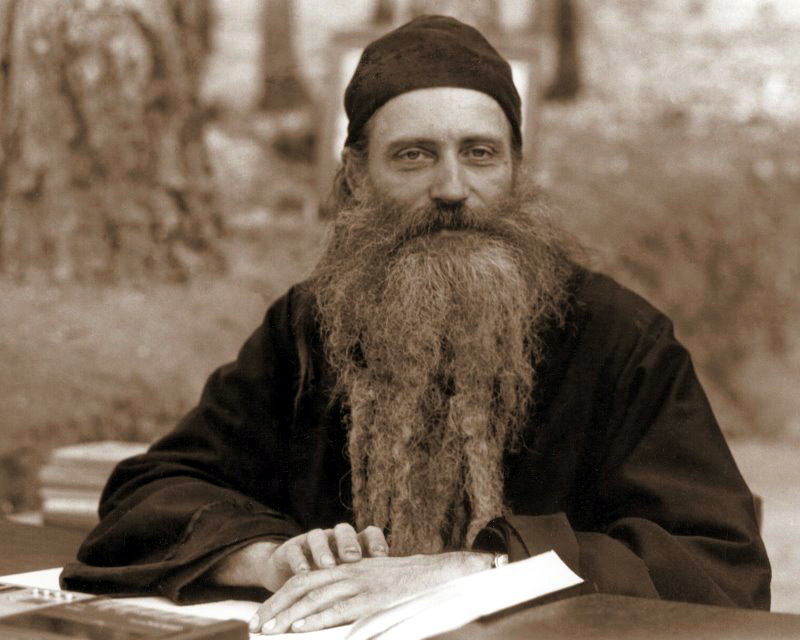
The Great Virtue of Patience ( Fr. Seraphim Rose )


Count it all joy, my brethren, when ye fall into manifold temptations, knowing that the testing of your faith produces patience. And let patience have its perfect work, that ye may be perfect and entire, lacking nothing. (James 1:2-4)

"By taking one small step at a time, and nobody not thinking that in one big step we are going to get any place, we can walk straight to the Kingdom of Heaven––and there is no reason for any of us to fall away from that ."

Fr. Seraphim Rose

Γιατι δεν καταλαβαινουμε τη βοήθεια του Θεού ( Αγιος Παϊσιος )


Παλιά, θυμάμαι, πήγαιναν οι γονείς στα χωράφια και πολλές φορές μας άφηναν στην γειτόνισσα να μας προσέχη μαζί με τα παιδιά τα δικά της. Αλλά τότε ήταν ισορροπημένα τα παιδιά.

Μια ματιά έριχνε η γειτόνισσα και έκανε τις δουλειές της και εμείς παίζαμε ήσυχα. Έτσι και ο Χριστός, η Παναγία, οι Άγιοι παλιά με μια ματιά παρακολουθούσαν τον κόσμο. Σήμερα και ο Χριστός και η Παναγία και οι Άγιοι τον έναν πιάνουν από ΄δω, τον άλλον από ΄κει, γιατί οι άνθρωποι δεν είναι ισορροπημένοι.

Τώρα είναι μια κατάσταση ...; Θεός φυλάξοι! Σαν μια μητέρα να έχη δυό-τρία προβληματικά παιδιά, το ένα λίγο χαζούλικο, το άλλο λίγο αλλοίθωρο, το άλλο λίγο ανάποδο, να έχη και κανά-δυό της γειτόνισσας να τα προσέχη, και το ένα να ανεβαίνη ψηλά και να κινδυνεύη να πέση κάτω, το άλλο να παίρνη το μαχαίρι να κόψη τον λαιμό του, το άλλο να παή να κάνη κακό στο άλλο, και αυτή συνέχεια να βρίσκεται σε εγρήγορση, να τα παρακολουθή, και εκείνα να μην καταλαβαίνουν την αγωνία της.

Έτσι και ο κόσμος δεν καταλαβαίνη την βοήθεια του Θεού. Με τόσα επικίνδυνα μέσα πού υπάρχουν σήμερα θα είχε σακατευθή, αν δεν βοηθούσε ο Θεός. Αλλά έχουμε και Πατέρα τον Θεό και Μάνα την Παναγία και αδέλφια τους Αγίους και τους Αγγέλους, πού μας προστατεύουν.

Πόσο μισεί ο διάβολος το ανθρώπινο γένος και θέλει να το εξαφανίση! Και εμείς ξεχνούμε με ποιόν παλεύουμε. Να ξέρατε πόσες φορές ο διάβολος τύλιξε την γη με την ουρά του, για να την καταστρέψη! Δεν τον αφήνει όμως ο Θεός, του χαλάει τα σχέδια. Και το κακό που πάει να κάνη το ταγκαλάκι, ο Θεός το αξιοποιεί και βγάζει μεγάλο καλό. Ο διάβολος τώρα οργώνει, ο Χριστός όμως θα σπείρη τελικά".

Αγιος Παϊσιος 


http://agapienxristou.blogspot.ca/2013/07/blog-post_8488.html

Thursday, July 23, 2015

Saint Herman of Alaska On Love For God


Once the Elder was invited on board a frigate that had come from St. Petersburg. The captain of the frigate was a man quite learned, highly educated; he had been sent to America by Imperial command to inspect all the colonies. With the captain were some 25 officers, likewise educated men. In this company there sat a desert-dwelling monk of small stature, in an old garment, who by his wise conversation brought all his listeners to such a state that they did not know how to answer him. The captain himself related: "We were speechless fools before him!"


Father Herman gave them all one common question: "What do you, gentlemen, love above all, and what would each of you wish for his happiness?" Diverse answers followed. One desired wealth, one glory, one a beautiful wife, one a fine ship which he should command, and so on in this fashion. "Is it not true," said Father Herman at this, "that all your various desires can be reduced to one - that each of you desires that which, in his understanding, he considers best and most worthy of love?" "Yes, it is so," they all replied. "Well, then, tell me," he continued, "can there be anything better, higher above everything, more surpassing everything and in general more worthy of love, than our Lord Jesus Christ Himself, who created us, perfectly adorned us, gave life to all, supports all, nourishes and loves all, who Himself is love and more excellent than all men? Should not a person then love God high above all and desire and seek Him more than all else?" All began to say: "Well, yes! That is understood! That speaks for itself!"


"And do you love God?" the Elder then asked. All replied: "Of course, we love God. How can one not love God?" "And I, sinful one, for more than forty years have been striving to love God, and cannot say that I perfectly love Him," answered Father Herman; then he began to show how a person should love God. "If we love someone," he said, "we always think of him, strive to please him, day and night our heart is occupied with this subject. Is it thus that you, gentlemen, love God? Do you often turn to Him, do you always think of Him, do you always pray to Him, and fulfill His holy commandments?" It had to be acknowledged that they did not! "For our good, for our happiness," concluded the Elder, "at least let us make a promise to ourselves, that from this day, from this hour, from this very moment we shall strive to love God above all, and fulfill His holy will!"


Behold what an intelligent, superb conversation Father Herman conducted in society; without doubt this conversation must have imprinted itself on the hearts of his listeners for their whole life!


http://agapienxristou.blogspot.ca/2013/07/saint-herman-of-alaska-on-love-for-god.html

Σοδομιτικά αμαρτήματα και....Ομοφυλοφιλία ( Αγιος Ιωάννης ο Χρυσόστομος )


«Αλλ' ακόμη δεν ανέφερα το αποκορύφωμα των κακών, ούτε το κυριώτερον μέρος της συμφοράς απεκάλυψα, διότι πολλάκις, που ητοιμάσθην να το ειπώ εκοκκίνησα, πολλάκις δε εντράπηκα.

Ποίον λοι­πόν είναι αυτό; Διότι πρέπει πλέον να το αποτολμήσωμεν να το είπωμεν. Αλλωστε θα ήτο μεγάλη ανανδρία, ενώ πρόκειται να εκριζώσωμεν κάτι κακόν, να μη τολμώμεν ούτε καν να ομιλήσωμεν δι' αυτό, ωσάν να πρόκειται η σιωπή να ιατρεύση αφ' εαυτής την ασθένειαν. Δεν θα σιωπήσωμεν λοιπόν, και αν ακόμη πρόκειται μυριάκις να εντραπώμεν και να κοκκινίσωμεν.

Διότι και ο ιατρός, προκειμένου να καθαρίση την μολυσμένην πληγήν, θα παραιτηθή από του να χρησιμο­ποίηση τον σίδηρον, και να βυθίση τα δάκτυλά του εις τον πυθμένα του τραύματος; Λοιπόν, ούτε και ημείς πρόκειται να σταματήσωμεν τον λόγον αυτόν, καθ' όσον η μόλυνσις είναι χειροτέρα. Ποίον λοιπόν είναι το κακόν;

Κάποιος παράδοξος και παράνομος πόθος εισήλθεν εις την ζωήν μας. Επέπεσεν ασθένεια βαρεία και αθερά­πευτος και ενέσκηψε πανώλης χει­ροτέρα όλων' επενοήθη κάποια νέα και φοβερά παρανομία, διότι ανατρέπονται όχι μόνον οι ανθρώ­πινοι, αλλά και οι φυσικοί νόμοι. Κατήντησε λοιπόν μικρόν πράγμα η πορνεία θεωρουμένη ως συνήθης ασέλγεια.

Και όπως εις τας οδύνας, το τυραννικώτερον πάθος, όταν επέλθη, καλύπτει την εντύπωσιν του προηγουμένου, έτσι και το υπερβολικόν μέγεθος αυτής της ύβρεως κάμνει το ανυπόφορον, να μη φαίνεται πλέον ως ανυπόφορον, δηλαδή την ακολασίαν περί την γυναίκα.
Διότι φαίνεται ότι είναι ευχάριστον το να ημπορέση να διαφύγη κανείς από τα δίκτυα αυτά και κινδυνεύει εις το εξής να γίνη περιττόν το γυναικείον φύλον, εφ' όσον οι νέοι αναπληρώνουν αντί εκεί­νων, όλα τα εις εκείνας ανήκοντα.


Και δεν είναι μόνον αυτό το κακόν, αλλ' ότι με πολλήν ελευθερίαν αποτολμάται τοιαύτη ακολασία και ενομιμοποιήθη η παρανομία. Κανείς λοιπόν δεν φοβείται και δεν τρέμει. Κανείς δεν εντρέπεται ούτε κοκκι­νίζει, αλλά και υπερηφανεύεται δια την γελοίαν αυτήν πράξιν και θεω­ρούνται παράφρονες οι σώφρονες και ότι δήθεν παραπλανώνται οι νουθετούντες' και αν μεν τύχη να είναι κατώτεροι σωματικώς, δέρονται, αν δε είναι ισχυρότεροι χλευ­άζονται, καταγελώνται, περιλούο­νται με μυριάδας εμπαιγμούς.

Εις τίποτε δεν ωφελούν τα δικαστήρια, ούτε οι νόμοι, ούτε οι παιδαγωγοί, ούτε οι πατέρες, ούτε οι υπηρέται, ούτε οι διδάσκαλοι.
Διότι άλλους μεν κατώρθωσαν να διαφθείρουν δια χρημάτων, αυ­τοί δε ενδιαφέρονται πως να απο­κτήσουν μισθόν. Εξ εκείνων δε που είναι φρονιμώτεροι και φροντί­ζουν δια την σωτηρίαν αυτών, που τους έχουν εμπιστευθή, άλλοι μεν πολύ ευκόλως αποκοιμίζονται και εξαπατώνται, άλλοι δε φοβούνται την δύναμιν των ανηθίκων.

Αλλω­στε ευκολώτερον θα ηδύνατο να γλυτώση κάποιος, ο οποίος έχει γί­νει ύποπτος ότι εποφθαλμιά το βασιλικόν αξίωμα, παρά να ξεφύγη από τα χέρια των μιαρών εκείνων, αν προσπαθήση να αρπάξη από αυτούς τα παιδιά.

Ετσι, ωσάν εις μεγάλην ερημίαν, μέσα εις τας πό­λεις οι αρσενικοί με αρσενικούς διαπράττουν την ακολασίαν. Εάν δε μερικοί έχουν ξεφύγει τας παγί­δας αυτάς, δυσκόλως θα αποφύ­γουν όμως την κακήν φήμην αυ­τών, οι οποίοι διαπράττουν τας α­σχήμιας αυτάς.

Πρώτον μεν, διότι είναι πάρα πολύ ολίγοι και κατ' αυ­τόν τον τρόπον ευκόλως θα ημπο­ρούσαν να κρύπτωνται ανάμεσα εις το πλήθος των κακών, δεύτε­ρον δε, διότι και οι ίδιοι οι μιαροί και οι μολυσμένοι εκείνοι δαίμονες, επειδή δεν ημπορούν κατ' άλλον τρόπον να βλάψουν αυτούς οι ο­ποίοι τους περιεφρόνησαν, προ­σπαθούν να τους τιμωρήσουν δια του τρόπου αυτού.

Διότι, αφού δεν ημπόρεσαν να τους πλήξουν θανασίμως ούτε να εγγίσουν την ιδίαν την ψυχήν των, επιχειρούν λοιπόν να πληγώσουν τουλάχιστον τον διάκοσμον της σωφροσύνης των, τον οποίον λαμβάνουν από την κοινωνίαν και να καταστρέψουν την καλήν υπόληψίν των.
Διά τούτο και ήκουσα ότι πολλοί παραξενεύονται, πως ακόμη και σήμερον δεν έβρεξε άλλην πυρίνην βροχήν, πως δεν έπαθεν η πόλις μας αυτά, που έπαθον τα Σόδο­μα ενώ είναι αξία διά πολύ σκληροτέραν τιμωρίαν, καθόσον δεν εσωφρονίσθη ούτε με τα κακά εκεί­νων;

Αλλά μολονότι λοιπόν η χώρα εκείνη επί δύο χιλιάδες έτη βοά δια της όψεώς της λαμπρότερον και από φωνήν, προς όλην την οικουμένην, δια να μη αποτολμήση παρόμοιον αμάρτημα, όχι μόνον δε εμειώθη η τάσις των δια την αμαρτίαν αυτήν, αλλά και περισσότερον αυθάδεις έγιναν, ωσάν να φιλονεικούν και μάχωνται με τον Θεόν και προσπαθούν να αποδείξουν εμ­πράκτως ότι τόσον περισσότερον θα είναι προσκεκολλημένοι εις τα κακά αυτά, όσον περισσότερον τους απειλεί.


Πώς λοιπόν δεν έγινε τίποτε τέτοιο, ενώ τα μεν Σοδομιτικά αμαρτήματα διαπράττονται, όμως, δεν επιβάλλονται αι τιμωρίαι των Σοδόμων; Επειδή τους αναμέ­νει άλλο πυρ καυστικώτερον και τι­μωρία ατελεύτητος. Αλλωστε και εκείνοι, ενώ διέπραξαν πολύ βαρύ­τερα αμαρτήματα από τους καταστραφέντας δια του κατακλυσμού, εννοώ τους μετέπειτα, καμμία τέ­τοια ραγδαία βροχή, δεν έγινε μετά από εκείνον.
Και εδώ πάλιν ο λόγος είναι ο ίδιος. Διατί τάχα οι πρώτοι άνθρω­ποι, όταν ούτε δικαστήρια υπήρχον, ούτε φόβος υπήρχε από τους άρχοντας, ούτε νόμος να τους α­πειλή, ούτε όμιλος προφητών δια να τους επαναφέρη εις τάξιν, ούτε φόβος κολάσεως, ούτε ελπίς βασι­λείας αιωνίου, ούτε άλλη γνώσις αληθείας, ούτε και τα θαύματα, που ημπορούν να αναστήσουν και τους λίθους, πώς λοιπόν αυτοί, που δεν απήλαυσαν τίποτε από αυτά, ετιμωρήθησαν τόσον αυστηρά διά τας αμαρτίας των και αυτοί, που έχουν συμμετάσχει εις όλα αυτά και ζουν μέσα εις τόσον φόβον και θείων και ανθρωπίνων δικαστη­ρίων, δεν ετιμωρήθησαν ακόμη μέ­χρι σήμερον με τας αυτάς τιμω­ρίας, ενώ είναι άξιοι σκληροτέρας τιμωρίας;

Αρα, δεν είναι ευνόητον και εις ένα παιδί, ότι τους επιφυ­λάσσεται αυστηροτέρα τιμωρία; Διότι, εάν εμείς οργιζώμεθα έτσι και αγανακτώμεν, ο Θεός, που φρο­ντίζει δι' όλα και ιδιαιτέρως δια το ανθρώπινον γένος και αποστρέφε­ται και μισεί σφοδρώς την κακίαν, πώς θα ηνείχετο να αποτολμώνται αυτά χωρίς τιμωρίαν;
Δέν είναι έτσι, όχι! Αλλά θα επιφέρη επ' αυτών την παντοδύναμον χείρα του και την αφόρητον πληγήν και την οδύνην των βασανιστη­ρίων εκείνων, που είναι τόσον φο­βερά, ώστε αι συμφοραί των Σοδό­μων συγκρινόμενοι προς αυτά, θα θεωρούνται αστείαι.

Διότι ποίους βαρβάρους δεν εξεπέρασαν, ποίον γένος θηρίων, δια της μιαράς αυ­τής σαρκικής μίξεως; Υπάρχει εις μερικά από τα άλογα ζώα μεγάλη γενετήσιος ορμή και επιθυμία ασυ­γκράτητος, που δεν διαφέρει κα­θόλου από την τρέλλαν. Αλλ' ό­μως, δεν γνωρίζουν τον έρωτα αυ­τόν του αρσενικού προς το αρσενικόν, αλλά στέκονται εις τα όρια, που έθεσεν η φύσις. Και αν ακόμη μυριάκις κοχλάζει μέσα των το πά­θος, όμως, δεν ανατρέπουν τους νόμους της φύσεως.


Οι δήθεν, ό­μως, λογικοί, που εγνώρισαν την θείαν διδασκαλίαν και διδάσκουν εις άλλους τι πρέπει και τι δεν πρέ­πει να κάμνουν και ήκουσαν Γραφάς, που κατήλθον από τον ουρανόν, συνάπτουν σχέσεις όχι τόσον ελευθέρως με τας πόρνας, όσον με τους νέους. Ωσάν να μη είναι ακριβώς άνθρωποι, μήτε να υπάρχη η πρόνοια του Θεού, η οποία τιμωρει τας παρανομίας, αλλά ωσάν σκότος, που κατέλαβε τα πάντα και κανείς πλέον ούτε βλέπει αυτά ούτε τα ακούει, τοιουτοτρόπως αποτολμούν τα πάντα, και μάλιστα με τόσην μεγάλην μανίαν. Οι δε πα­τέρες των διαφθειρομένων παι­διών υπομένουν αυτά σιωπηλώς και δεν εξαφανίζονται μαζί με αυτά, ούτε σκέπτονται καμμίαν διόρθωσιν του κακού.
Διότι και εάν έπρεπε να μεταφέ­ρουν τα παιδιά των εξορία εις ξένην χώραν εξ αιτίας του πάθους αυτού, είτε εις την θάλασσαν, είτε εις τας νήσους, είτε εις απάτητον γην, είτε εις την υπεράνω ημών οικουμένην, δεν θα έπρεπε να κάνουν το παν και να προσπαθήσουν, ώστε να μη συρ­θούν αυταί αι αισχρότητες;

Και αν υπάρχη κάπου ένα χωρίον προσβληθέν από ασθένειαν και μάλι­στα χολέραν, δεν θα μεταφέρωμεν από εκεί τους υιούς και αν ακόμη πρόκειται να κερδίσουν εκεί πολλά και η υγεία των είναι αρίστη; Τώρα δε, όμως, που τόση διαφθορά υπάρ­χει παντού, όχι μόνον σύρομεν αυτούς προς τα βάραθρα αυτά, αλλά απομακρύνομεν και αυτούς, που θέλουν να τους απαλλάξουν, ωσάν καταστροφείς.

Και πόσης οργής άξια δεν είναι αυτά και πό­σων κεραυνών, όταν το μεν λεκτικόν αυτών προσπαθούμεν να το διορθώσωμεν και να τα καθαρίσωμεν δια της κοσμικής σοφίας, την δε ψυχήν, που κείται μέσα εις τον βόρβορον της ασελγείας και σαπί­ζει διαρκώς, όχι μόνον παραμελούμεν, αλλά και όταν θέλη να ανορθωθή, την εμποδίζωμεν;
Ακόμη λοιπόν θα τολμήση να ειπή κανείς ότι είναι δυνατόν αυ­τοί, που είναι τόσον βυθισμένοι εις τοιαύτας αμαρτίας να σωθούν; Από πού; Διότι αυτοί, που διέφυγον την μανίαν των ακολάστων (εί­ναι δε ολίγοι αυτοί), τους τυραννι­κούς εκείνους έρωτας, που δια­φθείρουν τα πάντα, όμως, δεν διαφεύγουν τον πόθον του πλούτου και της δόξης.

Οι περισσότεροι, όμως, και από τα ίδια αυτά πάθη και από τα πάθη της ασελγείας κατα­λαμβάνονται με μεγαλυτέραν ορμήν. Επειτα θέλοντες να τους καλλιεργήσωμεν την ευγλωττίαν, δεν απορρίπτομεν μόνον τα εμποδίζοντα την παίδευσιν, αλλά δημιουργούμεν και τα συντελούντα διορίζοντες και παιδαγωγούς και διδασκάλους και χρήματα δαπανώντες και απαλλάσσοντες αυ­τούς από τας άλλας ασχολίας και τονίζοντες εις αυτούς τακτικώτερον απ' όσον οι παιδοτρίβαι εις τους Ολυμπιακούς αγώνας αφ' ενός μεν δε την πενίαν λόγω της απαιδευσίας και αφ' ετέρου τον πλούτον, που αποκτά κανείς από την μόρφωσιν και πράττοντες και λέγοντες το παν και μόνοι μας και με άλλους, ώστε να τους οδηγήσωμεν εις το τέλος της εν λόγω παιδείας και παρά ταύτα πολλάκις ούτε έτσι το επιτυγχάνομεν.
Νομίζομεν δε ότι θα προκύψη καλλιέργεια συμπεριφοράς και ορθότητος αρίστου βίου, ενώ υπάρχουν τόσον πολλά, που την διακόπτουν; Και τί χειρότερον θα ηδύνατο να γίνη από τον παραλογισμόν αυτόν;

Το μεν ευκολώτερον δηλαδή να γίνεται αντικείμενον τόσον μεγάλης τιμής και επιμελείας, ωσάν να μη είναι δυ­νατόν χωρίς αυτήν να κατορθωθή ποτέ αυτό, εκείνο δε που είναι δυσκολώτερον, τούτο να νομίζωμεν ότι θα μας έλθη ενώ κοιμούμεθα, ως να ήτο κάτι από τα ευτελή και μηδαμινά; Διότι η παίδευσις της ψυχής είναι έργον τόσον δυσκολώτερον και επιπλέ­ον, όσον το να πράττη κανείς από το να λέγη και όσον τα έργα είναι κοπιαστικώτερα των λόγων.
Και ποίαν ανάγκην έχουν τα παιδιά μας, λέγει, από την φιλοσοφίαν και ορθότητα βίου; Πράγ­ματι αυτό είναι· αυτό είναι εκείνο, που κατέστρεψε τα πάντα, ότι δη­λαδή πράγμα τόσον αναγκαίον, που συγκρατεί την ζωήν μας, θε­ωρείται περιττόν και πάρεργον. Κανείς δεν θα έλεγε, εάν έβλεπε τον υιόν του να ασθενή κατά το σώμα, ποίαν ανάγκην έχει από καθαράν και ακριβή υγείαν;


(«Απαντα Χρυσοστόμου», 13ος τόμος, έκδοση «Ωφελίμου βιβλίου»)


πηγη

Wednesday, July 22, 2015

God often isolates those whom He chooses ( Father Seraphim Rose )


“Alison was witness to incidents which indicated how Eugene was “going crazy” and trying to “break the bonds” without really knowing how to do so. She recalls the night when Eugene and John’s argument about God came to a head. John, Eugene, Alison, and a few others had gone to the top of Mount Baldy, another local meeting place of the group of friends.

Everyone became drunk with wine, except Alison. “John was crying and ranting about how he had to give up women for God.” Alison recall, “and Eugene became totally disgusted with the whole scene.”

Then something unexpected happened. Eugene stood up and began shouting at John. “There is no God!” he bellowed. “Your God is a fable! If there was a God, He wouldn’t torment his followers. You believe that God is having fun sticking pins in people. Such a God does not exist!”

In his drunken rage, Eugene proceeded to pour win over John’s head, saying, “I’m John the Baptist!” Then, raising a fist to heaven from the top of the mountain, he cursed God and dared Him to damn him to hell. “See! Nothing happened,” he cried, looking at the distraught Alison with wild eyes. The others took this as some kind of joke, but Alison could see in it Eugene’s horrible struggle with God. In his despair, it seemed worth being damned forever by God’s wrath, if only he could empirically know that God existed – rather than remain in a stagnant state of indifference. If God did damn him to hell, at least then he would, for that blissfull instant, feel God’s touch and know for sure that He was reachable.”

In this excerpt, we see Eugene’s (Father Seraphim) passion to find God through his struggle with Him. He is so desperate to feel God that he doesn’t care if he damns him to hell forever, he just wants to feel his touch. Most of us would think that, this is no way to find God, but that is the same passion that later made God reveal himself to Eugene. As Alison once quoted, “God often isolates those whom He chooses, so that we have nowhere to turn except to Him, and then He reveals Himself to us.” Let the same passion that filled Eugene’s heart, fill our hearts too. –

Father Seraphim Rose


http://agapienxristou.blogspot.ca/2013/07/god-often-isolates-those-whom-he-chooses.html

The healing mission of the Church ( Metropolitan of Limassol, Athanasios, )


The main mission of the Church is to heal a person. In other words, when a person becomes part of the Church is healed if he follows the therapeutic regime which aims to assist him to return to the natural state which God gave him when He had created him.

After the fall of our forefathers, our nature was corrupted. When man severed his relationship with the Lord after disobeying His command, all his mental and physical capacities were immediately corrupted and perverted; his mind turned away from its unbreakable communication with the Lord, which was his natural state, towards the creation and matter, passions and sin. From that moment sickness and perversion entered man’s nature.

This is the reality of the fall, the sin of the forefathers, namely the hereditary sickness which passes on from one generation to another because we are natural descendents of our forefathers. Thus, each man has inherited this condition of spiritual sickness; the perversion of his nature.

Jesus Christ is called the ‘New Adam’, because He enters history at a certain point in time and accomplishes a mission. Christ’s mission was not so much to hand over the Gospel, namely His teachings, neither to give us a book called ‘Gospel’, but to give us Himself. In other words, just as we have inherited the sickness of our nature through the first Adam, Jesus offers us Himself, so that through the baptism we unite with Him, become one with Him, and then through the Holy Eucharist we acquire the capacity to unite with Him organically and ontologically (actually). This means that the actual unity with the Body and Blood of Jesus flows into our being, into our soul and our body. This is the reason why we become children of God and why the Church exists. The Church would have no reason to exist if it did not administer the holy mysteries, particularly the mystery of the Holy Eucharist.

The Church is not an institution aiming to increase its followers for various reasons. It is the place where man is healed spiritually and is given the opportunity to unite with Jesus Christ. However, man needs to follow a certain therapeutic treatment called ‘askesis’. It entails obeying all of the Lord’s commands handed over to us by Jesus in the Gospel. Jesus’ commands are the medication which treats our sickness. In fact, the Lord shouldn’t have given us any commands since He had created us in His image; His commands are inherent in our nature and our conscience reminds us about them. Nevertheless, as the holy fathers say, the Lord did give us the appropriate medication to cancel out wickedness.

A sick man goes to the doctor and receives a certain treatment, not because the doctor impinges on his freedom or his dignity, but because his advice if heeded, may cure him. If he doesn’t follow the doctor’s instructions his illness will persist and may even cause his death. In the same way the Lord’s commandments act as a therapeutic treatment.

There are many commands and on the outset it seems difficult for someone to remember and obey all of them. Nevertheless, the most essential command is one and has to do with our entire being. It is: “you shall love the Lord your God with all your heart and with all your soul and with your entire mind and with all your strength.’ And it goes on ‘You shall love your neighbor as yourself’. This part is the result and the evidence of our genuine love towards the Lord. In other words, it is not possible for someone who does not love God, to love himself, his neighbor, nature or the rest of the creation. Therefore, all the commandments have a common mission; they converge on the love towards the Lord. This is the natural state of man; this is how the Lord created him, namely, to move towards the Lord with a loving force. This is easy to understand since as the Scriptures say ‘The Lord is love’. But we must appreciate that we are not moving towards an idea, namely ‘love’, but towards a person.

The Church moves man towards a personal meeting with the specific, personal God. In other words, the Church is the place which develops man as a person and not as an individual (an ‘individual’ means someone who is engrossed in his self). That is, it smashes his individualism, develops him as a person and turns him into someone who for the most part has a personal relationship with the Lord. This is also the main difference between the Orthodox Church and eastern religions which speak about a vague and faceless deity. This is the reason why prayer differs from meditation. Prayer is a personal motion towards a personal God; meditation is an impersonal motion from one man to another through the invocation of a vague deity.

The personal motion towards the Lord presupposes that the Lord also moves towards man. Since God is love, it follows that man, who has been created in the image of God, is also love. This loving motion enables man to come out of his self and offer himself to another person, just as Jesus did when He ‘emptied Himself’.

When man empties himself he meets the Lord in a loving union which is totally personal and totally fulfilling for man as a whole. Man’s union with the Lord does not only take place on a mental, philosophical, metaphysical or psychological level. It is a perfect union at all levels. We ought to understand these things if we are to appreciate our true mission in this world. Therefore, by understanding the numerous commandments, we also understand why we ought to obey them.

In other words, the Church is not the sum of certain commandments and laws but it is the place with a specific mission. The Saints of our Church, all the children of the Church who are indeed living children of God and of the Church, prove that what the Church says and promises is true. These people have followed the treatment offered by the Church and became the temple of the Holy Spirit and the chosen vessel of the Lord. Namely the Holy Spirit is present inside them. Indeed there are several such people who are experiencing the presence of the Holy Spirit inside their souls. They know what ‘grace’ means.

When dealing with the reality of our worship, along with all the preconditions and evidence presented by the lives of our saints, we are faced with the entire range of the spiritual struggle. In other words, we understand why all these things happen, why the commandments are given, why askesis and the spiritual regime are necessary and what happens with the presence of Jesus and with the existence of the Church. Thus we understand what will happen to us. The only matter which still needs to be resolved is how to practically begin the process of our relationship with God, how to find Him and how to taste all the things promised by the Church.

The Lord does not discriminate. He does not offer His mercy to one but not to the other, neither does He give gifts to one but not to the other. There are no ‘chosen ones’ for the Lord. The Lord gives to each one the same grace and the same love. It is man who regulates his relationship with the Lord. Man is free to love the Lord absolutely. One may love Him a lot, another very little and yet some may hate Him.

Nevertheless, one has to be aware of his own intentions; he ought to be able to say that he will remain steadfast in his faith even though the Lord sometimes seems to leave him alone in his struggles. In other words, one must never lose heart. He ought to recognize that this mission is not up to him but it is a task accomplished by the Lord. Jesus said to His disciples: ‘You did not choose me, but I chose you’ (John 15, 16). The disciples may have offered their good intention, but unless the Lord was present with His grace to strengthen them, they could not have accomplished a single thing.

Bearing in mind the Lord’s presence we ought to wage our struggle with immense courage. One of the weapons the enemy uses is trying to prevent us from dealing with our sins and passions with courage and zeal.

The Lord offers us a medicine to help us with this process. It is the medicine of repentance in the face of the Lord. This means that one ought to repent not as someone who feels guilty, but as one who is the son of the Lord. Neither any trespass nor the devil are able to take away from us the privilege of being children of the Lord. Thus we may stand before the Lord and say: ‘Indeed, I have sinned; I have been misled. Nevertheless, I have not denied You and I am still seeking my deliverance’.

People ought not to be miserable inside the Church, because they have been called by the Lord to become gods through grace. This means that a person who lives the life of the Church becomes lord and not a miserable man. This is how the Lord makes him. The Saints, instead of feeling depressed, placed great emphasis on repentance because it made them feel children of the Lord. Repentance was like a life-giving force which led them straight to the throne of their Father.

In the Church there is no place for disappointment neither for backtracking, no matter what happens. Nevertheless, when someone begins his spiritual life, the enemy may succeed in stealing his soul and his heart, enslaving him into worldly matters and causing him to drop his first love towards the Lord.

Therefore, let us not be enslaved by the affairs of this world despite all our responsibilities and duties. Our heart must only move towards the Lord.

The end

Excerpts from a homily by the Metropolitan of Limassol, Athanasios, published in the ‘Paraklisi’ magazine, March 2012.

Πρέπει να κάνουμε προσευχή πριν να φαμε..... ( Αγιος Παϊσιος )


(Ο Γέροντας θυμάται τα παιδικά του χρόνια).
Στο τραπέζι καθόμασταν όλοι μαζί. Κάναμε πρώτα προσευχή και υστέρα αρχίζαμε να τρώμε. Αν άρχιζε κανείς να τρώει, πριν ευλογηθεί το τραπέζι, λέγαμε: «αυτός πόρνευσε».

Την έλλειψη εγκράτειας την θεωρούσαμε πορνεία.

Είναι διάλυση της οικογενείας να έρχεται ο καθένας στο σπίτι, οποία ώρα θέλει, και να τρώει μόνος του χωρίς να υπάρχει λόγος.

Υ.Γ

Εσείς γέροντα την έλλειψη της εγκράτειας στο φαγητό τη θεωρούσατε πορνεία

Όσοι από εμάς θεωρούμε την πορνεία αρετή, άλλά και τα κουσούρια τα ονομάσαμε υπέρβαση και απελευθέρωση σε τι σειρά αρετής κατατασσόμαστε;


Αν αυτό που τότε λέγατε εσείς ήταν το αποκορύφωμα της εγκράτειας, αυτό που τώρα κάποιοι λένε από εμάς είναι προφανως το αποκορύφωμα... της διαφθοράς!

Αγιος Παϊσιος

Tuesday, July 21, 2015

'' I called but you didn't answer "


I was looking at you when you woke up this morning. I was expecting you to tell me one or two things, thanking me for everything that was happening to you, asking for my assistance for whatever you were about to do today.
I realized that you were very busy trying to find what to wear for work. I was hoping that you would find a few moments to tell me ‘good morning’!
But you were very busy. To help you see that I was near you, I had created the colorful sky and the songs of the birds. What a pity! You didn’t even notice my presence, not even then.
I was looking at you being in a hurry for work and was again waiting for you. I suspected that because you were busy you didn’t have time to say a few words to Me, even then.
When you returned from work, I saw how tired you were and how stressed and sent you some rain to relieve you from the day’s stress. I thought that by making this favor to you, you would remember Me.
Instead, being tired, you swore at Me. I so much wished that you would have wanted to talk to Me.
Still the day was not over yet. You switched on the TV and watched your favorite program. I was waiting. Then you had dinner with your loved ones and once again you didn’t remember Me.
Seeing you so exhausted, I understood your need for silence and turned off the sky’s brilliance so you could get some rest, but I didn’t turn the sky into a dark pitch. I turned on innumerable stars for you. They were so beautiful… it’s a pity you didn’t see them… never mind!
Do you really realize that I am here for you; I have more patience that you can ever imagine. I want to demonstrate this, so that you tell those around you.I love you so much that I am putting up with you.
Any moment now, you will wake up again. All I can do is to love you and hope that today at least you will give me some of your time…
Your loving Father
The Lord of Infinite Love.

Προσευχή στην οικογένεια και τους αγγέλους ....

Η προσευχή της Εκκλησίας έχει τόσο μεγάλη δύναμη, ώστε και αν ακόμη είμαστε πιο άφωνοι και από τις πέτρες, θα μπορούσε να κάνει τη γλώσσα μας πιο ελαφρά από το φτερό. Διότι, όπως ο ζέφυρος όταν φυσάει στα πανιά του πλοίου το κάνει να τρέχει πιο γρήγορα από το βέλος, έτσι και η προσευχή της Εκκλησίας όταν πέσει στη γλώσσα αυτού που την λέει, κινεί τον λόγο δυνατότερο από τον ζέφυρο.

Πόση τιμή δε έχει το πράγμα, να είναι κάποιος άνθρωπος και να συνομιλεί με το Θεό, όλοι το γνωρίζουν, αλλά να δείξουν με λόγια το μέγεθός της δεν μπορούν οι πολλοί, διότι αυτή η τιμή ξεπερνά και των Αγγέλων τη μεγαλοπρέπεια. Αυτό το γνωρίζουν οι ίδιοι οι Άγγελοι, αφού φαίνονται πως έφερναν τις δεήσεις των Προφητών στο Θεό, τους ύμνους και τις λατρείες στο Δεσπότη με φόβο πολύ, έχοντας και τα πόδια σκεπασμένα από την μεγάλη ευλάβεια.

Αλλά αν εκείνοι που πετούν και δεν ησυχάζουν καθόλου δείχνουν το φόβο που έχουν, τούτο μου φαίνεται ότι το κάνουν για να εκπαιδεύουν εμάς στον καιρό της προσευχής να λησμονούμε την ανθρώπινη φύση· και με την προθυμία και τον φόβο που έχουμε, να μη βλέπουμε, ούτε να φανταζόμαστε κανένα πράγμα τούτου του κόσμου, αλλά να μας φαίνεται πως είμαστε μεταξύ των Αγγέλων και προσφέρουμε τη λατρεία που προσφέρουν κι εκείνοι. Διότι όλα τα άλλα, τα δικά μας, είναι πολύ χωρισμένα από τα δικά τους· και η φύση και ο τρόπος ζωής και η σοφία και η φροντίδα και ό,τι άλλο· η προσευχή όμως είναι κοινό έργο των Αγγέλων και των ανθρώπων.

Αυτή η προσευχή σε ξεχωρίζει από τα άλογα ζώα, αυτή η προσευχή σε κάνει σύντροφο των Αγγέλων αυτή μπορεί γρήγορα να σε ανεβάσει στη δική τους πολιτεία, στη ζωή, στη δίαιτα, και την τιμή και την συγγένεια, και τη σύνεση και τη σοφία, και να σε κάνει να φροντίζεις όλη σου τη ζωή να βρίσκεσαι σε προσευχές και στη λατρεία του Θεού.

Sunday, July 19, 2015

The Cross of the Prayer


A pilgrim of the Holy Mountain visited a hermitic skete and stayed in the hut of a known elder. He had the idea that prayer is easy work and that monks do not toil a lot for it .
 
Then the elderly ascetic told the pilgrim to be obedient and to stay awake one night- according to the typikon of prayer of the hesychasts- and to do prostrations and prayer with the prayer rope for a certain number of hours.

That man really stayed awake and tried to pray as the elder had instructed him.
When dawn finally came, he asked him : '' How did it go, brother? ''
''What can I tell you, Father, forgive me . I couldn't wait for daybreak.
I feel so tired from the vigil and from the attacks of the evil spirits that I would have preferred
to dig in a garden all day with the hoe. ''

'' Brother, the work of prayer, especially of pure prayer, is toilsome. That is why it has so many fruits and gifts. ''

Themes from the Philokalia pg. 66