Translate

Showing posts with label Elder Joseph of Vatopaidi. Show all posts

Wednesday, August 1, 2018

The Differences Among Trials

A section taken from “Elder Joseph the Hesychast: Struggles, Experiences, Teachings,” by Elder Joseph of Vatopaidi


Elder Joseph the Hesychast (+1959)


Trials, or temptations (πειρασμοὶ -- peirasmoi) are so called because they engender experience (πεῖρα -- peira), since in the unseen warfare they do indeed afford spiritual knowledge to those who are mindful. Anything is called a temptation if it is in opposition to our struggle for faith and true piety as we press on towards submission to God, but they are sub-divided into various kinds, according to the understanding of the Fathers. There are the trials of those actively engaged in the struggle, so that they may make additional gains and progress in their struggle. There are the trials of the slothful and unwilling, to make them beware of things that are harmful and dangerous. There are the trials of those who are drowsy or sleeping, in order to wake them up. Then again there are the trials of those who have distanced themselves and gone astray, to make them draw near to God. Different again are the trials of the righteous and friends of God, so that they may inherit the promise. There are also trials of the perfect, which God permits in order to bring them forward in the Church for the strengthening of the faithful and as an example to be emulated. There is also another kind of trial, again of the perfect, such as those endured by our Lord and the Apostles, who fulfilled the law of communion with the world by taking up the trials which are ours.


Spiritual fathers also participate in this law of ‘communion’ by bearing the burdens and the weaknesses of their spiritual children through prayers and other struggles, supplementing what is lacking in others. There is also another way, according to the Fathers, in which one person may be a sharer in someone else’s trials, and this is as follows: the accuser shares in the trials of the accused, the slanderer in those of the slandered, the wrongdoer in those of the wronged -- especially when those who are wronged endure the harm done to them without a murmur.

We shall speak at this point of the trials of those who are making progress as a result of their attentiveness and willingness to struggle, which -- again in the judgment of our Fathers -- are usually the following: indolence, heaviness of body, languor of the limbs, listlessness, confusion of the mind, suspicion of bodily sickness -- faintheartedness, in other words -- darkening of the thoughts, being abandoned by human help, deprivation in their external needs and the like. All these things, when -- by God’s consent -- they befall participants in the struggle, give rise to a sense of dereliction. Their faith then begins to waver, as if the hope which had given them heart up till then had been cut off. But secretly grace consoles them so that they do not change their regime, because it convinces them that the trial has not come from themselves, since everything testifies that they have not abandoned their consistent good practice. After facing this difficulty and receiving the mystical consolation of grace, they turn with faith and yearning towards God who has power to save them, and fall down in humility asking His salvation, which is the end to which they have endured these trials. Such, according to the Fathers, are the trails of those who are advanced and making progress in spiritual matters.

In those who chance to neglect their duties or, which is the most terrible, fall into self-conceit and pride, the trials are different and harsher, in the same way as surgical operations and excisions are called for in cases of serious illness. The demons at first make war on them openly and quite shamelessly and insistently, and beyond their strength (cf. 1 Cor. 10:13). They experience a darkening of the mind so that they lose the power of discrimination altogether, and imbecility and idiotic thoughts abound; an intense war of the flesh, pressing their will to go contrary to nature; anger for no reason and intractability in whatever concerns their own will; quarrelling on the spur of the moment and rebuking people at random; blasphemous thoughts against God; a loss of courage in the heart; being mocked by the demons, secretly and openly; lack of restraint in idle talk and, in general, a desire for the world and for idle vanities. After that, trials which are severe and hard to dispel: strange and unusual symptoms of illness and painful wounds, a poverty and dereliction that is extraordinary and defies consolation, and all other things that seem impossible and insoluble, giving rise to despair and fear because the heart is devoid of hope. All these things are consequences mainly of pride, and come upon the person who has been led astray into believing in himself; these are all also the medicines for his healing, to make him sober up and humble himself and vomit out the bile of this devastating perversion.

Just as in matters of grace there are means of assistance which augment our progress both in time and in quantity, so also on the side of error there are factors which contribute to its fluctuation. On the side of grace, when by the grace of Christ someone treads the strait and narrow way (Mt. 7:14) of the commandments according to the measure of his understanding and accompanied by humility and compassion in the service of love, he increases the aid and illumination given by grace.

Something comparable happens on the side of deception. If impatience and grumbling are added to it, one’s cross becomes twice as heavy, if not more. Faintheartedness and lack of hope are the most excruciating horrors of the unseen warfare, and are reserved for hard and unhumbled characters as the harshest lesson, which is a taste of hell itself and of punishment, a palpable sign of desertion and dereliction. Here it takes the prayers of saints and the intervention of a miracle for the heart to be softened. Many prayers and tears are needed for this sick soul to be reunited with grace and to be healed: otherwise it is inevitable that error will conquer, and that way lies madness and destruction.

O blessed humility and gratitude! Who is wise and will keep thy ways and understand thy statutes, that he may win thee totally and have thee as his intimate companion: that thou mayest go before him and follow him in all his ways, until thou presentest him to thy Master and King, who has taken thee as His delight and sharer of His throne and has revealed thee to us! For he says, ‘Learn from me, for I am gentle and lowly in heart’ (and not just in appearance) ‘and you will find rest for your souls’! (Mt. 11:29).

It was not our intention to repeat so many problems and explanations that are familiar to us from the Fathers; we were carried away by our train of thought, since almost unintentionally we found ourselves amidst the whirlwinds of trials to which we so often fall victim through our many deficiencies and lapses in attention.

The ever-memorable Elder [Joseph] never stopped explaining to us at every stage of our life, in his own winsome way, the aim and purpose of these misfortunes that befall us. We understood the movement and functioning of these misfortunes constantly within the framework of the spiritual law which regulated everything in our lives in detail. Indeed, how much wisdom is concealed here for those who have understanding in the science of the spiritual life, when they chart their course over this ocean of life using nothing but this lodestone of the spiritual law, ‘the law of the spirit of life’ (Rom. 8:2).

Thursday, March 8, 2018

The Differences Among Trials


A section taken from “Elder Joseph the Hesychast: Struggles, Experiences, Teachings,” by Elder Joseph of Vatopaidi

Trials, or temptations (πειρασμοὶ -- peirasmoi) are so called because they engender experience (πεῖρα -- peira), since in the unseen warfare they do indeed afford spiritual knowledge to those who are mindful. Anything is called a temptation if it is in opposition to our struggle for faith and true piety as we press on towards submission to God, but they are sub-divided into various kinds, according to the understanding of the Fathers. 
There are the trials of those actively engaged in the struggle, so that they may make additional gains and progress in their struggle. There are the trials of the slothful and unwilling, to make them beware of things that are harmful and dangerous.
 There are the trials of those who are drowsy or sleeping, in order to wake them up. Then again there are the trials of those who have distanced themselves and gone astray, to make them draw near to God. Different again are the trials of the righteous and friends of God, so that they may inherit the promise. There are also trials of the perfect, which God permits in order to bring them forward in the Church for the strengthening of the faithful and as an example to be emulated. There is also another kind of trial, again of the perfect, such as those endured by our Lord and the Apostles, who fulfilled the law of communion with the world by taking up the trials which are ours.


Spiritual fathers also participate in this law of ‘communion’ by bearing the burdens and the weaknesses of their spiritual children through prayers and other struggles, supplementing what is lacking in others. There is also another way, according to the Fathers, in which one person may be a sharer in someone else’s trials, and this is as follows: the accuser shares in the trials of the accused, the slanderer in those of the slandered, the wrongdoer in those of the wronged -- especially when those who are wronged endure the harm done to them without a murmur.

We shall speak at this point of the trials of those who are making progress as a result of their attentiveness and willingness to struggle, which -- again in the judgment of our Fathers -- are usually the following: indolence, heaviness of body, languor of the limbs, listlessness, confusion of the mind, suspicion of bodily sickness -- faintheartedness, in other words -- darkening of the thoughts, being abandoned by human help, deprivation in their external needs and the like. All these things, when -- by God’s consent -- they befall participants in the struggle, give rise to a sense of dereliction. Their faith then begins to waver, as if the hope which had given them heart up till then had been cut off. But secretly grace consoles them so that they do not change their regime, because it convinces them that the trial has not come from themselves, since everything testifies that they have not abandoned their consistent good practice. After facing this difficulty and receiving the mystical consolation of grace, they turn with faith and yearning towards God who has power to save them, and fall down in humility asking His salvation, which is the end to which they have endured these trials. Such, according to the Fathers, are the trails of those who are advanced and making progress in spiritual matters.

In those who chance to neglect their duties or, which is the most terrible, fall into self-conceit and pride, the trials are different and harsher, in the same way as surgical operations and excisions are called for in cases of serious illness. The demons at first make war on them openly and quite shamelessly and insistently, and beyond their strength (cf. 1 Cor. 10:13). They experience a darkening of the mind so that they lose the power of discrimination altogether, and imbecility and idiotic thoughts abound; an intense war of the flesh, pressing their will to go contrary to nature; anger for no reason and intractability in whatever concerns their own will; quarrelling on the spur of the moment and rebuking people at random; blasphemous thoughts against God; a loss of courage in the heart; being mocked by the demons, secretly and openly; lack of restraint in idle talk and, in general, a desire for the world and for idle vanities. After that, trials which are severe and hard to dispel: strange and unusual symptoms of illness and painful wounds, a poverty and dereliction that is extraordinary and defies consolation, and all other things that seem impossible and insoluble, giving rise to despair and fear because the heart is devoid of hope. All these things are consequences mainly of pride, and come upon the person who has been led astray into believing in himself; these are all also the medicines for his healing, to make him sober up and humble himself and vomit out the bile of this devastating perversion.

Just as in matters of grace there are means of assistance which augment our progress both in time and in quantity, so also on the side of error there are factors which contribute to its fluctuation. On the side of grace, when by the grace of Christ someone treads the strait and narrow way (Mt. 7:14) of the commandments according to the measure of his understanding and accompanied by humility and compassion in the service of love, he increases the aid and illumination given by grace.

Something comparable happens on the side of deception. If impatience and grumbling are added to it, one’s cross becomes twice as heavy, if not more. Faintheartedness and lack of hope are the most excruciating horrors of the unseen warfare, and are reserved for hard and unhumbled characters as the harshest lesson, which is a taste of hell itself and of punishment, a palpable sign of desertion and dereliction. Here it takes the prayers of saints and the intervention of a miracle for the heart to be softened. Many prayers and tears are needed for this sick soul to be reunited with grace and to be healed: otherwise it is inevitable that error will conquer, and that way lies madness and destruction.

O blessed humility and gratitude! Who is wise and will keep thy ways and understand thy statutes, that he may win thee totally and have thee as his intimate companion: that thou mayest go before him and follow him in all his ways, until thou presentest him to thy Master and King, who has taken thee as His delight and sharer of His throne and has revealed thee to us! For he says, ‘Learn from me, for I am gentle and lowly in heart’ (and not just in appearance) ‘and you will find rest for your souls’! (Mt. 11:29).

It was not our intention to repeat so many problems and explanations that are familiar to us from the Fathers; we were carried away by our train of thought, since almost unintentionally we found ourselves amidst the whirlwinds of trials to which we so often fall victim through our many deficiencies and lapses in attention.

The ever-memorable Elder [Joseph] never stopped explaining to us at every stage of our life, in his own winsome way, the aim and purpose of these misfortunes that befall us. We understood the movement and functioning of these misfortunes constantly within the framework of the spiritual law which regulated everything in our lives in detail. Indeed, how much wisdom is concealed here for those who have understanding in the science of the spiritual life, when they chart their course over this ocean of life using nothing but this lodestone of the spiritual law, ‘the law of the spirit of life’ (Rom. 8:2).

Tuesday, December 26, 2017

Learning that prayer well would be sufficient - Jesus Prayer

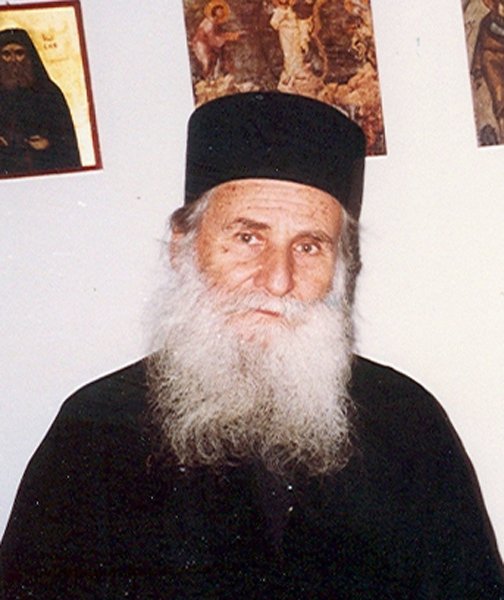
When I asked if he knew the words to the Akathist hymn to the Most Holy Theotokos – since it is common in Greece for many faithful and monastics to have this hymn memorized – Elder Isidoros the Blind of Philotheou monastery on Mt. Athos answered:

“No, I know Kyrie Isou Xriste eleison me (Lord Jesus Christ have mercy on me).”

I bowed my head and felt a little ashamed of my question. But impressed by his simplicity and natural humility, I marveled at his child likeness. He knew the most important prayer – supplication for God’s mercy while prophesying the Divine Incarnation of the Word of God in the person of Jesus Christ.

Learning that prayer well would be sufficient I believe.

“The goal of this all-virtuous work [namely, prayer] is to turn and keep the mind of man on God. For this purpose our Fathers devised easier methods and simplified the prayer, so that the mind might more easily and more firmly turn to and remain in God.

…Primarily for this reason they selected just a few words in a single, simple prayer, “Lord Jesus Christ, Son of God, have mercy on me”, so that the mind would not require a great effort in order to hold on to a long, protracted prayer.

…I repeat once again my exhortation to all who love God and their salvation not to put off trying this good labor and practice for the sake of the Grace and mercy which it holds out to as many as will strive a bit at this work. I say this to them for courage, that they don’t hesitate or become fainthearted due to the bit of resistance or weariness which they will encounter. Contemporary elders that we have known had many disciples living in the world, men and women, married and single, who not only arrived at the beginning state but rose to higher levels through the Grace and compassion of our Christ. “It is a trifle in the eyes of the Lord to make a poor man rich.” (Sir. 11:23) I think that in today’s chaos of such turmoil, denial and unbelief there exists no simpler and easier spiritual practice that is feasible for almost all people, with such a multitude of benefit and opportunity for success, than this small prayer.”
 (Prayer of the Heart for the Faithful Living in the World, written by Elder Joseph of Vatopaidi monastery, Mt. Athos)

Tuesday, June 16, 2015

Prayer of the Heart for the Faithful Living in the World ( Elder Joseph of Vatopaidi )


The question is always being asked, "Is it possible for those living in the world to occupy themselves with noetic prayer?" To those who ask we answer quite affirmatively, "Yes." In order to make this exhortation of ours comprehensible to those interested, but at the same time to make aware those who are unaware, we will briefly explain this, so that no one will be placed in a quandary by the various interpretations and definitions of noetic prayer that exist.

Generally speaking, prayer is the sole obligatory and indispensable occupation and virtue for all rational beings, both sentient and thinking, human and angelic. For this reason we are enjoined to the unceasing practice of the prayer .

Prayer is not divided dogmatically into types and methods but, according to our Fathers, every type and method of prayer is beneficial, as long as it is not of diabolic delusion and influence. The goal of this all-virtuous work is to turn and keep the mind of man on God. For this purpose our Fathers devised easier methods and simplified the prayer, so that the mind might more easily and more firmly turn to and remain in God. With the rest of the virtues other parts of man's body come into play and senses intervene, whereas in blessed prayer the mind alone is fully active; thus much effort is needed to incite the mind and to bridle it, in order that the prayer may become fruitful and acceptable. Our most holy Fathers, who loved God in the fullest, had as their chief study uniting with God and remaining continuously in Him; thus they turned all of their efforts to prayer as the most efficient means to this end.

There are other forms of prayer which are known and common to almost all Christians which we will not speak about now; rather we will limit ourselves to that which is called "noetic prayer", which we are always being asked about. It is a subject that engages the multitude of the faithful since next to nothing is known regarding it, and it is often misconstrued and described rather fantastically. The precise way of putting it into practice as well as the results of this deifying virtue, which leads from purification to sanctification, we will leave for the Fathers to tell. We paupers will only mention those things which are sufficient to clarify the matter and to convince our brethren living in the world that they need to occupy themselves with the prayer.

The Fathers call it noetic because it is done with the mind, the "nous", but they also call it "sober watchfulness" which means nearly the same thing. Our Fathers describe the mind as a free and inquiring being which does not tolerate confinement and is not persuaded by that which it can't conceive on its own. Primarily for this reason they selected just a few words in a single, simple prayer, "Lord Jesus Christ, Son of God, have mercy on me", so that the mind would not require a great effort in order to hold on to a long, protracted prayer. Secondly, they turned the mind within, to the center of our reason, where it resides motionless with the meaning of the divine invocation of the most sweet Name of our Lord Jesus, in order to experience as soon as possible the divine consolation. It is impossible, according to the Fathers, for our all-good Master, being thus called upon continuously, not to hear us, He Who desires so much the salvation of men.

Just as a natural virtue that is aspired to can only be achieved by the conducive means, so also this holy work requires some nearly indispensable rudiments: a degree of quiet; freedom from cares; avoidance of learning about and spreading the "news" of things going on, the "giving and taking" as the Fathers put it; self discipline in all things; and an overall silence which stems from these things. Moreover, I don't think this persistence and habit will be unattainable for devout people who take an interest in this holy activity. The good habit of a regular prayer time, morning and evening, always about the same time, would be a good beginning.

With surety we have emphasized perseverance as the most indispensable element in prayer. Rightly it is stressed by St. Paul, "Continue steadfastly in prayer."(Col. 4:2) In contrast to the rest of the virtues, prayer requires effort throughout our entire lifetime, and for this reason I repeat to those who are making the attempt not to feel encumbered, nor to consider the need for endurance as a failure in this sober-minded work.

In the beginning it is necessary to say the prayer in a whisper, or even louder when confronted by duress and inner resistance. When this good habit is achieved to the point that the prayer may be sustained and said with ease, then we can turn inwardly with complete outer silence. In the first part of the little book (Way of the Pilgrim) a good example is given of the initiation into the prayer. Sound persistence and effort, always with the same words of the prayer not being frequently altered, will give birth to a good habit. This will bring control of the mind, at which time the presence of Grace will be manifested.

Just as every virtue has a corresponding result, so also prayer has as a result the purification of the mind and enlightenment. It arrives at the highest and perfect good, union with God; that is to say, actual divinization (theosis). However, the Fathers also have this to say: that it lies with man to seek and strive to enter the way which leads to the city; and if by chance he doesn't arrive at the endpoint, not having kept pace for whatever reason, God will number him with those who finished. To make myself more clear, especially on the subject of prayer, I will explain how all of us Christians must strive in prayer, particularly in that which is called monological or noetic prayer. If one arrives at such prayer he will find much profit.

By the presence of the Jesus Prayer man is not given over to temptation which he is expecting, because its presence is sober watchfulness and its essence is prayer; therefore "the one who watches and prays does not enter into temptation." (cf. Matt. 26:41) Further, he is not given over to darkness of mind so as to become irrational and err in his judgments and decisions. He does not fall into indolence and negligence, which are the basis of many evils. Moreover, he is not overcome by passions and indulgences where he is weak, and particularly when the causes of sin are near at hand. On the contrary his zeal and devotion increase. He becomes eager for good works. He becomes meek and forgiving. He grows from day to day in his faith and love for Christ and this inflames him towards all the virtues. We have many examples in our own day of people, and particularly of young people, who with the good habit of doing the prayer have been saved from frightful dangers, from falls into great evils, or from symptoms leading toward spiritual death.

Consequently, the prayer is a duty for each one of the faithful, of every age, nationality, and status; without regard to place, time or manner. With the prayer divine Grace becomes active and provides solutions to problems and trials which trouble the faithful, so that, according to the Scriptures, "Everyone that calls on the Lord shall be saved." (Acts 2:21)

There is no danger of delusion, as is bandied about by a few unknowledgeable people, as long as the prayer is said in a simple and humble manner. It is of the utmost importance that when the prayer is being said no image at all be portrayed in the mind; neither of our Lord Christ in any form whatever, nor of the Lady Theotokos, nor of any other person or depiction. By means of the image the mind is scattered. Likewise, by means of images the entrance for thoughts and delusions is created. The mind should remain in the meaning of the words, and with much humility the person should await divine mercy. The chance imaginations, lights, or movements, as well as noises and disturbances are unacceptable as diabolic machinations towards obstruction and deception. The manner in which Grace is manifested to initiates is by spiritual joy, by quiet and joy-producing tears, or by a peaceful and awe-inspiring fear due to the remembrance of sins, thus leading to an increase of mourning and lamentation.

Gradually Grace becomes the sense of the love of Christ, at which time the roving about of the mind ceases completely and the heart becomes so warmed in the love of Christ that it thinks it can bear no more. Still at other times one thinks and desires to remain forever exactly as one finds oneself, not seeking to see or hear anything else. All of these things, as well as various other forms of aid and comfort, are found in the initial stages by as many as try to say and maintain the prayer, in as much as it depends on them and is possible. Up to this stage, which is so simple, I think that every soul that is baptized and lives in an Orthodox manner should be able to put this into practice and to stand in this spiritual delight and joy, having at the same time the divine protection and help in all its actions and activities.

I repeat once again my exhortation to all who love God and their salvation not to put off trying this good labor and practice for the sake of the Grace and mercy which it holds out to as many as will strive a bit at this work. I say this to them for courage, that they don't hesitate or become fainthearted due to the bit of resistance or weariness which they will encounter. Contemporary elders that we have known had many disciples living in the world, men and women, married and single, who not only arrived at the beginning state but rose to higher levels through the Grace and compassion of our Christ. "It is a trifle in the eyes of the Lord to make a poor man rich." (Sir. 11:23) I think that in today's chaos of such turmoil, denial and unbelief there exists no simpler and easier spiritual practice that is feasible for almost all people, with such a multitude of benefit and opportunity for success, than this small prayer.

Whenever one is seated, moving about, or working, and if need be even in bed, and generally wherever and however one finds oneself, one can say this little prayer which contains within itself faith, confession, invocation and hope. With such little labor and insignificant effort the universal command to "pray without ceasing" (1 Thes. 5:17) is fulfilled to perfection. To whatever word of our Fathers one might turn, or even in their wonderful lives, he will encounter hardly any other virtue given so much praise or applied with such zeal and persistence, so that it alone constitutes the most powerful means of our success in Christ. It is not our intention to sing the praises of this queen of virtues, or to describe it, because whatever we might say would instead rather diminish it. Our aim is to exhort and encourage every believer in the working of the prayer. Afterwards, each person will learn from his own experience what we have said so poorly.

Press forward you who are doubtful, you who are despondent, you who are distressed, you who are in ignorance, you of little faith, and you who are suffering trials of various kinds; forward to consolation and to the solution to your problems. Our sweet Jesus Christ, our Life, has proclaimed to us that "without Me you can do nothing." (Jn. 15:5) Thus behold that, calling upon Him continuously, we are never alone; and consequently "we can and will do all things through Him." (cf Phil. 4:13) Behold the correct meaning and application of the significant saying of the Scripture, "Call upon Me in your day of trouble and I will deliver you, and you shall glorify Me." (Ps. 49(50):15) Let us call upon His all-holy Name not only "in the day of trouble" but continuously; so that our minds may be enlightened, that we might not enter into temptation. If anyone desires to step even higher where all-holy Grace will draw him, he will pass through this beginning point, and will be "spoken to" regarding Him, when he arrives there.

As an epilogue to that which has been written we repeat our exhortation, or rather our encouragement, to all the faithful that it is possible and it is vital that they occupy themselves with the prayer, "Lord Jesus Christ, have mercy on me", the so-called "noetic prayer", with a sure faith that they will benefit greatly regardless of what level they may reach. The remembrance of death and a humble attitude, together with the other helpful things that we have mentioned, guarantee success through the grace of Christ, the invocation of Whom will be the aim of this virtuous occupation. Amen.


Elder Joseph of Vatopaidi (Spiritual Child of Elder Joseph the Hesychast)
 

source

Saturday, May 30, 2015

The Faithful Husband That Would Not Abandon His Unfaithful Wife ( Elder Joseph of Vatopaidi )


I will tell you of another characteristic of a proper spouse, which is extremely difficult to find in our day. But we did encounter one such person. He was in every way a perfect character, a Christian, and completely social. He married late, around thirty years old, not because he was averse to marriage, but because he thought that was how it should be. So he said his prayers with faith, and found himself a young girl and married her. The girl was young, ten years younger than him. Soon after he married her, she began her mischief. He pretended not to notice; he regarded her as his daughter and himself as her father. However, they had important business interests overseas and they had to go there, even if only temporarily. So he took her and they went abroad. When they arrived, she became very obstinate, and would say to herself: "He did this on purpose, to estrange me from my environment. I will desert him." So she abandoned and left him. She came back to Greece, and where do you think she went? To one of those "casino" places, and began to live the life of a free woman - one who is paid.

The husband however, from the day that she left him, never stopped praying with tears and insisting - in fact exhorting God: "All Good One, I will not retreat, I will not leave You alone; You were the One who gave me my wife. 'By the Lord is a man and woman harmonized' (according to the Bible). I want my wife. If the young girl has been deceived, must she be lost? Why did You come down to earth? Didn't You come to find the lost ones, to heal the sick, to resurrect the dead? I will not retreat. I will not let You rest. I want my wife; bring her back to me." He wept for two whole years.

His prayer was eventually heard and the young woman came to her senses. "Oh my," she confessed, "God will have to create another Hell, because this one is too small for me!"


So she sat down and wrote him a letter, saying: "I dare not address your name; I have no such right. If I return, will you accept me as your servant?"

He replied: "My love, why did you mention that word and hurt my feelings? Wasn't it me who sent you on a vacation and I was longing for my love to return to my open arms?"

So, he went and waited for her at the airport, as they had arranged. When she arrived, she fell down and began to beat herself and cry. He took her in his arms.

"My love, why are you like this and hurt my feelings? I was longing to see you again. Let's go home now; we never parted - I was always with you."

And this young girl proved herself to be a faithful wife from then on.

And that is the stance that a man - a husband - should take.


Elder Joseph of Vatopaidi

Friday, April 24, 2015

Blessed Elder Joseph of Vatopaidi: His 63 Year Monastic Life on Mount Athos in Pictures (1946-2009)


From the Cave of Saint Anne to the Monastery of Vatopaidi

These pictures are from the photographic archives of the Monastery of Vatopaidi which they have offered now to those who honor the Elder.

The Elder came to Mount Athos in 1946 from Cyprus to the Skete of Saint Anne to be with Elder Joseph the Hesychast. This photo was found in his passport.

This is the Church of the Sacred Forerunner John the Baptist belonging to the Brotherhood of the Elder Joseph the Hesychast and where Elder Joseph lived.

The Brotherhood of Elder Joseph the Hesychast. Behind the Elder Joseph the Hesychast's right shoulder is Elder Joseph. Noteworthy also is Elder Ephraim of Philotheou (now America) who is second from the far right of the seated Elder.

The cell of the Annunciation at New Skete where the Brotherhood lived until the death of Elder Joseph the Hesychast.

Elder Joseph at New Skete a few years after the passing of Elder Joseph the Hesychast.

This was taken in 1982 at the Sacred Monastery of Koutloumousiou where the Elder lived for a short time with his own Brotherhood. Depicted is Elder Paisios, Hieromonk Athanasios (now Metropolitan of Limassol) and he who is now Monk Niphon before entering the monastic life.

The cell of the Annunciation at New Skete as it was built for the needs of Elder Joseph's Brotherhood, until the year they left for the Sacred Monastery of Vatopaidi.

Below are a few photos from the Elders daily life at New Skete.


The donkeys of the Elder, whom he named Kitsos and Kastanis.

Fishing

In the Kitchen

Though he was the Elder of his Brotherhood, the Elder did not consider himself above everyone and worked just as hard as they did. Here he is shown resting from work.

With Papa-Haralambos at New Skete, who was then (1986) Abbot of the Monastery of Dionysiou.

The Elder in prayer on the grounds of the cell at New Skete.

The inside of Elder Joseph's cell at New Skete.

The Elder at his desk where he spent much time responding to letters and writing his books.

The Elder with the two hieromonks of his Brotherhood (in 1985) Athanasios (Metropolitan of Limassol) and Ephraim (Abbot of the Sacred Monastery of Vatopaidi).

The last photograph at New Skete on Pascha of 1987 before his departure for the Monastery of Vatopaidi.

The Elder deep in thought in the first years at Vatopaidi Monastery, wich were difficult years.

May of 1988. In front of the gate of Vatopaidi Monastery with Elder Ephraim Katounakioti and Elder Ephraim who was then Abbot of Philotheou (now in Arizona).

The first Pascha at Vatopaidi Monastery in 1989. The Elder looks astonished from when the visitors lit loud fireworks during the "Christ is Risen".

Cheesefare Sunday - March 1990. The installation of Elder Ephraim as Abbot of the Monastery of Vatopaidi.

Sunday of the Myrrhbearers - April 1990. Day of the enthronement of Abbot Ephraim. Visible in this photo also is Blessed Theoklitos Dionysatis.

After the enthronement refreshments were served in the synodikon of the Monastery. Visible also is the Governor of Mount Athos Mr. Loulis, the Archbishop of Athens Christodoulos (then Metropolitan of Dimitriados), the Abbot of Stavrovouniou Monastery in Cyprus, Abbot Ephraim and Elder Joseph.

September 1991. The visit to the Vatopaidi Monastery of Ecumenical Patriarch Dimitrios.

The cell in which the Elder lived at Vatopaidi and died.

One of the last photos of the Elder during Pascha 2009, his last Pascha.

"We believe in the resurrection of the dead." 


https://blogger.googleusercontent.com/img/b/R29vZ2xl/AVvXsEgp74QJkiISUG01O5ZGVmdBvRfDw6-NXcPwKIcsH9AoQhA-75REv8rWxZu33xIwC0xTnqZamY0UxW5o0CI1gq8od2IxNR3EOgRVQV3OfD4_j05BIDAbbmqhR_tW5ap0_ZdSAPSWDjLzeuvX/s1600-h/j30.bmp

Sunday, April 19, 2015

Marital Advice from Elder Joseph of Vatopaidi


Do Not Complain About Your Spouse

Now then, today I am forced to speak about this matter also; it is a somewhat daring endeavour, but necessity has caused me to bring up the subject, when every day I hear men say "my wife is like this, my wife is like that, all women are devils...".

So, I ask: "Excuse me dear fellow, but this woman you are referring to - weren't you the one that married her?"

"Yes."

"Well then, when you married her, didn't you find every love, tenderness and happiness in her person?"

"Yes."

"So, why have you changed now? She is the same person. Both when you married her, and now. Can you see that you are to blame?"

Looking at Marriage From an Eternal Perspective

I met an elderly couple some years ago, approximately in their eighties, who had so much bitterness between them that, if it were possible, they would kill each other. I felt sorry for them; I sat down next to them and began to search deeper and discovered that they had reached that point out of ignorance. They had no idea what Christianity was, or anything about ethics - nothing whatsoever. When I sat down to talk to them, I saw that they were quite receptive and they would pay attention to whatever I told them. Well, after trying to briefly show them that mankind has origins from God and has eternity, and that we will not be in this world forever, and that the conjugal relationship is not dissolved here but continues into eternity, they were both moved and they accepted all that they heard. I left them, and after some time, they sent me a letter in which they said: "Elder, it is as though we are reliving the first month of our marriage." This from those who were ready to kill and to slaughter each other. Can you see the evidence now?

The Faithful Husband That Did Not Abandon His Adulteress Wife

I will tell you of another characteristic of a proper spouse, which is extremely difficult to find in our day. But we did encounter one such person. He was in every way a perfect character, a Christian, and completely social. He married late, around thirty years old, not because he was averse to marriage, but because he thought that was how it should be. So he said his prayers with faith, and found himself a young girl and married her. The girl was young, ten years younger than him. Soon after he married her, she began her mischief. He pretended not to notice; he regarded her as his daughter and himself as her father. However, they had important business interests overseas and they had to go there, even if only temporarily. So he took her and they went abroad. When they arrived, she became very obstinate, and would say to herself: "He did this on purpose, to estrange me from my environment. I will desert him." So she abandoned and left him. She came back to Greece, and where do you think she went? To one of those "casino" places, and began to live the life of a free woman - one who is paid.

The husband however, from the day that she left him, never stopped praying with tears and insisting - in fact exhorting God: "All Good One, I will not retreat, I will not leave you alone; You were the One who gave me my wife. 'By the Lord is a man and woman harmonized' (according to the Bible). I want my wife. If the young girl has been deceived, must she be lost? Why did You come down to earth? Didn't You come to find the lost ones, to heal the sick, to resurrect the dead? I will not retreat. I will not let You rest. I want my wife; bring her back to me." He wept for two whole years.

His prayer was eventually heard and the young woman came to her senses. "Oh my," she confessed, "God will have to create another Hell, because this one is too small for me!"

So she sat down and wrote him a letter, saying: "I dare not address your name; I have no such right. If I return, will you accept me as your servant?"

He replied: "My love, why did you mention that word and hurt my feelings? Wasn't it me who sent you on a vacation and I was longing for my love to return to my open arms?"

So, he went and waited for her at the airport, as they had arranged. When she arrived, she fell down and began to beat herself and cry. He took her in his arms.

"My love, why are you like this and hurt my feelings? I was longing to see you again. Let's go home now; we never parted - I was always with you."

And this young girl proved herself to be a faithful wife from then on.

And that is the stance that a man - a husband - should take. If spouses are like these, then show me what woman is bad?


Elder Joseph of Vatopaidi 


http://agapienxristou.blogspot.ca/2013/05/marital-advice-from-elder-joseph-of.html

Saturday, April 18, 2015

The Faithful Husband That Would Not Abandon His Unfaithful Wife ( Elder Joseph of Vatopaidi )


I will tell you of another characteristic of a proper spouse, which is extremely difficult to find in our day. But we did encounter one such person. He was in every way a perfect character, a Christian, and completely social. He married late, around thirty years old, not because he was averse to marriage, but because he thought that was how it should be. So he said his prayers with faith, and found himself a young girl and married her. The girl was young, ten years younger than him. Soon after he married her, she began her mischief. He pretended not to notice; he regarded her as his daughter and himself as her father. However, they had important business interests overseas and they had to go there, even if only temporarily. So he took her and they went abroad. When they arrived, she became very obstinate, and would say to herself: "He did this on purpose, to estrange me from my environment. I will desert him." So she abandoned and left him. She came back to Greece, and where do you think she went? To one of those "casino" places, and began to live the life of a free woman - one who is paid.

The husband however, from the day that she left him, never stopped praying with tears and insisting - in fact exhorting God: "All Good One, I will not retreat, I will not leave You alone; You were the One who gave me my wife. 'By the Lord is a man and woman harmonized' (according to the Bible). I want my wife. If the young girl has been deceived, must she be lost? Why did You come down to earth? Didn't You come to find the lost ones, to heal the sick, to resurrect the dead? I will not retreat. I will not let You rest. I want my wife; bring her back to me." He wept for two whole years.

His prayer was eventually heard and the young woman came to her senses. "Oh my," she confessed, "God will have to create another Hell, because this one is too small for me!"


So she sat down and wrote him a letter, saying: "I dare not address your name; I have no such right. If I return, will you accept me as your servant?"

He replied: "My love, why did you mention that word and hurt my feelings? Wasn't it me who sent you on a vacation and I was longing for my love to return to my open arms?"

So, he went and waited for her at the airport, as they had arranged. When she arrived, she fell down and began to beat herself and cry. He took her in his arms.

"My love, why are you like this and hurt my feelings? I was longing to see you again. Let's go home now; we never parted - I was always with you."

And this young girl proved herself to be a faithful wife from then on.

And that is the stance that a man - a husband - should take.


Elder Joseph of Vatopaidi 


http://agapienxristou.blogspot.ca/2013/05/the-faithful-husband-that-would-not.html

Tuesday, February 24, 2015

Obedience ( Elder Joseph of Vatopaidi )


To my dearest A. and M., I send my fatherly prayers.

I have received both the letter and the goods, and we are most grateful to you, as is Fr Athanasios [now Metropolitan of Limassol], who received the phelonion. Let’s see who will get tired first, us from receiving, or you from sending.

You have clearly asked about the issue of obedience to the holy fathers and I say the following: no one on this earth is absolved of this duty of being obedient, no matter how high he stands or what his status is, even those in the Church hierarchy. Not even Paul was absolved of this duty by the fullness of grace which resided in him. We hear him say, ”Then after three years I went up to Jerusalem to see Peter, and remained with him fifteen days” . And he continues:”Then after fourteen years, I went up again to Jerusalem… by revelation, and communicated to them that gospel which I preach… lest by any means I might run, or had run, in vain” .

Here we find Paul, who was given not a command but an order on what to do and say, confessing and accepting advice. So, who is exempt from this duty? No one, no matter where he is, is acknowledged by Grace unless he accepts advice.

Moses says, ”Ask your father and he will relate to you; your elders, and they will tell you” . ”We see in part, we know in part, and we prophesy in part” , says Paul, and so perfection is seen as “in a mirror, dimly” . All this shows how deficient and weak man is. “We have this treasure in earthen vessels, that the excellence of the power may be of God and not of us”.

Here we see the moderation of our fathers manifested, who always regarded it their inviolable duty to “take counsel from one another”. This Grace of God has never been revealed to those who live by their own design and auspices rather than in obedience to elder spiritual fathers. “To the one that is alone, beware” ; and likewise “it is not good for man to be alone” . And again, “A cord of three strands is not quickly broken”, but “if a man falls alone, who will help him up? ”

The counsel for rational beings is to actually practice humility, without which nothing can be done…

I pray that the remainder of the days [of Great Lent] be peaceful and without hindrance and that you may receive the whole of grace on the great day of Pascha.

With all my love in Christ,

Your poor father,
Elder Joseph of Vatopaidi


http://agapienxristou.blogspot.ca/2013/09/obedience-elder-joseph-of-vatopaidi.html

Tuesday, February 17, 2015

Should a man send his wife away for reasons of adultery? ( Elder Joseph of Vatopaidi )


Words of the recently reposed Elder Joseph of the Vatopedion Monastery:

“….Now then, today I am forced to speak about this matter also; it is a somewhat daring endeavour, but necessity has caused me to bring up the subject, when every day I hear men say “my wife is like this….my wife is like that….all women are devils…”.

So, I ask: “Excuse me dear fellow, but this woman you are referring to – weren’t you the one that married her?”

“Yes….”

“Well then, when you married her, didn’t you find every love, tenderness and happiness in her person?”

“Yes…”

“So, why have you changed now? She is the same person. Both when you married her, and now. Can you see that you are to blame?”

I met an elderly couple some years ago – quite elderly, in their eighties – who had so much bitterness between them that, if it were possible, they would kill each other. I felt sorry for them; I sat down next to them and began to search deeper and discovered that they had reached that point out of ignorance. They had no idea what Christianity was, or anything about morality – nothing whatsoever. When I sat down to talk to them, I saw that they were quite receptive and they would pay attention to whatever I told them…. Well ! After trying to briefly show them that mankind is descended from God and that it has eternity inside it, and that we will not be in this world forever, and that conjugality is not dissolved here but continues into eternity, they were both moved and they accepted all that they heard. I left them, and after some time, they sent me a letter in which they said: “Dear Elder, it is as though we are reliving the first month of our marriage…..” Imagine that – those who were ready to kill, to slaughter each other…. Can you see the evidence now?

I will tell you of another character, of a proper husband; one that we rarely encounter in our day. But we did encounter one such person. He was in every way a perfect character – a Christian, and a completely social sort of person. He married late, almost thirty years old, not because he was averse to marriage, but because he thought that was how it should be. So he said his prayers with faith, and found himself a young girl and married her. The girl was young – ten years younger than him. Soon after he married her, she began to get into mischief. He pretended not to notice; he regarded her as his daughter and himself as her father. However, they had important business interests overseas and they had to go there, even if only temporarily. So he took her and they went abroad. When they arrived, she became very obstinate, and would say to herself: “He did this on purpose, to estrange me from my environment. I will desert him.” So she just up and left him. She came back to Greece, and where do you think she went? To one of those “casino” places, and began to live the life of a free woman – one who is paid…”

The husband however, from the day that she left him, never stopped praying with tears and insisting – in fact extorting God: “Benevolent One, I will not retreat, I will not leave you alone; You were the One who gave me my wife. “By God is a woman suited to a man” (according to the Bible). I want my wife. If the young girl has strayed, must she be lost? Why did You come down to earth? Didn’t You come to find the lost ones, to heal the sick, to resurrect the dead? I will not budge. I will not let You rest. I want my wife. Bring her back to me.” He wept for two whole years.

His prayer was eventually heard and the young woman came to her senses. “Oh dear,” she confessed, “God will have to create another Hell, because this one is too small for me!”

So she sat down and wrote him a letter, saying: “I dare not address you; I have no such right. If I return, will you accept me as your servant?”

He replied: “My love, why did you mention that word and hurt my feelings? Wasn’t it me who sent you on a vacation and was waiting for my love to return, to my wide open arms?”

So, he went and waited for her at the airport, as they had arranged. When she arrived, she fell down and began to beat herself and cry. He took her in his arms.

“My love, why are you doing this and hurting my feelings? I was longing to see you again. Let’s go home now; we never parted – I was always with you.”

That young girl turned out to be a faithful wife after this….

And that is the stance that a man – a husband – should take. If husbands are like that one, then show me what woman is bad?”


http://agapienxristou.blogspot.ca/2013/09/should-man-send-his-wife-away-for.html

Thursday, November 27, 2014

Prayer of the Heart for the Faithful Living in the World ( Elder Joseph of Vatopaidi )

The question is always being asked, "Is it possible for those living in the world to occupy themselves with noetic [1] prayer?" To those who ask we answer quite affirmatively, "Yes." In order to make this exhortation of ours comprehensible to those interested, but at the same time to make aware those who are unaware, we will briefly explain this, so that no one will be placed in a quandary by the various interpretations and definitions of noetic prayer that exist.

Generally speaking, prayer is the sole obligatory and indispensable occupation and virtue for all rational beings, both sentient and thinking, human and angelic. For this reason we are enjoined to the unceasing practice of the prayer [2].

Prayer is not divided dogmatically into types and methods but, according to our Fathers, every type and method of prayer is beneficial, as long as it is not of diabolic delusion and influence. The goal of this all-virtuous work is to turn and keep the mind of man on God. For this purpose our Fathers devised easier methods and simplified the prayer, so that the mind might more easily and more firmly turn to and remain in God. With the rest of the virtues other parts of man's body come into play and senses intervene, whereas in blessed prayer the mind alone is fully active; thus much effort is needed to incite the mind and to bridle it, in order that the prayer may become fruitful and acceptable. Our most holy Fathers, who loved God in the fullest, had as their chief study uniting with God and remaining continuously in Him; thus they turned all of their efforts to prayer as the most efficient means to this end.

There are other forms of prayer which are known and common to almost all Christians which we will not speak about now; rather we will limit ourselves to that which is called "noetic prayer", which we are always being asked about. It is a subject that engages the multitude of the faithful since next to nothing is known regarding it, and it is often misconstrued and described rather fantastically. The precise way of putting it into practice as well as the results of this deifying virtue, which leads from purification to sanctification, we will leave for the Fathers to tell. We paupers will only mention those things which are sufficient to clarify the matter and to convince our brethren living in the world that they need to occupy themselves with the prayer.

The Fathers call it noetic because it is done with the mind, the "nous", but they also call it "sober watchfulness" [3] which means nearly the same thing. Our Fathers describe the mind as a free and inquiring being which does not tolerate confinement and is not persuaded by that which it can't conceive on its own. Primarily for this reason they selected just a few words in a single, simple prayer, "Lord Jesus Christ, Son of God, have mercy on me", so that the mind would not require a great effort in order to hold on to a long, protracted prayer. Secondly, they turned the mind within, to the center of our reason, where it resides motionless with the meaning of the divine invocation of the most sweet Name of our Lord Jesus, in order to experience as soon as possible the divine consolation. It is impossible, according to the Fathers, for our all-good Master, being thus called upon continuously, not to hear us, He Who desires so much the salvation of men.

Just as a natural virtue that is aspired to can only be achieved by the conducive means, so also this holy work requires some nearly indispensable rudiments: a degree of quiet; freedom from cares; avoidance of learning about and spreading the "news" of things going on, the "giving and taking" as the Fathers put it; self discipline in all things; and an overall silence which stems from these things. Moreover, I don't think this persistence and habit will be unattainable for devout people who take an interest in this holy activity. The good habit of a regular prayer time, morning and evening, always about the same time, would be a good beginning.

With surety we have emphasized perseverance as the most indispensable element in prayer. Rightly it is stressed by St. Paul, "Continue steadfastly in prayer."(Col. 4:2) In contrast to the rest of the virtues, prayer requires effort throughout our entire lifetime, and for this reason I repeat to those who are making the attempt not to feel encumbered, nor to consider the need for endurance as a failure in this sober-minded work.

In the beginning it is necessary to say the prayer in a whisper, or even louder when confronted by duress and inner resistance. When this good habit is achieved to the point that the prayer may be sustained and said with ease, then we can turn inwardly with complete outer silence. In the first part of the little book (Way of the Pilgrim) a good example is given of the initiation into the prayer. Sound persistence and effort, always with the same words of the prayer not being frequently altered, will give birth to a good habit. This will bring control of the mind, at which time the presence of Grace will be manifested.

Just as every virtue has a corresponding result, so also prayer has as a result the purification of the mind and enlightenment. It arrives at the highest and perfect good, union with God; that is to say, actual divinization (theosis). However, the Fathers also have this to say: that it lies with man to seek and strive to enter the way which leads to the city; and if by chance he doesn't arrive at the endpoint, not having kept pace for whatever reason, God will number him with those who finished. To make myself more clear, especially on the subject of prayer, I will explain how all of us Christians must strive in prayer, particularly in that which is called monological [4] or noetic prayer. If one arrives at such prayer he will find much profit.

By the presence of the Jesus Prayer man is not given over to temptation which he is expecting, because its presence is sober watchfulness and its essence is prayer; therefore "the one who watches and prays does not enter into temptation." (cf. Matt. 26:41) Further, he is not given over to darkness of mind so as to become irrational and err in his judgments and decisions. He does not fall into indolence and negligence, which are the basis of many evils. Moreover, he is not overcome by passions and indulgences where he is weak, and particularly when the causes of sin are near at hand. On the contrary his zeal and devotion increase. He becomes eager for good works. He becomes meek and forgiving. He grows from day to day in his faith and love for Christ and this inflames him towards all the virtues. We have many examples in our own day of people, and particularly of young people, who with the good habit of doing the prayer have been saved from frightful dangers, from falls into great evils, or from symptoms leading toward spiritual death.

Consequently, the prayer is a duty for each one of the faithful, of every age, nationality, and status; without regard to place, time or manner. With the prayer divine Grace becomes active and provides solutions to problems and trials which trouble the faithful, so that, according to the Scriptures, "Everyone that calls on the Lord shall be saved." (Acts 2:21)

There is no danger of delusion, as is bandied about by a few unknowledgeable people, as long as the prayer is said in a simple and humble manner. It is of the utmost importance that when the prayer is being said no image at all be portrayed in the mind; neither of our Lord Christ in any form whatever, nor of the Lady Theotokos, nor of any other person or depiction. By means of the image the mind is scattered. Likewise, by means of images the entrance for thoughts and delusions is created. The mind should remain in the meaning of the words, and with much humility the person should await divine mercy. The chance imaginations, lights, or movements, as well as noises and disturbances are unacceptable as diabolic machinations towards obstruction and deception. The manner in which Grace is manifested to initiates is by spiritual joy, by quiet and joy-producing tears, or by a peaceful and awe-inspiring fear due to the remembrance of sins, thus leading to an increase of mourning and lamentation.

Gradually Grace becomes the sense of the love of Christ, at which time the roving about of the mind ceases completely and the heart becomes so warmed in the love of Christ that it thinks it can bear no more. Still at other times one thinks and desires to remain forever exactly as one finds oneself, not seeking to see or hear anything else. All of these things, as well as various other forms of aid and comfort, are found in the initial stages by as many as try to say and maintain the prayer, in as much as it depends on them and is possible. Up to this stage, which is so simple, I think that every soul that is baptized and lives in an Orthodox manner should be able to put this into practice and to stand in this spiritual delight and joy, having at the same time the divine protection and help in all its actions and activities.

I repeat once again my exhortation to all who love God and their salvation not to put off trying this good labor and practice for the sake of the Grace and mercy which it holds out to as many as will strive a bit at this work. I say this to them for courage, that they don't hesitate or become fainthearted due to the bit of resistance or weariness which they will encounter. Contemporary elders that we have known had many disciples living in the world, men and women, married and single, who not only arrived at the beginning state but rose to higher levels through the Grace and compassion of our Christ. "It is a trifle in the eyes of the Lord to make a poor man rich." (Sir. 11:23) I think that in today's chaos of such turmoil, denial and unbelief there exists no simpler and easier spiritual practice that is feasible for almost all people, with such a multitude of benefit and opportunity for success, than this small prayer.

Whenever one is seated, moving about, or working, and if need be even in bed, and generally wherever and however one finds oneself, one can say this little prayer which contains within itself faith, confession, invocation and hope. With such little labor and insignificant effort the universal command to "pray without ceasing" (1 Thes. 5:17) is fulfilled to perfection. To whatever word of our Fathers one might turn, or even in their wonderful lives, he will encounter hardly any other virtue given so much praise or applied with such zeal and persistence, so that it alone constitutes the most powerful means of our success in Christ. It is not our intention to sing the praises of this queen of virtues, or to describe it, because whatever we might say would instead rather diminish it. Our aim is to exhort and encourage every believer in the working of the prayer. Afterwards, each person will learn from his own experience what we have said so poorly.

Press forward you who are doubtful, you who are despondent, you who are distressed, you who are in ignorance, you of little faith, and you who are suffering trials of various kinds; forward to consolation and to the solution to your problems. Our sweet Jesus Christ, our Life, has proclaimed to us that "without Me you can do nothing." (Jn. 15:5) Thus behold that, calling upon Him continuously, we are never alone; and consequently "we can and will do all things through Him." (cf Phil. 4:13) Behold the correct meaning and application of the significant saying of the Scripture, "Call upon Me in your day of trouble and I will deliver you, and you shall glorify Me." (Ps. 49(50):15) Let us call upon His all-holy Name not only "in the day of trouble" but continuously; so that our minds may be enlightened, that we might not enter into temptation. If anyone desires to step even higher where all-holy Grace will draw him, he will pass through this beginning point, and will be "spoken to" [5] regarding Him, when he arrives there.

As an epilogue to that which has been written we repeat our exhortation, or rather our encouragement, to all the faithful that it is possible and it is vital that they occupy themselves with the prayer, "Lord Jesus Christ, have mercy on me", the so-called "noetic prayer", with a sure faith that they will benefit greatly regardless of what level they may reach. The remembrance of death and a humble attitude, together with the other helpful things that we have mentioned, guarantee success through the grace of Christ, the invocation of Whom will be the aim of this virtuous occupation. Amen.


by Elder Joseph of Vatopaidi (Spiritual Child of Elder Joseph the Hesychast)
 

source :http://orthodoxinfo.com/search.aspx?q=Jesus+Prayer