Which psalms should you memorize? Memorize the ones that strike your heart as you are reading them. Each person will find different psalms to be more effective for himself. Begin with Have mercy on me, O God (Psalm 50); then Bless the Lord, O my soul (Psalm 102); and Praise the Lord, O my Soul (Psalm 145).
These latter two are the antiphon hymns in the Liturgy. There are also the psalms in the Canon for Divine Communion: The Lord is my shepherd (Psalm 22); The earth is the Lord’s, and the fulness thereof (Psalm 23); I believed, wherefore I spake (Psalm 115); and the first psalm of the evening vigil, O God, be attentive unto helping me (Psalm 69). There are the psalms of the hours, and the like. Read the Psalter and select.
A Prayer Rule, by St. Theophan the Recluse
http://agapienxristou.blogspot.ca/2012/10/which-psalms-should-i-memorize.html
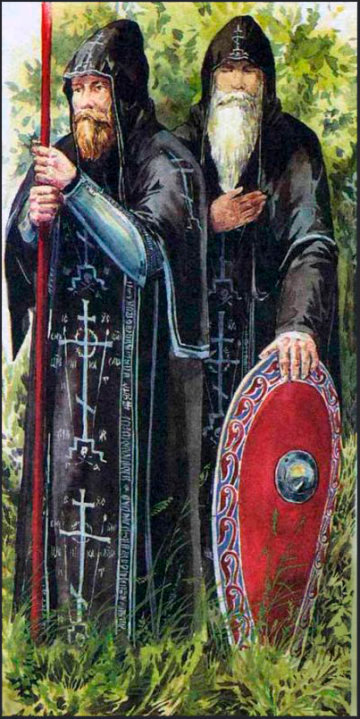
“…Timidity leads the soul into confusion and a certain unsteadiness, and a soul which is unstable can very easily fall. Yet self-satisfaction and conceit are the very enemies which one has to fight. Anybody who has let them in has fallen already, and is predisposed to further falls because they make a man inactive and negligent.
The warfare has begun. Guard your heart particularly, and do not let sinful impulses that arise reach your feelings. Meet each impulse as it enters your soul, and try to strike them all down. Be swift to establish firm convictions in your soul that are contrary to those to which your disturbing thoughts cling. These convictions will not only be your shield, they will also serve as arrows in your inner warfare. They not only defend your heart, but strike the heart of the enemy.
From this point on, the sin which arises will constantly be corrected by opposing thoughts and ideas. One must take care not to weaken or an instant, then victory will be sure, because the sinful impulse will have no firm support, but how long this will take will depend upon circumstances.”
St. Theophan the Recluse

Saint Hesychius give this advice on our struggle to overcome the passions:
One who is engaged in the spiritual struggle must have at every moment the following four things: humility, extreme attentiveness, refutation (of the thoughts) and prayer.

Humility, in so far as its adversaries in combat are the demons of pride, so that he will have at hand Christ's help in his heart, for ' the Lord resists the proud.' (James 4:6; 1Peter 5:5)

Attentiveness, so that one does not allow the heart to have any thought, no matter how good it seems.

Denial, so that as soon as one has detected a thought that has come, he may repulse it immediately with anger.

Prayer, so that after refuting a thought, one may immediately cry out to Christ with 'groanings which cannot be uttered' (Romans 8:26) Then the ascetic will see the enemy bound or chased by the honorable name of Jesus, like dust by the wind, or like smoke that vanishes with it's dreams. Saint Hesychius adds the following on the importance of prayer,
One who does not have prayer that is free from the thoughts is without a weapon for battle. I understand prayer to be that which is carried unceasingly within the depths of the soul, so that the enemy who is secretly fighting may be vanquished and scorched by this invocation to Christ. For you must look with the sharply focused eye of the mind so that you will recognize what has entered into it, and after doing so, immediately cut off the head of the snake through refutation, and at the same time call on Christ with groaning. Through experience you will come to know God's invisible help; then you will see clearly the true condition of the heart.
Saint Theophan advises in his commentary on the teaching of Saint Hesychius,
A person whose decision to belong to the Lord is sincere cannot by-pass the path described. He may preform great labors and get around things in various ways, but until he comes upon this path, it is to no purpose. I am pointing you directly to the path so that you do not wander all over the place. Be more diligent in your undertaking, and you will find success. However, you must labor with all your might, because without labor there will be nothing.
Reference: The Spiritual LIfe, pp 249-253
http://agapienxristou.blogspot.ca/2013/07/the-4-key-necessities-for-spiritual.html

Many people who call themselves Christians say that it is through faith alone that you will be saved. This is a dangerous error. Salvation requires that we receive the Holy Spirit.
Saint Theophan comments,
"Believe, believe, and the Holy Spirit will come." This is the biggest lie. Faith is indeed an indispensable condition for receiving the Holy Spirit, but the very receiving of the gift comes about not from faith alone, but from faith through the Divinely-established Mysteries. This is how it was even in Apostolic times.Our current culture is misled by our dependence on rational thought which leads us to accept the idea that we only need to believe and we can be saved. This is an intellectual deception. We cannot intellectually think of God and then expect to receive the Holy Spirit which is His saving grace. This Spirt only comes with the Sacraments of His Church.
Saint Theophan makes this point through the story of Paul in Ephesus. When he came to Ephesus Paul encountered several believers and asked them if they had received the Holy Spirit. They answered that they had not even heard of the Holy Spirit. They had been baptized with the baptism of John the Forerunner. Saint Paul then baptized them with the baptism of Christ and after that he laid his hands on them and they were filled with the Holy Spirit. The baptism they had received earlier was only a renewal and a preparation for receiving the saving Holy Spirit. The Holy Spirit came through the laying on of Hands. Later the Apostles introduced Holy Chrism (a holy oil) to be used instead of the laying on of hands. Today in the Orthodox Church one is received into the Body of Christ though baptism and the sacrament of Chrismation where one receives the Holy Spirit. This sacramental act is essential.
Many Christian churches in this country do not have this sacrament. They preach the idea of faith alone. They require a confession of faith and then baptize in water, an act which is often seen as merely symbolic of their commitment to Christ. Those who follow this direction are grossly misled and never receive the Holy Spirit which they must have for union with God.
Now once you have this gift that comes through the sacrament of Chrismation, you need to nurture it so its presence and action will grow within you. If you fail to do so it will remain latent or hidden. If ignored, eventually it will become inactive. Then it is difficult to resurrect it. This is why we have the other sacraments of Holy Confession and Holy Communion to help us maintain the active work of the Holy Spirit which comes to us through these sacraments. Of course we have faith, but we also receive the Holy Spirit through Chrismation and continually renew its presence through the other sacraments. It also why we are continually engaging in ascetic efforts to purify our heart so that the "fire" of the Holy Spirit will be fanned and be allowed to act through all our bodily actions. In this way we can become virtuous and follow the Commandments of God. This is the Way to union with God and salvation.
Reference: The Spiritual Life, p 282
You write that you prayed fervently and at once you were calmed, receiving an inner assurance that you would be released from oppression; and then, indeed, it was so....
Recall how you prayed and always strive to pray this way, so that prayer comes from the heart and is not just thought by the mind and chattered by the tongue.
I won't conceal the fact that, though once you prayed from the heart, it is hardly possible to pray that way constantly. Such prayer is given by God or is inspired by your Guardian Angel. It comes and goes. It does not follow, though, that we should give up the labor of prayer.
Prayer of the heart comes when one makes an effort; to those who do not strive, it will not come. We see that the Holy Fathers made extraordinary efforts in prayer, and by their struggles they kindled the warm spirit of prayer. How they came to this prayerful state is illustrated in the writings they have left us.
Everything they say about striving in prayer makes up the science of prayer, which is the science of sciences. The time will come when we will study this art [see the classic work The Art of Prayer (Faber & Faber)—webmaster]. But now, since it came up in our correspondence, I touch on it only in passing.
Let me add: There is nothing more important than prayer; therefore, our greatest attention and most diligent attention must attend it. Grant us, O Lord, zeal for such an effort!
St. Theophan the Recluse On Prayer
From the Letters of Bishop Theophan the Recluse
The Art and Science of Prayer (from Letter 15)

A hard heart is one that does not fully recognize our true condition and the danger we are in. The best way to begin change this condition is to remember our eventual fate. Saint Theophan give the following advice:
Say to yourself 'Alas, so will come death.' Another man you know dies; any time it could be your hour. Do not estrange yourself from this hour of death. Convince yourself that the angel of death has already been sent; he is coming, and draws near. Or imagine yourself to be a person who stands with a sword drown over his head , ready to cut it off. Then imagine clearly what will happen at the time of death or after words. James tells us: The judge standeth before the door (James 5:9) At this moment yo will be faced alone with all your sins. There is a choice you are making. It is one between eternal life in paradise or hell. One promises blessedness and the other torment. Will you know God and be accepted or not know Him and be rejected? Theophan says, "Feel all this vividly and force yourself to remain in it until you are filled with fear ind trembling."
Next, he suggest that you turn to God and place yourself before Him. Imagine you sinful nature standing before God and wonder if your presence will be offensive. Will you be able to face Him or will you turn your back on Him?
Next, he suggest that you ascend in thought to Golgotha and crucify yourself. Think about all you have been given as a Christian: redeemed by His blood, cleansed by the Baptismal water, you have been given the gift of the Holy Spirit, you have taken the Blood and Body of Christ at His table,. Imagine being on Golgatha. Will you be one who crucifies Him. Will you repent like the thief? Saint Theophan says. "Choose one or the other: either crucify Him, then perish eternally––or crucify yourself, and inherit eternal life with Him."
Next, he asks you to consider the sin that you hang on to and abhor it and reject it. realize that it is your sinfulness that separates you from God. Saint Theophan says, "It separates you from God, wreaks havoc on your soul and body, torments your conscience, brings upon you God's punishment in life and at death; and after death it sends you to hell, closing paradise to you forever."
Finally, he asks you to look at sin from the devil's point of view. Do you realize that when yo sin you are working for the devil who has done nothing for you? He befriends you through sin and entices you by promising sweetness and then he torments and tortures. Like eve in the Garden of Eden he will try to convince you that your sins are nothing. He is filled with glee when anyone falls in his traps of sin.
"When you will thus press into your heart one after another contrition-producing and softening feelings––little by little your heart will warm up and begin to move, and after it your enfeebled will will begin to strain itself and spring into action. As volts of electricity communicate certain tension and stimulation to the body, or as the cool, clean morning air communicates freshness and energy, so does this feeling that fills the soul awaken slumbering energy and renew the call and willingness to escape your dangerous condition. these will be the beginnings of your active care for you own salvation..."
Ref: Path to Salvation pp 137-139

When you begin to establish a routine prayer life, the words are important. To start we recite prayers from a prayer book and say them verbally. " But this is only the beginning of prayer," says St. Theophan. He sues the analogy of learning a language where we first learn the words and forms of the language from books but we don't stop at this point. We move on to converse freely in the language. the same is true in prayer.
We become accustomed to reading our prayers from books - using the prayer passed down to us by Our Lord, and by the Holy Fathers who had achieved the art of prayer. But we must not stop at this. It is necessary to extend ourselves further. Once we have become accustomed to turn our ears and hearts to God using this help given by others, we should then also attempt to bring something of our won to Him, so to speak; to pass on into our own prayerful conversation with God; to raise ourselves toward Him; to open ourselves to Him; to confess to Him the contents and needs of our souls.
He says prayer "should be an unceasing offering of oneself to Him."
To achieve this, it is necessary to begin - as often as possible during the day - by calling out to God from the heart in short words, according to one's needs and in ways appropriate to the events around you.
St. Theophan the Recluse

Developing the will involves training it to be oriented to the virtues––humility, meekness, patience, continence, submissiveness, helpfulness and others. This activity is primarily directed against self-will.
Saint Theophan says,
"This infirmity is healed by submission to the will of God, with denial of your own and of any other."
This includes the following:
1. Obedience to God's commandments according to each person's duty or calling.
2. Submission to the whole church rubrics or rule
3. Submission to civil order, or to family duty, for they are conduits of God's will.
4. Obeying to God's will as manifested in your fate.
5. Subjecting yourself to the spirit that is zealous to fulfill its vows.
The challenge is to determine what is possible for you to do. It is important to do everything with discernment. Each day go over all the possible opportunities and the deeds done.
Saint Theophan says,
"Those who are used to doing righteous deeds never pre-determine what they are going to do, but do always what God sends them, for everything comes from God. He reveals His own determinations to us through different occurrences... Do everything with humility and fear of God according to God's will and to His glory."
His next point is an important one. The spirit with which we do good deeds is most important.
"He who does something out of self-reliance, with boldness and audacity, out of self-gratification or man-pleasing, no matter how righteous the works may be, only fosters within himself an evil spirit of self-righteiousness, arrogance and pharisaism."
To often we find ourselves caught up in our self-directed works. We may attend a charity ball, tournament, or dinner, or serve at a soup kitchen thinking we are dong good, when in fact we are acquiescing to social norms or pressures, acting out of a human-pleasing duty, seeking recognition or simply engaging in personal pleasure.
Begin with the small acts and to ascend to what is higher, he says. "It is good to choose one outstanding virtuous work according to your character and station, and stick with it unswervingly... Everything should be done in moderation... The most reliable of all is almsgiving..."
Ref: Path to Salvation, p 250-255
http://orthodoxwayoflife.blogspot.ca/2010/02/spiritual-exercises-for-will.html

Perhaps the most popular and basic definition of prayer is that it is a conversation with God. While this is essentially true, Orthodox Christianity looks upon prayer as something deeper than "conversation".
Prayer is understood as an intimate encounter with God. When we pray, we meet with God in our hearts, in the sanctuary of all our thoughts, motivations, dreams, emotions and concerns. This is a place where we can share our inner selves with no other human person as completely as we can share ourselves with the Lord.
To enter into this very personal and intimate place with God, full of faith and love, is to feel His presence in our lives in the most profound and life-giving of ways. In this place in our hearts, we no longer perceive God as being "out there", looking down on us. Rather, we sense His presence inside us, stirring our hearts, guiding our actions, enlightening our minds.
Our Orthodox Christian Faith teaches us that prayer is the most natural thing a person can do, it is what we are created for. In Paradise Adam and God converse frequently. It is only after the Fall that we hide from God and choose not to speak openly with Him.
Human beings were made for prayer, not because God needs us to pray to Him, but because we need to connect with Him who made us, saved us from sin and death, and showers His sanctifying grace upon us. Without prayer there is no life, not in its fullest sense. As human persons we are created for prayer just as we are created to breath or to think. Prayer is part of our unique nature; of all God's creatures, only human beings are able to perceive and interact with both the visible (physical) and invisible (spiritual) realities.
Prayer is so important in our lives that St. Gregory of Nazianzus instructs us to, "remember God more often that you breath". At first, this task might seem daunting, perhaps impossible. In truth, we find that often the greatest obstacle to our developing prayer life is our own lack of trust in ourselves, and in what God can do for and with us.
Often we "psych" ourselves out when it comes to prayer. We think that it is only for the spiritual "specialists" to engage in prayer -- clergy, monks, nuns. We feel that if we need to struggle with our prayer life we must not be "doing it right". In truth, it is only when we struggle with prayer that we are approaching it in a healthy way.
But even though prayer is -- or at least should be -- a natural part in our human make-up, prayer is a discipline, it is a spiritual exercise. An analogy commonly used by the Saints is that prayer is like a fire. Initially, it starts out only as a small spark in our soul; eventually though, if we fan the flames with a constant effort to pray, this spark grows into a spiritual flames — these flames are the burning bush in our souls, where we, like Moses, speak with God.
To feed the fire of prayer in our soul, we must work ourselves into a regular pattern — or "rule" — of prayer. Like a fire, if our prayer life is left untended, it will die away and turn cold. The more we pray, the more meaningful and nourishing our prayer life becomes, and the more of a desire we have to enter into prayer.
The ways that we pray
In Orthodox spirituality, we recognize two basic types of prayer: liturgical (that is, worship); and personal prayer. In our Church both of these types of prayer are understood as corporate acts -- they are carried out by believers as a single body, the body of Christ.
Liturgical prayer is obviously corporate. A group of brothers and sisters in the faith gather together in one place to offer hymns and prayers to God. However, even when we pray in private, we do not pray alone. Rather, we join our voices to the countless other Orthodox Christians throughout the world who are also lifting their hearts to God in prayer at that time. Christianity is always lived out as a group, never as an isolated individual.
Liturgy and private prayer are interdependent. It is not enough for us only to pray by ourselves, because every human being has an innate need for community, a need to belong. Our liturgical worship also gives us the order and structure that we need to have stability in our spiritual lives.
At the same time, our liturgical prayer is truly vibrant and life-giving only when those present are "people of prayer" outside the services as well. Our faith is not "Sunday-only" and our prayer life shouldn't be Sunday-only either. Each type of prayer, liturgical and personal, compliments and supplements the other.
In both worship and personal prayer, structure is important. Worship services have a set structure of fixed and variable parts. Although our private prayer can be much more simple and "customized" than worship services, we still structure it as part of our daily lives. In our personal prayer life, we need to develop a habit of praying regularly at certain times during the day. This habit of regular prayer is called a "rule of prayer."
Ancient Christian sources instruct Christians to pray three times a day: in the morning, at mid-day and in the evening. In this way we keep God on our minds and hearts throughout the day -- upon waking up, in the midst of our daily tasks and upon retiring for the night. This regularity is very important because, at its core, a life or prayer is a life lived in the constant remembrance of God.
The Saints teach us that our prayers should include the following four elements, in this order:
1 & 2) glorification and thanksgiving: the primary work of prayer is to glorify God and thank Him for His great blessings, both know and unknown;
3) confession of sins: we ask God for His forgiveness for when we fall short of the life that He calls us to;
4) supplication: we ask God to be merciful and grant our petitions for others and for ourselves
This structure helps us remember that God’s blessing are giving to us not because owe have earned them, but in spite of our imperfections and faults. It also helps us avoid looking upon God as a spiritual "bell boy" who is there merely to answer our requests -- the last thing we do is ask for things, not the first.
Prayers do not have to be long or complicated to be effective. Some of the most powerful prayers in history have been sentences of only a few words. The Thief on the Cross merely had to say, "Remember me, Lord, in Your Kingdom", to hear Jesus' promise, "today you shall be with me in Paradise."
When trying to develop a habit of daily prayer in your life remember this: it is far better to spend five minutes each day in private devotions, than to "bank" the time and take in 35 minutes of personal prayer once per week.
Should we pray from books, or use our own words?
Many believers have developed a great love for the prayers found in our prayer books. In our prayer books we find collections of prayers, written at different times in history for different situations, times of day and needs.
In the Orthodox Church, one of the most beloved prayer books is the Old testament Book of Psalms. The Psalms offer us a way of framing life's varying experiences -- good and bad -- in prayer using very poetic and profound language. So important is the Book of Psalms that you will find the Psalms used in every worship service and rule of prayer.
Written prayers can be a font of wisdom and comfort. There are those, however, that do not feel that written prayers completely fit their personal "voice". For these people, spontaneous prayer is an important part of their personal devotions. There is nothing wrong with spontaneous prayer. The only caution with spontaneous prayer is that the content of such prayers must not contradict the beliefs and practices of the Orthodox Faith. For example, we would not pray that, after we die, God would reincarnate us as a better person, since we do not believe in reincarnation.
The Orthodox Christian approach to written and spontaneous prayers is one of balance. Our written prayers are truly a treasury of Christian spiritual insight, nurture and guidance. But at the same time even our prayer books instruct us to "take time to pray to God in your own words..." There is a place for both types of prayer, written and spontaneous, and each complements the other.
In the Gospels, Jesus gives the following warning about prayer: "when you pray, do not use vain repetitions as the heathen do. For they think that they will be heard for their many words. (Matthew 6:7)" Based on this verse, some Christian groups teach that God is not pleased by written prayers; instead, they say, all prayer should be spontaneous. This teaching, however, does not make sense when we see that two verses later, Jesus gives His disciples a specific prayer to use: "In this manner, therefore, pray: Our Father Who art in heaven... (Matthew 6:9-113)."
The issue that Jesus addresses is not written prayer versus spontaneous prayer, but rather the how we approach prayer. In Matthew 6, Jesus also teaches us, "when you pray, go into your room, and when you have shut your door, pray to your Father who is in the secret place; and your Father who sees in secret will reward you open." The Saints teach us that there is a double meaning to the words, "go into your room."
First, "go into your room" means keep a low profile when you pray. Do not use prayer to show off to others: "Look at me, everyone! I'm praying! I am *SO* holy!"
Second, "go into your room" means shut out distractions when you pray. We have to pay attention when we pray. We cannot simply rattle off the words of our prayers with our minds wandering to other things -- our schedules, a song on the radio, a conversation happening beside us, the big play of last night's game. We must focus on what we are saying.
Whether we are praying using words from a prayer book or in our own words, the key is that we put in the effort to do it right. No one likes the feeling of being in a conversation, knowing that the other person is not paying attention. If we would try not to act like this with another human being, then we should also put the effort in with God. Quite simply, He deserves nothing less.
The Jesus Prayer
One of the most important prayers in the Orthodox Tradition is the "Jesus Prayer." It is not long or complicated, simply, "Lord Jesus Christ, Son of God, have mercy on me, a sinner." Some make it even shorter: "Lord, Jesus Christ, have mercy one me."
The Jesus Prayer became famous in monasteries through the movement known as "hesychasm", or the way of "stillness." The idea of hesychasm is that it is only when we have stilled our hearts and bodies that we can be fully open to the life-giving presence of God. The body must be stilled from its obsessions, compulsions and addictions and the heart must be stilled of it's wandering here and there looking for something to keep it occupied, entertained and satisfied.
The Jesus Prayer is used as the refrain of a prayerful meditation. Through continued use, practitioners find themselves saying it automatically, much in the same way that we sometimes find a tune running through our minds without our conscious effort. At its highest level, practice of the Jesus Prayer leads to an intimate encounter with God through a vision of what is know as the "Uncreated Light."
The Gospels tell us that, shortly before His Crucifixion, Jesus took the apostles Peter, James and John to the top of Mount Tabor. There, they saw Jesus garments go pure white, and He began to shine with a resplendent light that was almost too much for the to bear. (See Mttw. 17:1-9; Mk.9:2-13; Lk. 9:28-36) This light was a manifestation of Jesus' Divinity. This is the light that vary advanced practitioners of the Jesus Prayer will encounter when saying the prayer.
This sounds very impressive and perhaps even desirable. However, it is not what we experience -- or what we do not experience -- that matters when say the Jesus Prayer or any other prayer. What really matters is that we pray with an awareness of what our words really mean, and that we try to stay as attentive as possible to the words we are saying while we pray.
The most important part in the Jesus Prayer is the name of our Savior. The Saints teach that the very mention of name of Jesus sends the demons running. Jesus Christ is God speaking for Himself. God is not far off and remote from us. God loves us so much that He came to be one of us, through His only-begotten Son, and He allows us to relate to His Son on a first-name basis, calling Him "Jesus".
Repetition of the name of Jesus Christ, the Son of God, is a very powerful tool in our spiritual life. It allows us to approach God in a very direct manner. We do not simply say, "Somebody, who ever is out there, hear my prayer." We specifically say, "Lord, Jesus Christ, Son of God", hear my prayer. By the way, the name "Jesus" means, "the Lord is salvation."
As we call on the name of Jesus, we call upon Him as "Lord" -- "Lord, Jesus Christ..." "Lord" is a title of honor. In times past, someone who was a lord had authority over people under him. To call Jesus our Lord is to put ourselves under His authority. Jesus is the Lord of our lives... we will follow His teachings, do what He wants us to do, base our lives on the way of living that He has showed us. In short, if Jesus is the Lord, Jesus is in charge.
Also important in the Jesus Prayer is the call for God's mercy. Admitting that we are broken, sinful, we pray words found so often in the Gospels, "have mercy on me". No one is "worthy" of God's grace; there are no "necessary requirements" that makes us "entitled" to God's blessings. The blessings we receive from God are solely based on His great and abundant mercy. Divine mercy is the starting point our whole life. If God were not merciful, we wouldn't even exist.
The Jesus Prayer became so important, so loved, that it eventually made it's way into every worship service in a couple of different forms. The best know of these forms is the response, "Lord, have mercy" in our litanies. "Lord, have mercy," is a compact form of the Jesus Prayer.
Whether we are singing it in worship or saying it quietly in personal prayer, the Jesus Prayer is a jewel of our spiritual tradition. I said in an earlier posting that prayers don't necessarily have to be long to be effective. Say the words of the Jesus Prayer, with awareness, attention and a sincere heart -- say them often -- and we will find God acting in our lives like we never have before.
Prayer as Silence
God is always trying to get our attention. He wants us to turn to Him, to listen to Him, to open ourselves to a relationship with Him. God does not force Himself on us, but He is always making ovations towards us, waiting for us to respond with loving attentiveness towards Him. If we pay attention, if we listen, we will hear God speaking to us in our lives. Prayer is as much about listening to God as it is speaking to Him. In fact, the listening is even more important than the talking.
One way that we listen to God in our prayers is through the reading of the Holy Scriptures and other of our Church's spiritual writings. In our private devotions, we can select a passage, read it, and then take some time to think about what we have read. As we think about the passage, we try to be aware of specific sentences, phrases or words that grab our attention. Some people will write down their observations in a journal for future discussion with their spiritual father.
The second means of listening to God in prayer is through silence. Silence is something that many of us are not comfortable with. We fill our days with the noise of iPods, TV, radios. For some people, the time that they dread most are the moments at night before they go to sleep, when all they are left with is silence and their thoughts. And yet, God often talks to us, not in thunder claps and lightening flashes, but in the still small voice whispering in our heart. (for more on this, see 1 Kings 19:11-13)
The Saints instruct us that as we say our prayers, we should take time to stop and sit quietly, just being present with God. The monastic fathers and mothers of our Church say that prayer is like a flying bird. When a bird is in the air, it beats its wings until it has reached a certain height; at that point, it stops beating its wings and glides along. The words of our prayers are our spiritual wings. There will come a point while praying where words are no longer necessary, we can stop talking and glide in silence, allowing God's presence keep us aloft.
Prayer is a conversation. It is a two-way dynamic. As we all know, its hard to say we have had a "conversation" with someone, if one party has monopolized the time, without giving the other party the chance to offer any input. In order for prayer to be truly beneficial to us, in addition to talking to God we also need to listen to what He has to say to us.
A Call to Prayer
Sometimes we think that if our spiritual life isn't "feeling right," that our prayers are some way not working. Regardless of how we feel, any time is an appropriate time for us to pray. We start from where we are, emotionally and spiritually. We approach God as we are, trusting that He is ready, willing and able to overlook our faults, doubts and wounds and to lift us above them.
At the same time, we must take care never to assume that we are doing "good enough" in our lives, and that we may excuse ourselves from prayer. Christ did not call us to being "good enough"; He called us to be perfect. The struggle for that perfection is a life-long endeavor. Furthermore, it is an endeavor that we cannot achieve ourselves, it can be accomplished only with, and through God — the God that we encounter intimately through prayer.
In the Divine Liturgy, we hear the invitations "Let us lift up our hearts", and "Let us give thanks to the Lord". These two calls sum up the center of human existence. When we lift up our hearts to God, glorifying Hi for all that He does for us -- both known and unknown. And in doing so, the image of God -- who is the maker, savior and sanctifier of our lives -- shines within us, and through us into the world.
"Prayer is the test of everything; prayer is also the source of everything; prayer is the driving force of everything; prayer is also the director of everything. If prayer is right, everything is right. For prayer will not allow anything to go wrong." — St. Theophan the Recluse
http://agapienxristou.blogspot.ca/2012/10/prayer-is-test-of-everything.html


