
- A dream is a movement of the mind while the body is at rest. A phantasy is an illusion of the eyes when the intellect is asleep. A phantasy is an ecstasy of the mind when the body is awake. A phantasy is the appearance of something which does not exist in reality.
- The reason why we have decided to speak about dreams here is obvious. When we leave our home and relatives for the Lord’s sake, and sell ourselves into exile for the love of God, then the devils try to disturb us with dreams, representing to us that our relatives are either grieving or dying, or are captive for our sake and destitute. But he who believes in dreams is like a person running after his own shadow and trying to catch it.
- The demons of vainglory prophesy in dreams. Being unscrupulous, they guess the future and foretell it to us. When these visions come true, we are amazed; and we are indeed elated with the thought that we are already near to the gift of foreknowledge. A demon is often a prophet to those who believe him, but he is always a liar to those who despise him. Being a spirit he sees what is happening in the lower air, and noticing that someone is dying, he foretells it to the more credulous types of people through dreams. But the demons know nothing about the future from foreknowledge. For if they did, then the sorcerers would also have been able to foretell our death.
- Devils often transform themselves into angels of light and take the form of martyrs, and make it appear to us during sleep that we are in communication with them. Then, when we wake up, they plunge us into unholy joy and conceit. But you can detect their deceit by this very fact. For angels reveal torments, judgments and separations; and when we wake up we find that we are trembling and sad. As soon as we begin to believe the devils in dreams, then they make sport of us when we are awake, too. He who believes in dreams is completely inexperienced. But he who distrusts all dreams is a wise man. Only believe dreams that foretell torments and judgment for you. But if despair afflicts you, then such dreams are also from devils.
From The Ladder of Divine Ascent, Step 3; Translated by Lazarus Moore (1959).

Δυο Πανορθόδοξες Συνδιασκέψεις έχουν χαρακτηρίσει ως ΜΑΓΙΚΕΣ τις μεθόδους των λεγομένων εναλλακτικών θεραπειών. Ο Άγιος Νικόδημος προειδοποιεί όσους καταφεύγουν σε αυτές...
Μόνο ο Θεός θεραπεύει αληθινά
Όσιος Νικόδημος ο Αγιορείτης
Ανόητε άνθρωπε, καταφεύγεις στους μάγους για να γιατρευτείς; Και πιστεύεις, πώς ο διάβολος θα γιατρέψει πραγματικά την αρρώστια σου; Εκείνος "ανθρωποκτόνος ήν απ αρχής" (Ιω. 8:44), και θανάτωσε όλο το γένος των ανθρώπων. Πώς τώρα θα γίνει γιατρός σου; Δεν είδες, που οι δαίμονες δεν μπόρεσαν να γιατρέψουν ούτε τους δικούς τους μάγους από τις πληγές που τους προξένησε ο Μωυσής στην Αίγυπτο; (Εξόδ. 9:11). Και τώρα θα κάνουν καλά εσένα; Και αν οι δαίμονες δεν λυπούνται την ψυχή σου, πώς θα λυπηθούν το σώμα σου; Αστεία πράγματα! Γιατί δεν υπάρχει τίποτα γλυκύτερο για το διάβολο από το να τυραννάει τον άνθρωπο με κάθε τρόπο. Ευκολότερο είναι να δώσει κρύο η φωτιά και φλόγα το χιόνι, παρά να γιατρέψει ο διάβολος πραγματικά. Ούτε μπορεί ούτε θέλει ούτε ξέρει πώς να γιατρεύει. Αλλά κι αν υποτεθεί ότι και μπορεί και θέλει και ξέρει, όμως αν δεν του επιτρέψει ο Θεός, από μόνος του δεν μπορεί να κάνει τίποτα.
Πίστεψε λοιπόν, αδελφέ, ότι μόνο ο Θεός είναι ο αληθινός γιατρός ψυχών και σωμάτων. Οι μάγοι και οι δαίμονες γιατρεύουν όχι στ αλήθεια αλλά φανταστικά. Μα κι αν θελήσουν να γιατρέψουν το σώμα σου με παραχώρηση του Θεού, να ξέρεις ότι το γιατρεύουν με σκοπό να θανατώσουν την ψυχή σου. Πώς; Τραβώντας σε από την πίστη του Χριστού και πείθοντάς σε να πιστεύεις σ' εκείνους. Ποια λοιπόν η ωφέλειά σου, αν εδώ έχεις πρόσκαιρη υγεία, εκεί όμως κολαστείς αιώνια; Να χαθεί τέτοια υγεία! Να χαθεί τέτοια ζωή!
Ο διάβολος, αδελφοί μου, είναι ένας ψαράς πολύ πανούργος. Βάζει μικρό δόλωμα και θέλει να πιάσει μεγάλο ψάρι. Με χαρά σάς δίνει λίγη υγεία, μόνο και μόνο για να σάς στερήσει τον παράδεισο, για να σάς κολάσει αιώνια!
Πώς μπορείτε λοιπόν, για το παραμικρό πρόβλημα, να εγκαταλείπετε το γλυκύτατο Χριστό - τον ποιητή, το λυτρωτή, τον αληθινό γιατρό σας - και να πηγαίνετε στον καταραμένο διάβολο - το φονιά και τύραννό σας; Πώς σάς κάνει καρδιά να καταφρονείτε τόσους αγίους, που είναι φίλοι και ευεργέτες και θεραπευτές σας, και να καταφεύγετε στους μάγους και τους δαίμονες, που είναι οι πιο άσπονδοι εχθροί σας;
Μα πιστεύετε στ αλήθεια, πώς αυτά που κάνει μια αλλοπαρμένη κακόγρια, μια τσιγγάνα, μια μάγισσα, δεν μπορεί να τα κάνει και ο Χριστός; Πιστεύετε πώς με τα κάρβουνα και τα πέταλα και τα διαβολικά φυλαχτά δεν έχουν ίση τουλάχιστο δύναμη ο Σταυρός, ο αγιασμός και τα άλλα σωτήρια ιαματικά μέσα της πίστεώς μας; Αχ, αχάριστα πλάσματα! Αχ, γενεά άπιστη και σκληρόκαρδη! Πόσο δίκιο έχει ο Χριστός μας να λυπάται και να φωνάζει παραπονετικά μαζί με τον προφήτη Ησαία: "Άκουε, ουρανέ, και ενωτίζου, γη... υιούς εγέννησα και ύψωσα, αυτοί δε με ηθέτησαν" (Ησ.1:2).
Για να μη λυπάται λοιπόν ο Ιησούς εξαιτίας σας, για να μη φαίνεστε κι εσείς αχάριστοι στο μεγάλο αυτό Ευεργέτη σας, σάς παρακαλώ αδελφοί μου, μην πηγαίνετε σε μάγους και μάγισσες και τσιγγάνες. Κι όταν αρρωσταίνετε, να προστρέχετε στο Χριστό με ζωντανή πίστη και να ζητάτε απ Αυτόν τη γιατρειά σας. Γιατί Αυτός είναι ο φιλόστοργος πατέρας σας. Κι αν σάς έδωσε την αρρώστια, σάς την έδωσε για να δοκιμάσει την υπομονή σας, για να σάς στεφανώσει περισσότερο και για να δει αν τον αγαπάτε γνήσια. Να προστρέχετε ακόμα στην Κυρία Θεοτόκο, που θεραπεύει τους ασθενείς και παρηγορεί τους λυπημένους. Να προστρέχετε, τέλος, στους αγίους Πάντες και να τους παρακαλείτε με θέρμη. Έτσι θα πετύχετε την αληθινή θεραπεία σας.
Κι αν όμως δεν βρείτε την πολυπόθητη υγεία, κι αν ο Θεός σάς αφήσει να ταλαιπωρείστε, επειδή αυτό συμφέρει την ψυχή σας, και πάλι πρέπει να στέκεστε ανδρείοι και στερεοί στην πίστη. Χίλιες φορές να προτιμήσετε το θάνατο, παρά να καταφύγετε σε μάγους και ν αρνηθείτε έτσι το Χριστό.
http://agapienxristou.blogspot.ca/2013/04/blog-post.html
WE MUST FIRST EXPERIENCE THE CROWN OF THORNS BEFORE WE CAN EXPERIENCE THE CROWN OF GLORY

CHRIST KNOWS WHAT IT IS TO BE A GOOD SHEPHERD, BECAUSE HE KNEW WHAT IT WAS TO BE A LAMB

At the reception of the Eucharist our mind becomes the mind of Christ, our thoughts become the thoughts of Christ,our activity and life become the activity and life of Christ....
St Gregory Palamas
 Ἐφραὶμ Κατουνακιώτης Ἱερομόναχος – Πνευματικὲς νουθεσίες Περὶ Νοερᾶς Προσευχῆς, Δακρύων καὶ Χάριτος Νὰ λέγῃς παιδί μου τὴν εὐχή, «Κύριε Ἰησοῦ Χριστὲ ἐλέησόν με», ἡμέρα καὶ νύχτα συνέχεια. Ἡ εὐχὴ θὰ τὰ φέρῃ ὅλα. Ἡ εὐχὴ περιέχει τὰ πάντα, περικλείει τὰ πάντα, αἴτησι, παράκλησι, πίστι, ὁμολογία, θεολογία κλπ.
Ἡ εὐχὴ νὰ λέγεται χωρὶς διακοπή. Ἡ εὐχὴ θὰ φέρῃ ὀλίγον κατ᾿ ὀλίγον εἰρήνη, γλυκύτητα, χαρά, δάκρυα. Ἡ εἰρήνη καὶ ἡ γλυκύτης θὰ φέρουν περισσότερον εὐχή, καὶ ἡ εὐχὴ κατόπιν, περισοτέραν εἰρήνη καὶ γλυκύτητα κλπ. Θὰ ἔρθη στιγμή, ποὺ ἂν θὰ σταματᾷς τὴν εὐχή, θὰ αἰσθάνεσαι ἄσχημα.
Ὅταν ὁ μοναχός, βρῇ αὐτὴ τὴν χαρὰ καὶ τὴν εἰρήνη ἀπὸ τὴν εὐχή, τότε θεωρεῖ σκύβαλα ὅλα τὰ τοῦ κόσμου. Τότε δοξάζει τὸν Θεόν, ποὺ τὸν ἅρπαξε ἀπὸ τὴν ματαιότητα τοῦ κόσμου. Τότε, σκέπτεται, τί θὰ εἶναι ἄραγε ἐκεῖ εἰς τὸν Παράδεισον, ἂν τὸν ἀξιώσῃ ὁ Κύριος, ἐφόσον ἐδῶ χορταίνει ἀπὸ χάρι, ἐφόσον ἐδῶ νοιώθει τέτοια μακαριότητα.
Σκέπτεται τί θὰ εἶναι ἄραγε ἐκεῖνα τὰ ἀνέκφραστα ἀγαθά! Ἡ εὐχὴ λοιπὸν θὰ φέρῃ τὴν εἰρήνη καὶ τὴν γλυκύτητα, καὶ κατόπιν θὰ φέρῃ τὰ δάκρυα. Μόνα τους θὰ ἔρχονται τὰ δάκρυα. Εἶναι ἕνα ἄλλο σκαλοπάτι τὰ δάκρυα. Πρῶτα θὰ εὕρης μὲ τὴν εὐχὴν μία χαρά, μία εἰρήνη καὶ γλυκύτητα. Πρῶτα θὰ νοιώσῃς αὐτά, καὶ κατόπιν ἐφόσον θελήσῃ ὁ Θεός, μπορεῖ νὰ γευθῇς κι ἄλλες καταστάσεις. Π.χ. μία ἁρπαγὴ τοῦ νοός, κλπ.
Ἐσὺ παιδί μου λέγε τὴν εὐχή. Πίεζε τὸν ἐαυτόν σου νὰ λέγῃς τὴν εὐχή. Οἱανδήποτε ἐργασία κι ἂν κάνῃς, λέγε τὴν εὐχή. Ἐνίοτε δυσκολεύεσαι νὰ λέγῃς τὴν εὐχὴ ταυτοχρόνως εἰς τὴν ἐργασία σου. Θὰ ἔρθη ὅμως καιρός, ὅπου ἐνῷ θὰ κάνῃς οἱανδήποτε ἐργασία, ἐνῷ θὰ ἔχῃς οἱανδήποτε ἀπασχόλησι, θὰ λέγῃς ταυτοχρόνως καὶ τὴν εὐχή.
Θὰ λέγεται μόνη της ἡ εὐχή. Τρόπον τινά, σὰν νὰ ἔχῃς δυὸ ἐγκεφάλους. Ὁ ἕνας θὰ λέγῃ τὴν εὐχήν, καὶ ὁ ἄλλος θὰ ἐκτελῇ οἱανδήποτε ἐργασία, οἱανδήποτε ἀπασχόλησι. Ἡ ἁρπαγὴ τοῦ νοὸς εἶναι προχωρημένη κατάστασις. Γίνεται ἀπὸ τὸν Θεόν, ἀπὸ τὸ Ἅγιον Πνεῦμα. Ἁρπάζεται καὶ ἀνέρχεται ὁ νοῦς εἰς ὕψη δυσθεώρητα. Τότε αἰσθάνεσαι, ὅτι ἔφυγε ὁ νοῦς σου. Τότε ὁ νοῦς ὁδηγεῖται ἀπὸ τὴν δύναμιν τοῦ Θεοῦ. Τὸν ὁδηγεῖ ὅπου θέλει ὁ Θεός. Τότε εἴτε δοξολογεῖ τὸν ἄπειρον Θεόν, δηλαδὴ ὁδηγεῖται εἰς δοξολογίαν, εἴτε βλέπει μυστήρια Θεοῦ.
Ἡ εὐχὴ ποὺ λέγομεν, μᾶς καθαρίζει ὀλίγον κατ᾿ ὀλίγον ἀπὸ τὰ πάθη. Πολὺ φοβᾶται ὁ διάβολος τὴν εὐχή. Φοβᾶται τὴν εὐχή, ποὺ σὰν πύρινος κύκλος, περικλείει τὸν εὐχόμενον. Ὅπως ἀνέφερα ὅταν ὁμίλησα περὶ ὑπακοῆς, ὁ δαιμονισμένος ἐκεῖνος, ποὺ ἦτο εἰς πλησίον ἐδῶ κελλί, ὅταν ἔγινε καλὰ λόγω τῆς ὑπακοῆς του, μοῦ ἔλεγε: Λέγοντας τὴν εὐχή, ἔβλεπα τὸν δαίμονα ἀπέναντί μου νὰ ταράσσεται. Στὴν δεύτερη εὐχὴ ἐταράσσετο περισσότερον. Στὴν τρίτη ἐγένετο ἄφαντος. Ἐγὼ κάποτε ὅταν ἤμουν ἀρχάριος, πολεμήθηκα ἀπὸ τὸν διάβολο.
Εἶχα σαρκικὸ πόλεμο. Ξάπλωσα νὰ κοιμηθῶ, ἀλλὰ ὁ πόλεμος τῆς σαρκὸς δυνατός. Ἤρχισα μὲ ζέσι νὰ λέγω τὴν εὐχή. Τότε μεταξὺ ὕπνου καὶ ξύπνου βλέπω ἕνα ὄνειρο, ἕνα ὅραμα: Ἀπέναντι εἰς τὴν ἐξώπορτα, ἤτανε ἕνας δαίμονας, ὅπως τὸν περιγράφουν πατέρες, μὲ κέρατα, μὲ μαῦρα φτερά, κ.λ.π., καὶ κάγχαζε. Δὲν ἠδύνατο ὅμως νὰ πλησιάσῃ εἰς τὸ κελλί μου! Συνῆλθα.
Πῆγα καὶ τὸ διηγήθηκα κατόπιν εἰς τὸν Γ. Ἰωσήφ. Μοῦ λέγει: Βλέπεις παιδί μου, ὅτι μὲ τὴν εὐχή, τὸν κρατᾷς εἰς τὴν ἐξώπορτα, καὶ δὲν μπορεῖ νὰ σὲ πλησιάση! Εἰς ἕνα μοναχό, εἰσήρχοντο λογισμοὶ βλασφημίας. Τοῦ λέγαμε νὰ λέγῃ τὴν εὐχὴ συνέχεια, χωρὶς διακοπή. Αὐτὸς τὸ δικό του. Δὲν ἤκουε. Ἔκανε κι ἄλλες παρακοές. Διὰ τὸν μοναχὸν αὐτόν, προσηύχετο καὶ ὁ Γ. Ἰωσὴφ κι ἐγὼ πάρα πολύ.
Μία φορά, μετὰ ἀπὸ πολὺ προσευχὴ ποὺ ἔκανα δι᾿ αὐτόν, σὰν νὰ μὲ πῆρε ὁ ὕπνος. Τότε βλέπω σὲ ἀπόστασι τινά, ὡσὰν νὰ ἦτο μιὰ γυναῖκα, ἡ ὁποία τραγουδοῦσε καὶ τὸν μοναχὸν διὰ τὸν ὁποῖον προσευχόμουν πρίν, νὰ πηγαίνει πρὸς τὰ ἐκεῖ. Τὸν φωνάζω μὲ τὸ ὄνομά του. Αὐτὸς τίποτε. Δὲν σταματᾷ. Συνεχίζει νὰ πηγαίνῃ πρὸς τὰ ἐκεῖ. Τὸν ξαναφωνάζω. Αὐτὸς πάλι δὲν σταματᾷ. Διὰ τρίτη φορὰ φωνάζω. Πάλι δὲν σταματᾷ. Συνῆλθα.
Πληροφορήθηκα οὕτω, ὅτι αὐτὸν δὲν τὸν πειράζει ὁ διάβολος. Δηλαδὴ μόνος του, θεληματικά, πηγαίνει πρὸς τὸν διάβολον. Αὐτὸς μόνος του εἶναι πειρασμός! Ἡ νοερὰ προσευχὴ ὀλίγον κατ᾿ ὀλίγον, φέρνει τὸν ἄνθρωπον εἰς τὴν πρώτην χάριν τοῦ βαπτίσματος. Προσοχὴ νὰ μὴ λυπήσῃ ὁ ἕνας τὸν ἄλλον. Ὅταν λυπηθῇ ὁ ἀδελφός, δὲν μπορεῖς νὰ κάνῃς προσευχή. Σβήνει ἡ προσευχή! Ὁ Γ. Ἰωσὴφ ἔλεγε εἰς τοὺς ὑποτακτικούς του: Ἀπὸ ἐσᾶς δὲν θέλω τίποτε. Ἐγὼ θὰ μαγερεύω. Ἐγὼ θὰ σᾶς διακονῶ.
Ἀπὸ σᾶς θέλω μόνον μέρα νύχτα προσευχή, μετάνοια, κυρίως δάκρυα. Τίποτε ἄλλο δὲν θέλω, μόνον βία εἰς τὴν προσευχήν, καὶ δάκρυα μέρα – νύχτα. Μιὰ φορὰ εὑρισκόμενος εἰς τὴν Ἁγίαν Ἄννα, εἰς τὸ κελλὶ τοῦ τιμίου Προδρόμου, καὶ θέλοντας νὰ προσευχηθῶ δὲν μποροῦσα, διότι κάτω ἀπὸ τὸ κελλὶ ἐγίνετο μεγάλος θόρυβος, πολὺ φασαρία καὶ φωνές. Σκεπτόμουνα πὼς θὰ κάνω προσευχὴν μὲ τόσον θόρυβον. Τότε λέγοντας τὴν εὐχὴ μὲ τὸ στόμα, δοκίμασα νὰ μπῶ μέσα μου, εἰς τὸν ἐαυτόν μου. Προσπαθοῦσα καὶ προσευχόμουν νὰ μὲ βοηθήσῃ ὁ Κύριος! Ἐπὶ μίαν ὥρα δὲν ἄκουγα τίποτε. Ὅταν βγῆκα, ὅταν συνῆλθα, βρὲ λέγω, ποῦ βρισκόμουνα ἐπὶ τόσην ὥρα; Τότε κατάλαβα σχετικὰ μὲ τὴν νοερὰ προσευχήν.
Ἐφραὶμ Κατουνακιώτης Ἱερομόναχος
Ἐφραὶμ Κατουνακιώτης Ἱερομόναχος – Πνευματικὲς νουθεσίες Περὶ Νοερᾶς Προσευχῆς, Δακρύων καὶ Χάριτος Νὰ λέγῃς παιδί μου τὴν εὐχή, «Κύριε Ἰησοῦ Χριστὲ ἐλέησόν με», ἡμέρα καὶ νύχτα συνέχεια. Ἡ εὐχὴ θὰ τὰ φέρῃ ὅλα. Ἡ εὐχὴ περιέχει τὰ πάντα, περικλείει τὰ πάντα, αἴτησι, παράκλησι, πίστι, ὁμολογία, θεολογία κλπ.
Ἡ εὐχὴ νὰ λέγεται χωρὶς διακοπή. Ἡ εὐχὴ θὰ φέρῃ ὀλίγον κατ᾿ ὀλίγον εἰρήνη, γλυκύτητα, χαρά, δάκρυα. Ἡ εἰρήνη καὶ ἡ γλυκύτης θὰ φέρουν περισσότερον εὐχή, καὶ ἡ εὐχὴ κατόπιν, περισοτέραν εἰρήνη καὶ γλυκύτητα κλπ. Θὰ ἔρθη στιγμή, ποὺ ἂν θὰ σταματᾷς τὴν εὐχή, θὰ αἰσθάνεσαι ἄσχημα.
Ὅταν ὁ μοναχός, βρῇ αὐτὴ τὴν χαρὰ καὶ τὴν εἰρήνη ἀπὸ τὴν εὐχή, τότε θεωρεῖ σκύβαλα ὅλα τὰ τοῦ κόσμου. Τότε δοξάζει τὸν Θεόν, ποὺ τὸν ἅρπαξε ἀπὸ τὴν ματαιότητα τοῦ κόσμου. Τότε, σκέπτεται, τί θὰ εἶναι ἄραγε ἐκεῖ εἰς τὸν Παράδεισον, ἂν τὸν ἀξιώσῃ ὁ Κύριος, ἐφόσον ἐδῶ χορταίνει ἀπὸ χάρι, ἐφόσον ἐδῶ νοιώθει τέτοια μακαριότητα.
Σκέπτεται τί θὰ εἶναι ἄραγε ἐκεῖνα τὰ ἀνέκφραστα ἀγαθά! Ἡ εὐχὴ λοιπὸν θὰ φέρῃ τὴν εἰρήνη καὶ τὴν γλυκύτητα, καὶ κατόπιν θὰ φέρῃ τὰ δάκρυα. Μόνα τους θὰ ἔρχονται τὰ δάκρυα. Εἶναι ἕνα ἄλλο σκαλοπάτι τὰ δάκρυα. Πρῶτα θὰ εὕρης μὲ τὴν εὐχὴν μία χαρά, μία εἰρήνη καὶ γλυκύτητα. Πρῶτα θὰ νοιώσῃς αὐτά, καὶ κατόπιν ἐφόσον θελήσῃ ὁ Θεός, μπορεῖ νὰ γευθῇς κι ἄλλες καταστάσεις. Π.χ. μία ἁρπαγὴ τοῦ νοός, κλπ.
Ἐσὺ παιδί μου λέγε τὴν εὐχή. Πίεζε τὸν ἐαυτόν σου νὰ λέγῃς τὴν εὐχή. Οἱανδήποτε ἐργασία κι ἂν κάνῃς, λέγε τὴν εὐχή. Ἐνίοτε δυσκολεύεσαι νὰ λέγῃς τὴν εὐχὴ ταυτοχρόνως εἰς τὴν ἐργασία σου. Θὰ ἔρθη ὅμως καιρός, ὅπου ἐνῷ θὰ κάνῃς οἱανδήποτε ἐργασία, ἐνῷ θὰ ἔχῃς οἱανδήποτε ἀπασχόλησι, θὰ λέγῃς ταυτοχρόνως καὶ τὴν εὐχή.
Θὰ λέγεται μόνη της ἡ εὐχή. Τρόπον τινά, σὰν νὰ ἔχῃς δυὸ ἐγκεφάλους. Ὁ ἕνας θὰ λέγῃ τὴν εὐχήν, καὶ ὁ ἄλλος θὰ ἐκτελῇ οἱανδήποτε ἐργασία, οἱανδήποτε ἀπασχόλησι. Ἡ ἁρπαγὴ τοῦ νοὸς εἶναι προχωρημένη κατάστασις. Γίνεται ἀπὸ τὸν Θεόν, ἀπὸ τὸ Ἅγιον Πνεῦμα. Ἁρπάζεται καὶ ἀνέρχεται ὁ νοῦς εἰς ὕψη δυσθεώρητα. Τότε αἰσθάνεσαι, ὅτι ἔφυγε ὁ νοῦς σου. Τότε ὁ νοῦς ὁδηγεῖται ἀπὸ τὴν δύναμιν τοῦ Θεοῦ. Τὸν ὁδηγεῖ ὅπου θέλει ὁ Θεός. Τότε εἴτε δοξολογεῖ τὸν ἄπειρον Θεόν, δηλαδὴ ὁδηγεῖται εἰς δοξολογίαν, εἴτε βλέπει μυστήρια Θεοῦ.
Ἡ εὐχὴ ποὺ λέγομεν, μᾶς καθαρίζει ὀλίγον κατ᾿ ὀλίγον ἀπὸ τὰ πάθη. Πολὺ φοβᾶται ὁ διάβολος τὴν εὐχή. Φοβᾶται τὴν εὐχή, ποὺ σὰν πύρινος κύκλος, περικλείει τὸν εὐχόμενον. Ὅπως ἀνέφερα ὅταν ὁμίλησα περὶ ὑπακοῆς, ὁ δαιμονισμένος ἐκεῖνος, ποὺ ἦτο εἰς πλησίον ἐδῶ κελλί, ὅταν ἔγινε καλὰ λόγω τῆς ὑπακοῆς του, μοῦ ἔλεγε: Λέγοντας τὴν εὐχή, ἔβλεπα τὸν δαίμονα ἀπέναντί μου νὰ ταράσσεται. Στὴν δεύτερη εὐχὴ ἐταράσσετο περισσότερον. Στὴν τρίτη ἐγένετο ἄφαντος. Ἐγὼ κάποτε ὅταν ἤμουν ἀρχάριος, πολεμήθηκα ἀπὸ τὸν διάβολο.
Εἶχα σαρκικὸ πόλεμο. Ξάπλωσα νὰ κοιμηθῶ, ἀλλὰ ὁ πόλεμος τῆς σαρκὸς δυνατός. Ἤρχισα μὲ ζέσι νὰ λέγω τὴν εὐχή. Τότε μεταξὺ ὕπνου καὶ ξύπνου βλέπω ἕνα ὄνειρο, ἕνα ὅραμα: Ἀπέναντι εἰς τὴν ἐξώπορτα, ἤτανε ἕνας δαίμονας, ὅπως τὸν περιγράφουν πατέρες, μὲ κέρατα, μὲ μαῦρα φτερά, κ.λ.π., καὶ κάγχαζε. Δὲν ἠδύνατο ὅμως νὰ πλησιάσῃ εἰς τὸ κελλί μου! Συνῆλθα.
Πῆγα καὶ τὸ διηγήθηκα κατόπιν εἰς τὸν Γ. Ἰωσήφ. Μοῦ λέγει: Βλέπεις παιδί μου, ὅτι μὲ τὴν εὐχή, τὸν κρατᾷς εἰς τὴν ἐξώπορτα, καὶ δὲν μπορεῖ νὰ σὲ πλησιάση! Εἰς ἕνα μοναχό, εἰσήρχοντο λογισμοὶ βλασφημίας. Τοῦ λέγαμε νὰ λέγῃ τὴν εὐχὴ συνέχεια, χωρὶς διακοπή. Αὐτὸς τὸ δικό του. Δὲν ἤκουε. Ἔκανε κι ἄλλες παρακοές. Διὰ τὸν μοναχὸν αὐτόν, προσηύχετο καὶ ὁ Γ. Ἰωσὴφ κι ἐγὼ πάρα πολύ.
Μία φορά, μετὰ ἀπὸ πολὺ προσευχὴ ποὺ ἔκανα δι᾿ αὐτόν, σὰν νὰ μὲ πῆρε ὁ ὕπνος. Τότε βλέπω σὲ ἀπόστασι τινά, ὡσὰν νὰ ἦτο μιὰ γυναῖκα, ἡ ὁποία τραγουδοῦσε καὶ τὸν μοναχὸν διὰ τὸν ὁποῖον προσευχόμουν πρίν, νὰ πηγαίνει πρὸς τὰ ἐκεῖ. Τὸν φωνάζω μὲ τὸ ὄνομά του. Αὐτὸς τίποτε. Δὲν σταματᾷ. Συνεχίζει νὰ πηγαίνῃ πρὸς τὰ ἐκεῖ. Τὸν ξαναφωνάζω. Αὐτὸς πάλι δὲν σταματᾷ. Διὰ τρίτη φορὰ φωνάζω. Πάλι δὲν σταματᾷ. Συνῆλθα.
Πληροφορήθηκα οὕτω, ὅτι αὐτὸν δὲν τὸν πειράζει ὁ διάβολος. Δηλαδὴ μόνος του, θεληματικά, πηγαίνει πρὸς τὸν διάβολον. Αὐτὸς μόνος του εἶναι πειρασμός! Ἡ νοερὰ προσευχὴ ὀλίγον κατ᾿ ὀλίγον, φέρνει τὸν ἄνθρωπον εἰς τὴν πρώτην χάριν τοῦ βαπτίσματος. Προσοχὴ νὰ μὴ λυπήσῃ ὁ ἕνας τὸν ἄλλον. Ὅταν λυπηθῇ ὁ ἀδελφός, δὲν μπορεῖς νὰ κάνῃς προσευχή. Σβήνει ἡ προσευχή! Ὁ Γ. Ἰωσὴφ ἔλεγε εἰς τοὺς ὑποτακτικούς του: Ἀπὸ ἐσᾶς δὲν θέλω τίποτε. Ἐγὼ θὰ μαγερεύω. Ἐγὼ θὰ σᾶς διακονῶ.
Ἀπὸ σᾶς θέλω μόνον μέρα νύχτα προσευχή, μετάνοια, κυρίως δάκρυα. Τίποτε ἄλλο δὲν θέλω, μόνον βία εἰς τὴν προσευχήν, καὶ δάκρυα μέρα – νύχτα. Μιὰ φορὰ εὑρισκόμενος εἰς τὴν Ἁγίαν Ἄννα, εἰς τὸ κελλὶ τοῦ τιμίου Προδρόμου, καὶ θέλοντας νὰ προσευχηθῶ δὲν μποροῦσα, διότι κάτω ἀπὸ τὸ κελλὶ ἐγίνετο μεγάλος θόρυβος, πολὺ φασαρία καὶ φωνές. Σκεπτόμουνα πὼς θὰ κάνω προσευχὴν μὲ τόσον θόρυβον. Τότε λέγοντας τὴν εὐχὴ μὲ τὸ στόμα, δοκίμασα νὰ μπῶ μέσα μου, εἰς τὸν ἐαυτόν μου. Προσπαθοῦσα καὶ προσευχόμουν νὰ μὲ βοηθήσῃ ὁ Κύριος! Ἐπὶ μίαν ὥρα δὲν ἄκουγα τίποτε. Ὅταν βγῆκα, ὅταν συνῆλθα, βρὲ λέγω, ποῦ βρισκόμουνα ἐπὶ τόσην ὥρα; Τότε κατάλαβα σχετικὰ μὲ τὴν νοερὰ προσευχήν.
Ἐφραὶμ Κατουνακιώτης Ἱερομόναχος

Πατέρα, είπε την Κυριακή ο μικρός στον πατέρα του, έχω την άδεια σου να πάω στην Εκκλησία;
Όχι, απάντησε ο άπιστος πατέρας.
Η Εκκλησία δεν είναι για σένα.
Είναι για τους γέρους και τις γριές.
Μα, πατερούλη μου, είπε ο μικρός, στο σχολείο έμαθα ότι η τέταρτη εντολή του Θεού, λέει να πηγαίνουμε κάθε Κυριακή στην Εκκλησία, για να λατρέψουμε τον Θεό.
Αυτό είναι ανοησία, συνέχισε ο πατέρας.
Αλλά τότε, πατέρα μου, αν είναι ανοησία να εφαρμόζουμε την τέταρτη εντολή, θα είναι επίσης ανοησία να προσέχουμε την πέμπτη εντολή, που λέει να σεβώμεθα τους γονείς μας....!
Τα λόγια αυτά έπεσαν σαν κεραυνός στ' αυτιά του πατέρα, που τελικώς αποδέχθηκε το μήνυμα του μικρού παιδιού του.
Γιατί ο Θεός μας διδάσκει και δια των μικρών και δια των νηπίων...
ΑΣ ΠΡΟΣΕΧΟΥΜΕ ΛΟΙΠΟΝ ΤΙ ΔΙΔΑΣΚΟΥΜΕ ΣΤΑ ΠΑΙΔΙΑ ΜΑΣ..
http://www.agioritikovima.gr
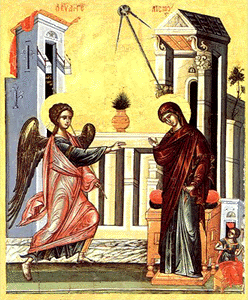 Of all the solemn days in Orthodoxy the day of March 25 is one not only of religious significance but of political significance as well, allowing the Greek Orthodox to commemorate God's message to Mary and the independence of Greece on the same day.
The expression, "For God and Country," has real meaning for the Orthodox Greek on the 25th day of March, a day on which he can celebrate two events without diminishing either one for the obvious reason that devotion and patriotism have the same emotional root -- love. If Christianity could be compressed into a single word, that word would be love. The same holds true for patriotism.
Uppermost in the true Greek's mind on March 25, however, is Mary, chosen from all the women in the world to be the Mother of Jesus Christ. When the angel Gabriel brought the momentous message from God this day, the gentle Mary must have felt a solemn pride, but at the same time a disquieting apprehension at the prospect of this awesome responsibility. Assured by the Archangel, Mary's answer was a simple: "Let it be according to the will of God," and the rest is glorious history.
The world of Mary of two thousand years ago is envisioned as one in which life was simple and free of the complexities that plague the modern world, but in that age of self-sufficiency there were problems which would be insurmountable today. The mother of that day was all things to her family, and it can safely be said that when the Archangel Gabriel departed, the prospective Mother of God must have for several moments felt terribly alone, Everyone knows about the nativity and the mission of Jesus Christ, but the details of the days, months and years in between are known but to Mary and to God.
The political importance of March 25 is fully realized only when the suffering of four centuries is called to mind. In 1458 the Ottoman hordes overran all of Greece and most of the Balkans and held hostage a people whose culture dated back more than two thousand years, and who gave more to the world than it could ever receive in return, and it seems that the world just stood by while the cradle of democracy and Christianity was being defiled by a scourge that would have undone a less hardy breed.
Hopelessly outnumbered, Greece endured nearly four hundred years of brutal oppression, but the spirit of its people knew not a single moment's weakness. The fires of rebellion that the Turks thought they had snuffed out, but which had smouldered in Hellenic hearts for almost 400 years, were kindled into a conflagration on 25 March 1821, not by a bemedalled general but by a man of the cloth, Bishop Germanos of Patras, Greece, who chose the day of the Annunciation knowing God would be on the side of the Greeks.
The good bishop held the Cross of Jesus Christ aloft on the 25th day of March, 1821, and proclaimed freedom for all Greek Orthodox Christians. It was a motion seconded by every Greek in the country. In addition to engaging in a war for independence, the Greeks were actually waging a holy war because it was not only Greek against Turk but Christian against Muslim, and the subsequent Greek victory was a triumph of Christianity.

By Niko Hilodakou
From the moment that Constantinople fell to the Ottomans and Mohammad Fattish entered the great Church of Saint Sophia on his white stallion, he remained transfixed for a long time by the icon of Christ in the dome. This is according to Turkish sources. This immense Church of Orthodoxy became the epicenter of different myths and legends which circulate amongst the conquerors eliciting an intense sense of awe for this great accomplishment of Orthodoxy which now is surrounded by four Ottoman minarets.
But during the last few years, certain events centered around Saint Sophia and specifically with the unexpected discovery of an Angel in the summer of 2008 in the dome, has elicited amongst the Turks an intense sense of suspense and fear about the future. In connection with this, all those legends have resurfaced recently and at times have shocked and brought to the Muslims a sense of fear. This fear is that the Orthodox Christian identity will once again rise up in spite of the fact that up until 1934 the Church was used as a Muslim mosque.
In this context of events, last January 20, 2012, the Turkish newspaper Sampach with a large circulation, presented a rather astonishing article about “The Mysteries of Saint Sophia.” It portrayed in a graceful way this climate of fear which has lately gripped the Turks in reference to the hidden things in the Holy Church and about all the things that will happen in the future.
The first significant element taken from that article is the indescribable fear which is revealed by the Turks concerning the hidden crosses, both symbolical and not, which are found on the interior of the Church and are also seen by the ground plan of the Church from above. As such, the Turks express great awe for the so-called “Cross of the Apostle Saint Andrew.” As is well known he is the founder of the Church of Constantinople. According to the newspaper Sampach, a Cross of Saint Andrew is found on the roof of the Church etched in a diagonal form. It is a significant symbol which not only was not lost throughout the ages of the Ottoman occupation but also dominates the area with its symbolic meaning. In addition to this, “The Cross of Justinian” freaks out the Turks. The legends as well refer to a very ancient jewel which is found mystically in Saint Sophia and in fact comes from Egypt and it has great power. Generally speaking, the construction of this "Great Orthodox Architectural Masterpiece", according to the same Turkish sources, is based on the Christian symbol of the Cross and this reality generates a sense of awe and fear about the future return of Saint Sophia to its traditional occupants, in other words, to Hellenic Orthodox worship.
But in addition to the crosses, the Turks refer to other mysterious and fearful things that are found in the interior of the Church. As is referred to in the legend, it is known that after the Church was turned into a Muslim mosque, the well-known Muslim Mihramp was built. It is the Muslim place of prayer. It is found on the eastern side of the Church in the direction of Mecca. But great interest is found, according to the Turkish legends, to that which in front of the Mihramp. A casket is buried there constructed of bronze gilded with gold. In this casket lays the body of Queen Sophia. Most likely her name is in reference to Saint Sophia. This Queen Sophia and her casket are connected, according to Turkish legend with a commandment that has existed for centuries up to the present day. This commandment directs that no one should ever disturb the casket, not even to touch it. If something like that should happen, then according to the legend it will initiate the rising of Queen Sophia. If this should happen then a frightful noise shall shake the whole structure of the Church initiating eschatological seismic events that will frighten the Turks.

This legend of Queen Sophia continues as follows. According to Turkish references, the casket is protected by four Archangels who are found on the dome of the Church. These Archangels, who the Turks believe exist, are: Tzemprael, Michael, Israfel and Azarael. The Turks say that Tzemprael protects the Byzantine Emperors, Michael protects the Church from hostile attacks, while Tzemprael and Israfel were those who proclaimed the events leading to hostile attacks. Tzemprael and Israfel were the angels that proclaimed the events of the warring efforts of the Byzantine Emperors. And these four Archangels have been assigned after the Fall of Constantinople to protect the casket of Queen Sophia from the danger of someone profane who might try to open it and bring about the Second Coming of Christ.
Another important legend which is referred to by the Muslims is the legend “Of the Hidden Patriarch” which is similar to the Greek legend about the “hidden priest.” As it is referred in Turkish tradition, on the south side of the Church is a narrow passageway. The passageway leads to a very old web covered mysterious door which is referred to in the legend as “The Closed Door.” According to Turkish references, when Mohammed Fattish entered Constantinople, the last Greek Orthodox Patriarch and his whole escort entered through that door which closed behind them. From that moment these people disappeared while the door remained hermetically sealed and no one ever dares to open it. Every year during the Resurrection Service of the Orthodox Christians, according to the Turkish newspaper Sampach, red eggs appear in front of this door. The legend is completed in prophecy, which frightens the Turks, that when the door is opened, Orthodox Christian chanting will be heard in the Church again. This is why the Turks are frightened simply by thinking about opening this mysterious door.
The Turkish newspaper reports about a mysterious underground tunnel that exists in a central location in the interior of the Church. As is reported, there is a double door which leads to a big tunnel. This tunnel, as reported by the Turkish newspaper, leads to Prinkoniso (Princes' Islands), and as far as the island Proti. The mystery for the Turks is how this tunnel was constructed and what role did it play in the long history of the Church.
Another mystery for the Turks is the imprint of the sole of a large animal, maybe an elephant, which is found on the southwestern section of the dome. And here it is reported that this is in reference to some eschatological stories. According to the Turks this imprint is from the horse of Mohammed the Conqueror. But the question is how the horse was able to step upon a place that is so high on the dome.
Great awe is elicited among the Turks, as referred to by the newspaper Sampach, by the various mosaics which have been uncovered with all their glory during the last ten years in the Church of Saint Sophia. This is in spite of the fact that the Muslim faith considers it a sin to create images of people who are related to religious events. They feel special awe about the mosaic which depicts Jesus with the Virgin Mary and John the Baptist on the right and left of Him. The Turks have named them “The Mosaic of the Apocalypse.” And its symbolism opens up to us its eschatological meaning which is very intense with the Muslim Turks.
Specific attention is made about the mosaic which depicts known Byzantine Emperors such as John Komnenos with Jesus Christ and the Emperor Constantine Monomachos with the Empress Zoe. All of these depictions elicit intense awe about this Greek Orthodox Christian majesty and the inner strength which emerge from these mosaics. They have generated different legends about their eschatological symbolism. These symbolisms are related to the Turkish phobias about the reestablishment and authority of the Holy Eastern Roman Empire with the blessing of Jesus Christ.
http://agapienxristou.blogspot.ca/2013/06/the-mystery-behind-hagia-sophia.html

«Η πράξη της νοεράς προσευχής είναι να βιάσεις τον εαυτόν σου να λέγεις συνεχώς την ευχή με το στόμα αδιαλείπτως.
Στην αρχή γρήγορα, να μην προφθάνει ο νους να σχηματίζει λογισμό μετεωρισμού.
Να προσέχεις μόνο στα λόγια: «Κύριε Ιησού Χριστέ, ελέησόν με».
Όταν αυτό πολυχρονίσει, το συνηθίζει ο νους και το λέγει και γλυκαίνεσαι ωσάν να έχεις μέλι στο στόμα σου και θέλεις να το λέγεις.
Αν το αφήσεις στενοχωρείσαι πολύ.
Όταν το συνηθίσει ο νους και χορτάσει -το μάθει καλά- τότε το στέλνει στην καρδιά.
Επειδή ο νους είναι ο τροφοδότης της ψυχής και μεταφέρει στην καρδιά οτιδήποτε φαντασθεί.
Όταν ο ευχόμενος κρατεί τον νου του να μη φαντάζεται τίποτε, αλλά να προσέχει μόνο τα λόγια της ευχής, τότε αναπνέοντας ελαφρά με κάποια βία και θέληση δική του τον κατεβάζει στην καρδιά, και τον κρατεί μέσα και λέγει με ρυθμό την ευχή, «Κύριε Ιησού Χριστέ, ελέησόν με» ...;
Αν θέλεις να βρεις τον Θεό δια της «ευχής» δεν θα σταματάς ποτέ αυτήν την εργασία. Όρθιος, καθήμενος, βαδίζοντας δεν θα μένεις χωρίς την ευχή.
Να μη βγαίνει πνοή χωρίς την ευχή για να εφαρμόζεται ο λόγος του Παύλου «αδιαλείπτως προσεύχεσθε, εν παντί ευχαριστείτε».
Εάν μπορέσεις να λέγεις την «ευχή» εκφώνως και συνέχεια, σε δύο-τρεις μήνες πιστεύω την συνηθίζεις και μετά πλησιάζει η Θεία Χάρις και σε ξεκουράζει.
Αρκεί να μη σταματήσεις να την λέγεις με το στόμα, χωρίς διακοπή.
Όταν την παραλάβει ο νους τότε θα ξεκουρασθείς με την γλώσσα να την λέγεις.
Όλη η βία είναι στην αρχή, έως ότου γίνει συνήθεια.
Κατόπιν θα την έχεις σ' όλα τα χρόνια της ζωής σου.
Μόνο κτύπα ευθέως την θύρα του θείου ελέους και πάντως ο Χριστός μας θα σου ανοίξει, εάν επιμένεις».
(Γέρων Ιωσήφ ο Ησυχαστής)
http://agapienxristou.blogspot.ca/2013/04/blog-post_1084.html

Σήμερα ο Θεός ανέχεται την κατάσταση. Ανέχεται, ανέχεται, για να είναι αναπολόγητος ο κακός.
Είναι περιπτώσεις που ο Θεός επεμβαίνει άμεσα και αμέσως, ενώ σε άλλες περιπτώσεις περιμένει. Δεν δίνει αμέσως την λύση και περιμένει την υπομονή των ανθρώπων , την προσευχή, τον αγώνα. Τι αρχοντιά έχει ο Θεός!
Ένας πόσους είχε σφάξει τότε με τον πόλεμο και ακόμη ζη. Θα του πη στην άλλη ζωή ο Θεός: « Σε άφησα να ζήσης περισσότερο και από τους καλούς » . Δεν θα έχη ελαφρυντικά.
- Γέροντα, μερικοί τέτοιοι άνθρωποι , ενώ είναι βαριά άρρωστοι, πώς δεν πεθαίνουν;
- Φαίνεται έχουν βαριές αμαρτίες, για αυτό δεν πεθαίνουν. Περιμένει ο Θεός μήπως μετανοήσουν.
- Και τον κόσμο που παιδεύουν;
- Αυτοί που παιδεύονται και δεν φταίνε, αποταμιεύουν. Αυτοί που φταίνε, εξοφλούν.
- Γέροντα, τι θα πη « Πονηροί άνθρωποι και γόητες προκόψουν επί το χείρον, πλανώντες και πλανώμενοι» ;
- Κοίταξε. Υπάρχουν άνθρωποι που έχουν κάποιον εγωισμό και ο Θεός τους δίνει ένα σκαμπίλι να πάνε παρακάτω. Άλλοι έχουν λίγο παραπάνω εγωισμό και ο Θεός στους δίνει ένα σκαμπίλι και πάνε ακόμη παρακάτω.
Αυτούς όμως που έχουν εωσφορική υπερηφάνεια, ο Θεός τους αφήνει. Μπορεί να φαίνεται ότι κάνουν προκοπή, αλλά τι προκοπή είναι αυτή; Μαύρη προκοπή.
Και μετά δεν πέφτουν απλώς κάτω, αλλά πέφτουν κατ' ευθείαν στο βάραθρο. Ο Θεός να φυλάη!
Αγιος Παϊσιος


