Translate

Wednesday, July 1, 2015

Some Recent Miracles of St. John Maximovich


Archbishop John's abundant miracles both before and after his death testify to his love for the people. People in America, Europe, and the other places of his pastoral labors have long known of the power of his heavenly intercessions. And now, with the publication of Blessed John the Wonderworker and other books and articles about him in the Russian language, the people of Russia are beginning to know, too, and have already experienced healings through his prayers, as the following accounts testify.

1) Valentina A. is a member of our parish which is dedicated to the Reigning Icon of the Mother of God. Having read the book on the healings and life of St. John of San Francisco (Blessed John the Wonderworker), she came to me after church services and asked for oil from the lampada in the sepulchre of Archbishop John, as her daughter was seriously sick. Valentina A. recounted that her daughter, an architect by profession, had a swelling in her breast. It grew and the daughter turned to a doctor for help. The diagnosis was a frightful one, cancer of the breast. I had Unction served over the daughter and later gave her cotton saturated with oil from Archbishop John’s lampada. She anointed the ailing spot several times by making the Sign of the Cross. The doctors insisted on surgery, but when she came to the hospital for observation, the doctors and the sick woman herself were amazed: the swelling had disappeared and there remained only a scar. (1994)

2) Our altar boy, Oleg S., asked me after church services to anoint his hand. There was a swelling on it the size of a chicken egg. I anointed him with the oil of Archbishop John in a cross-like form in the Name of the Father, Son and Holy Spirit, and the acolyte left for home. After a week, I asked Oleg about his hand. He said he himself did not even notice when that swelling had disappeared. (1995)

3) Some time later, after Divine Liturgy, a Moleben was served with a Blessing of the Water. At the end of the Moleben, I anointed all communicants with the oil of St. John Maximovitch. I also anointed Olga. After a week, she was again at services and stood weeping. I asked her why she was weeping and all she could say was that everything was fine. Her husband, a military man, later came to me and told me that her leg had developed some infected growths. These growths had rapidly become ulcerous and had begun to multiply. The sight was awful. She turned to doctors but they simply shrugged their shoulders and could say nothing concrete. They gave her various creams but these did not help her.

Alter Holy Communion, Alga had been anointed with the oil of St. John. At home she sprinkled her legs with holy water and went to bed. In the morning, she saw no ulcers at all on her legs. Therefore, at the next church service, Olga wept from gratitude and was too emotional to tell us by herself. June, 1995)

4) Another parishioner of mine, Nadezhda, told me that her son Michael caught a severe cold and had a convulsive cough which only grew worse. She began to treat him with various medications. In the evening he would begin to fall asleep but the cough continued to torment him. Each minute he would be racked by this cough. His mother, a professional medical worker, was very frightened because at one time he had been rushed to the hospital by ambulance with these same symptoms. At this time, Nadezhda was reading the book on St. John Maximovitch and his miraculous healings. The mother began to pray, asking help from St. John, that he would heal her son. Having prayed, she came over to her sleeping son, crossed him and turned him on the other side. Some time later, the cough stopped and the boy quietly slept until morning. She no longer gave him any medication, only some holy water. For several days, her son would occasionally cough, but the convulsive fits did not return, and he became quite well. The mother was very thankful to Archbishop John for the healing of her son and continues to pray to him with gratitude. (April, 1995)

Hieromonk Cyril Osipov

Astrakhan, Russia 


http://agapienxristou.blogspot.ca/2013/11/some-recent-miracles-of-st-john.html

Prayer Rope οr Design Bracelet, which is it ?


Many of the Orthodox Christians piously wear at their hands a "bracelet" made of wool knots or wooden beads. Fewer however know its true significance. The first thing we should stress is that it is not a piece of jewelry but an actual prayer rope. Its purpose is not just as decoration or to show others we are Orthodox, as many believe, but to be used as an aid in accomplishing our daily prayers.


The use of the prayer ropes is ancient in itself, going back to the origins of Christian monasticism. The prayer rope, creation attributed to Saint Pachomius in the fourth century, was intended as an aid for monks that could not read to accomplish a consistent number of prayers and prostrations in their cells. The use of the rope made it possible to pray the Jesus Prayer unceasingly, whether inside the cell or out, in accordance with Saint Paul's injunction to "Pray without ceasing" (I Thessalonians 5:17).
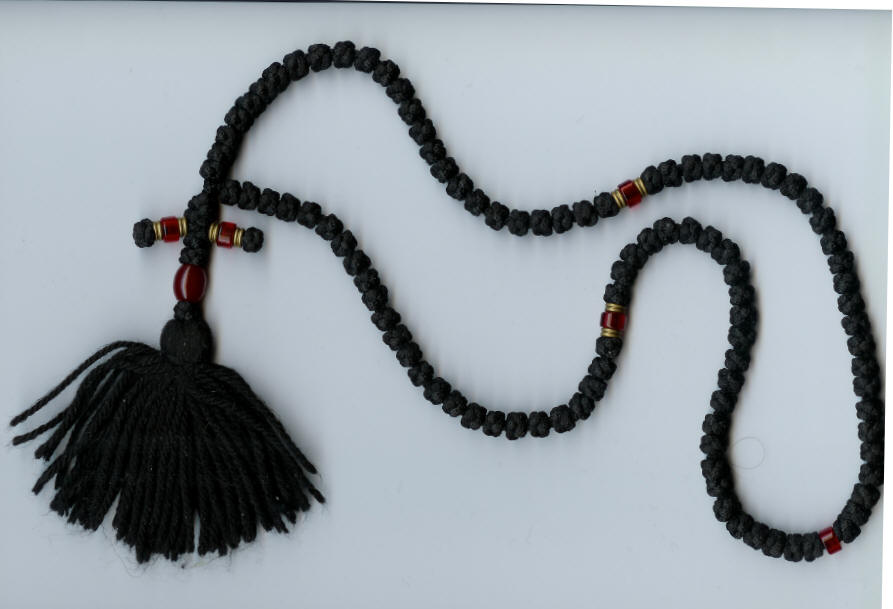
The method of tying the prayer rope also goes back to the fathers of monasticism. Saint Anthony the Great it is said to have started by tying a leather rope with a simple knot for every time he prayed Kyrie Eleison ("Lord have Mercy"), but the Devil would come and untie the knots to throw off his count. He then devised a way--inspired by a vision he had of the Theotokos--of tying the knots so that the knots themselves would constantly make the sign of the cross. This is why prayer ropes today are still tied using knots that each contain seven little crosses being tied over and over. The Devil could not untie it because the Devil is vanquished by the Sign of the Cross.
The prayer ropes are not to be confused with worry beads used as a pass-timer or calming device. The prayer ropes are to be used only in prayer. They come in various shapes and sizes but always they have a fixed number of knots or beads. This can be 33 (for the normal "bracelets") or 40, 50, 100, 200, 300, etc. for the longer ropes.


The use of the Jesus prayer with prostrations is sanctioned by our Church, which directs that one can (in cases of need) replace the common worship services with a definite number of prostrations and the Jesus Prayer (which would be difficult to carry out without the rope). Here is a guide we find at the end of some Psalter books.


Instead of the entire Psalter: 6000 Jesus Prayers
One kathisma: 300 prayers; for each stasis: 100
Midnight Service: 600
Matins: 1500
Vespers: 600
Great Compline: 700
Small Compline: 400
An Akathist to the Blessed Theotokos: 500
All those who are zealous for their salvation are invited to this unceasing remembrance of the saving name of Jesus, both laymen and monastics, for the spirit of life in Christ is one and the same for both. Many of our spiritual elders, men of prayer, ascetics and directors in faith and piety, down to the most recent time have recommended the use of the prayer rope to laymen and at times have even given them their own prayer ropes as a blessing.
For this reason we also recommend to the lay people today to properly use the prayer ropes around their hands to pray wherever they are, at home, at work, or driving, with a simple prayer: "Lord Jesus Christ Son of God have mercy on me the sinner" or simply "Lord Jesus Christ have mercy on me".

http://agapienxristou.blogspot.ca/2013/07/prayer-rope-r-design-bracelet-which-is.html

Πῶς διαλύονται οἱ σχεδιασμοί τῶν δαιμόνων ( Ἱερομόναχος Σάββας Ἁγιορείτης )


Οἱ σχεδιασμοί τοῦ διαβόλου καί ὅλων τῶν δαιμόνων καί μάλιστα τῶν Ἀρχηγῶν τους γιά τήν αἰώνια καταστροφή-κόλαση τοῦ ἀνθρώπου καταλύθηκαν καί ματαιώθηκαν ἀπό τό ἀπολυτρωτικό ἔργο τοῦ Χριστοῦ μας.

Γράφει ὁ Ἅγιος Νικόδημος στήν εἰσαγωγή του στή Φιλοκαλία : «Εὐδόκησε ὁ ἴδιος ὁ Θεαρχικώτατος Λόγος τοῦ Πατρός στίς ἔσχατες ἀπό τίς ἡμέρες ἐξ αἰτίας τοῦ σπλαχνικοῦ [Του] ἐλέους, νά ἀθετήσῃ τίς ἀποφάσεις τῶν ἀρχόντων τοῦ σκότους [τῶν δαιμόνων], καί νά περατώσῃ καί νά προωθήσῃ σέ ἔργο τήν ἀρχαία μαζί καί ἀληθινή ἀπόφασι, τήν ὁποία ὅρισε».

Ἡ πρό πάντων τῶν αἰώνων ἀπόφαση τῆς Ἁγίας Τριάδος ἦταν ὁ ἄνθρωπος νά θεωθεῖ. Αὐτή ἡ προαιώνια ἀπόφαση τοῦ Θεοῦ ἔπρεπε νά ἐκπληρωθεῖ ὁπωσδήποτε. Καί πράγματι ἐκπληρώθηκε διά τοῦ Χριστοῦ ὁ Ὁποῖος συνέπηξε στή γῆ τό «ἐργαστήριο τῆς θεώσεως» τοῦ ἀνθρώπου, τήν Ἐκκλησία Του.

Ἡ ἁγία μας Ὀρθόδοξη Ἐκκλησία ὡς σῶμα Χριστοῦ μέ κεφαλή Της τόν Ἴδιο, εἶναι αὐτή πού ἀφ’ ἑνός πραγματοποιεῖ τήν ἀρχική ἀπόφαση τοῦ Θεοῦ γιά τήν θέωση τοῦ ἀνθρώπου καί ἀφ’ ἑτέρου καταλύει τά ἔργα τοῦ διαβόλου.
Εἶναι Αὐτή πού διά τοῦ ἔργου της ἀκύρωσε καί συνεχίζει νά ἀκυρώνει τίς ἀποφάσεις καί τά σχέδιά του.
Ὡς «κοινωνία θεώσεως» πού εἶναι, ὁδηγεῖ διά τῶν Ἁγίων Μυστηρίων, τῶν Ἱερῶν Κανόνων καί τῆς ὅλης θεραπευτικῆς Της τά μέλη της στήν σωτηρία-θέωση.

Ὅταν ὁ ἄνθρωπος ζεῖ ἐκκλησιαστικά, εὐχαριστιακά ὅταν μετέχει στήν Θεία Λειτουργία καί Θεία Κοινωνία , ὅταν τελεῖ τήν ἀδιάλειπτη ἐν πνεύματι λατρεία στήν καρδία του μέ τήν ἀδιάλειπτη προσευχή, αὐτός μέ τήν Θεία Χάρη καταλύει τά ἔργα, τίς πλεκτάνες καί τίς παγίδες τοῦ διαβόλου.

Γιά τοῦτο καί εἶναι ὠφελιμότατο ὁ χριστιανός ὅσο γίνεται συχνότερα νά μετέχει στή Θεία Λειτουργία καί Θεία Κοινωνία μέ τήν ἄδεια τοῦ Πνευματικοῦ του ὁδηγοῦ.
Εἶναι ἐπίσης ἀπαραίτητο νά διατηρεῖ «ἄληστο» τήν μνήμη τοῦ ζωοποιοῦ ὀνόματος τοῦ Χριστοῦ μέ τήν ἀδιάλειπτη ἐπίκλησή: «Κύριε Ἰησοῦ Χριστέ ἐλέησόν με».
Ἔτσι παραμένει σέ συνεχή κοινωνία μέ τόν ζωοδότη Χριστό τόν καταλύσαντα τήν δύναμην τοῦ ἐχθροῦ καί τίς ἀνθρωποκτόνες ἀποφάσεις-σχέδιά του.

ΤΕΛΟΣ ΚΑΙ Τῼ ΘΕῼ ΔΟΞΑ!

Ἱερομόναχος Σάββας Ἁγιορείτης

Tuesday, June 30, 2015

The Prayer of the Heart ( St Theophan the Recluse )


“Lord Jesus Christ, have mercy upon me.”

“If you haven’t heard this, then listen now.
If you have never done this, begin now.”
 

St Theophan the Recluse

Adulterous Passion Is Death ( St. Nikolai Velimirovich )


Not one passion is conquered without a great struggle. The Holy Fathers have referred to adulterous passion as death. When the adulterer is saved from an adulterous passion it is as though he resurrected from the dead. For those who live in the world the passion of adultery is inflamed principally by seeing and for those who live a life of asceticism in the wilderness that passion is inflamed by thoughts and by imagination.

Saint Sarah, a great female ascetic, was tortured by the insane passion of adultery for thirty years. She always defeated it by prayer and drove it away from her. At one time, the foul insanity of adultery came to her in bodily form and said to her: "Sarah, you have defeated me!" Sarah humbly answered: "I have not defeated you but the Lord Christ has defeated you." From that time on, the thought of adultery left her forever.

When Saint Pimen was asked how can a man struggle against the adulterous insanity, he replied: "If man surpresses his stomach and tongue then he will be able to rule over himself."

St. Anthony said that there exists three kinds of movements in the body: "First, the natural movement, second, unrestrained in food, and third, from the demons."

Again, others have said that the vice of adultery is strengthened by anger and pride. However, all agree that along with man's sobriety and effort the help of God is necessary in order that this repulsive passion be uprooted completely. And that it is possible for man to preserve himself in purity, witness, among many others, St. Moses of Urgin, who lived fifty years in the world and ten years in the monastery, altogether a total of sixty years in completely virginal purity.

St. Nikolai Velimirovich

Ο Δίκαιος γέροντας Νικόδημος ο Κύπριος


Βρισκόμαστε στη Σκήτη της Αγίας Άννας, τη μεγαλύτερη Σκήτη τού Αγίου Όρους. Τα βήματα μας, μας έφεραν στην καλύβα «Είσόδια της Θεοτόκου». Γέροντας εδώ είναι ό πατήρ Άνθιμος, ό Πνευματικός. Γέρων στην ηλικία, είχε ζήσει την εποχή πού ό μοναχός Νικόδημος ό Κύπριος ασκήτευε κι αυτός στη Σκήτη της Αγίας Άννας. Πολλά θα γνώριζε να μας πει για το συμπατριώτη και μοναχό, γι' αυτό τον πλησιάζομαι και τον παρακαλούμε να ξαναφέρει στη μνήμη του εκείνες τις ευλογημένες μέρες πού έζησε, εν όσο χρόνο βρισκόταν στην επίγειο ζωή ό μακαριστός γέροντας Νικόδημος. Ό πατήρ Άνθιμος με πολλή καλοσύνη κι ευγένεια μας δέχθηκε και προθυμότατα υπάκουσε στις παρακλήσεις μας (να μας διηγηθεί ότι θυμάται από τη ζωή τού Κυπρίου μοναχού). Ή γλώσσα του απλή, σε ύφος αγιορείτικο και σε καθαρεύουσα γλώσσα προς αρχαιοπρεπή πού την αφήνουμε αυτούσια, για να μη χάσει από το χαριτωμένο της διηγήσεως.

«Ό γέρο - Νικόδημος», άρχισε να διηγείται, «καταγόταν από την Κύπρο. Εκεί στην πατρίδα του ήταν μάγειρος στον Άγγλο αρμοστή της Κύπρου. Ήταν πολύ καλός. Τον συμπαθούσε πολύ ό αρμοστής και ήταν επιθυμία τού γέρο-Νικόδημου να έλθει στο Αγιον Όρος. Τον εφοδίασε με διαβατήριο και συστατικά από τον Τούρκο διοικητή (καϊμακάμη). ' Αφού ήλθε στο Αγιον Όρος, περίπου στα 1895, περιήλθε το Αγιον Όρος, τα διάφορα μοναστήρια, σκήτες κλπ, και τού άρεσε πιο πολύ ή Σκήτη της ' Αγίας Αννης. Εκεί κοινοβίασε στην Καλύβι της θείας Αναλήψεως, κάτωθεν τού Κυριακού εις τον γέροντα Ιωάννη. Εις αυτήν την καλύβι είχε ασκηθεί και προετοιμαστεί για το μαρτύριο ό Άγιος όσιομάρτυς Νικόδημος, καταγόμενος από το Έλβασάν της Αλβανίας εις το όποιον και μαρτύρησε κατά το 1720. Ή μνήμη αυτού είναι εις τας 10 Ιουλίου όπως βλέπετε εις το συναξάρια. Γι' αυτό και προς μνήμην τού μάρτυρος ό Γέροντας του τον ονόμασε Νικόδημο.

Ήταν φύσις άκρως αγαθή, Φιλάδελφος, ελεήμων εις όλους όσους διέβαιναν διά της οδού πού διέρχεται διά της καλύβης του. Ασκητικός το έπακρον, τακτικός εις τας ιεράς ακολουθίας, κανόνας, νηστείας, αγρυπνίας, προσευχάς, όπως χαρακτηρίζεται ό αληθής, φιλόθεος μοναχός, υπήκοος εις τον γέροντα του στο έπακρον. Διά τούτο και ο θεός τον είχε χαριτώσει με πολλή χάριν, ώστε κι ή απλή ομιλία του να παρήγορη τον άκούοντα και να βοηθή τον κάθε ζητούντα λίγη παρηγοριά. Μιλούσε με τόση βεβαιότητα με την δύναμιν της πίστεως, ώστε οποίος τον άκουε, απορούσε για το σταθερό της γνώμης του. Επί παραδείγματι: Εις την Γερμανική κατοχή , όπου υπέφερε όλος ό Ελληνισμός και ιδιαιτέρως το Άγιο Όρος, επειδή δεν είχε παραγωγή, έλεγε: «Ολίγην υπομονή και ό Θεός θα βοηθήσει και θα μας φέρουν όλα τα αγαθά, ως και ζεστό ψωμί», τα όποια και ήξιώθη και τα είδε και τα απόλαυσε, «οι δέ Γερμανοί θα καταστραφούν», έλεγε.

Ή φιλοξενία προς τούς αδελφούς του ξεπέρασε και αυτήν τού Πατριάρχη Αβραάμ. Δεν υπήρχε διαβάτης πού να κτύπησε την πόρτα του και να μην ευεργετήθηκε, πεινασμένος πού να μη χόρτασε. Ήταν ό καλύτερος μάγειρος της Σκήτης και μοναδικός όλων των πανηγύρεων τού ' Αγίου Όρους. Ένα περιστατικό έκ παραδόσεως αναφέρει τα εξής: Άνωθεν της Αγίας Αννης προς την Κερασιάν, υπάρχει κελίον με την επωνυμία «Άγιος Αρτέμιος». Γενομένης αγρυπνίας εις τον Άγιο 'Αρτέμιο, ό γέρο - Νικόδημος ήτανε ό μάγειρας στην αγρυπνία και από την υπερβολική κόπωση, ενώ μαγείρευε, τον πήρε ό ύπνος. Μόλις ξύπνησε, νομίζοντας πώς είχε καεί το φαγητό, ξαφνιασμένος καθώς ήταν, κοιτάζει και βλέπει ένα στρατιώτη ντυμένο, ν' ανακατεύει το φαγητό και_ τού λέει: «Γέρο, μη στενοχωριέσαι, εγώ είμαι εδώ», και αμέσως έγινε άφαντος. Ήτανε ό ίδιος ό Άγιος Αρτέμιος, πού διά της παρουσίας του ευλογούσε την αγρυπνία.
Μια φράση πού έλεγε συχνά καθώς φιλοξενούσε κάποιον αδελφό ήτανε: «Έλα, ψυχή μου!».

Έκαμε μοναχούς και εκοιμήθη εις βαθύ γήρας, περίπου εκατονταετής. Ή καλύβι συνεχίζει την πορεία της και είναι εκεί τώρα άλλος γέροντας, Ματθαίος λεγόμενος, και δεύτερος Νικόδημος, φέρων την επωνυμία τού μακαριστού γέροντος Νικόδημου.
Ό, τι καλόν φαντασθεί κανείς και αγαθόν έργον εποίησε. Θερμός στην πίστη. Ευλαβής και επιμελής εις όλα τα αγαθά έργα και τώρα ευρίσκεται εις τούς ουρανούς, στην θριαμβεύουσαν Εκκλησία κακείθεν να πρεσβεύει προς τον Θεόν, να εύλογη την Σκήτη και να ελευθέρωση την γενέτειρα του μεγαλόνησο Κύπρο από των κατεχόντων αυτήν δεινών και να βοηθήσει τούς υποφέροντας αδελφούς Ελληνορθόδοξους Χριστιανούς.
Ας επικαλεσθούμε τας εύχάς του, να διέλθωμεν τον δόλιχον της ζωής και να καταντήσωμεν εις την αιώνιον μακαριότητα. Αμήν».


ΠΑΝΑΓΙΩΤΗΣ ΧΡΙΣΤΟΔΟΥΔΟΥ ΒΙΒΛΙΟΓΡΑΦΙΑ ΠΕΡΙΟΔΙΚΟ ΟΡΘΟΔΟΞΗ ΜΑΡΤΥΡΙΑ. ΤΕΥΧΟΣ 100.


http://agapienxristou.blogspot.ca/2013/07/blog-post_2578.html

Monday, June 29, 2015

How did the Apostles die....


1 Matthew

Suffered martyrdom in Ethiopia , killed by a sword wound.
2 Mark

Died in Alexandria , Egypt , after being dragged by horses through the streets until he was dead.

3 Luke

Was hanged in Greece as a result of his tremendous preaching to the lost.

4 John

Faced martyrdom when he was boiled in huge basin of boiling oil during a wave of persecution in Rome. However, he was miraculously delivered from death. John was then sentenced to the mines on the prison island of Patmos, Greece. He wrote his prophetic Book of Revelation on Patmos . The apostle John was later freed and returned to serve as Bishop of Edessa in modern Turkey. He died as an old man, the only apostle to die peacefully.
 
5 Peter

He was crucified upside down on an x-shaped cross. According to church tradition it was because he told his tormentors that he felt unworthy to die in the same way that Jesus Christ had died.


6 James the Just

The leader of the church in Jerusalem, was thrown over a hundred feet down from the southeast pinnacle of the Temple when he refused to deny his faith in Christ.. When they discovered that he survived the fall, his enemies beat James to death with a fuller’s club.
* This was the same pinnacle where Satan had taken Jesus during the Temptation.


7 James the Great


Son of Zebedee, was a fisherman by trade when Jesus called him to a lifetime of ministry. As a strong leader of the church, James was ultimately beheaded at Jerusalem . The Roman officer who guarded James watched amazed as James defended his faith at his trial. Later, the officer walked beside James to the place of execution. Overcome by conviction, he declared his new faith to the judge and knelt beside James to accept beheading as a Christian.


8 Bartholomew

Also known as Nathaniel, was a missionary to Asia. He witnessed for our Lord in present day Turkey. Bartholomew was martyred for his preaching in Armenia where he was flayed to death by a whip.

9 Andrew

Was crucified on an x-shaped cross in Patras , Greece. After being whipped severely by seven soldiers they tied his body to the cross with cords to prolong his agony. His followers reported that, when he was led toward the cross, Andrew saluted it in these words: ‘I have long desired and expected this happy hour. The cross has been consecrated by the body of Christ hanging on it.’ He continued to preach to his tormentors for two days until he expired.


10 Thomas


Was stabbed with a spear in India during one of his missionary trips to establish the church in the sub-continent.


11 Jude

Was killed with arrows when he refused to deny his faith in Christ.


12 Matthias

The apostle chosen to replace the traitor Judas Iscariot, was stoned and then beheaded.


13 Paul

Was tortured and then beheaded by the evil Emperor Nero at Rome in A.D. 67. Paul endured a lengthy imprisonment, which allowed him to write his many epistles to the churches he had formed throughout the Roman Empire. These letters, which taught many of the foundational doctrines of Christianity, form a large portion of the New Testament.

Perhaps this is a reminder to us that our sufferings here are indeed minor compared to the intense persecution and cold cruelty faced by the apostles/disciples during their times for the sake of the Faith. And ye shall be hated of all men for my name’s sake:

But he that endureth to the end shall be saved.

Matthew 10:22

http://agapienxristou.blogspot.ca/2013/08/how-did-apostles-die.html

How did Christ chose his 12 Apostles ( St. Cyril of Alexandria )


"And when it was day, He called His disciples to Himself; and from them He chose twelve, whom He also named apostles." (Lk 6: 13)


Choosing the Twelve Apostles


Our Lord Jesus Christ spent the night in prayer, conversing with His Father and God in heaven in a way indescribable and beyond our powers of understanding, a way which is solely known to Himself. He thus makes Himself an example to us of that which is necessary for salvation, for He taught us in what way we too may rightly and blamelessly offer our prayers. He then came down from the mountain, and appointed those who were to be the world’s teachers, according to the words He spoke, "You are the light of the world." (Matt. 5: 14) Of this appointment of the holy Apostles, the blessed David also makes mention addressing himself, as it were to Christ, "You shall make them princes in all the earth; I will make Your name to be remembered in every generation." (Ps. 45:16) For truly, while they were in the body, they make mention of the glory of Christ, telling His mystery both in cities and villages. Now that they have been called to the mansions that are above, they still converse with us about Him, by the most wise history which they have written concerning Him.


Gifts given to the Apostles


Indeed, those who were appointed priests according to the law of Moses, even Aaron and his company, were made beautiful to the senses by vestments suitable to their priestly dignity. But the divine disciples, being adorned with spiritual gifts, had entrusted to them the ministry of the Gospel oracles. For it was said to them, "Heal the sick, cleanse the lepers, raise the dead, cast out demons." (Matt. 10:8) Being thus invested with Christ’s power, they filled the whole world with astonishment. But notice the extreme moderation of the Evangelist. He does not simply say that the holy Apostles were appointed, but rather, by introducing the record of these chief ones each by name, takes care that no one should venture to enroll himself in the company of those that were chosen. For as Paul said, "No man takes this honor to himself, but he who is called by God." (Heb. 5: 4) Though the holy Apostles were called by name to this great and splendid dignity, yet from time to time, some men have gone to such a pitch of madness and audacity, as even to name themselves Apostles of Christ, and to seize an honor not granted unto them. Of these the divine disciples made mention, for they said, "For such are false apostles, deceitful workers, transforming themselves into apostles of Christ. And no wonder; for Satan even transforms himself into an angel of light. Therefore it is no great thing if his ministers also transform themselves into ministers of righteousness." (2 Cor. 11: 13-14) However, we neither acknowledge nor will receive any one, except those only so named in the Evangelic writings, and also the one who was appointed after them, the most wise Paul. The Savior Himself bore witness to him saying, "He is a vessel of Mine, to bear My name before all the gentiles." (Acts 9: 15)


Symbols of the Holy Apostles


The law pointed them out before in type, and the prophets also proclaimed them. As for instance, it is written in the Mosaic record, "And you shall take fine flour, and bake twelve cakes with it; and you shall set them in two rows, six in a row, on the pure gold table before the Lord. And you shall put pure frankincense on each row, that it may be on the bread for a memorial." (Lev. 24: 5-6) Who else can be the bread that came down form heaven and gives life to the world, except Christ, the Savior of the universe? In a similar manner the blessed disciples also are named loaves. Having been made partakers of Him, Who nourishes us unto life eternal, they also nourish by their own writings those who hunger and thirst after righteousness. As the Savior is the true light, He also called His disciples, "You are the light of the world."(Matt. 5: 14) Also being Himself the bread of life, He has bestowed upon His disciples to be ranked as loaves. Please, observe the marvelous art of the law: for you shall put, it says, upon the loaves of frankincense and salt. Now the frankincense is the symbol of a sweet odor; and the salt that of understanding and good sense. Both of them existed in the highest degree in the holy Apostles. Their life was one of a sweet savor, as they also said, "For we are to God the fragrance of Christ." (2 Cor. 2: 15) More over, they were also full of understanding, so that the prophet David sang of them in the Psalms, "There is Benjamin, their leader, the princes of Judah and their company, the princes of Zebulun and the princes of Naphtali." (Ps.68: 27) The blessed disciples were chosen out of almost every tribe of Israel, and were the bearers of light to the world, holding up the word of life. Indeed, the wonder is that the sages of the Greeks possessed eloquent speech, and an admirable beauty of language, but the disciples of our Savior were mere artificers (skilled craftsmen), boatmen, and fishermen, having no boast of words and no fluency of picked phrases. In expression they were indeed simple men, but rich in knowledge. The literature of the Greeks, with it eloquent phrases, is silent, while the power of the Evangelic preaching has possession of the world. God also make mention of them by the voice of Jeremiah, say of the enemy of all, Satan, "Woe to him who increases. What is not his-how long? And to him who loads himself with many pledges? Will not you creditors rise up suddenly? Will they not awaken who oppress you? And you will become their booty." (Hab. 2: 6-7) Satan gathered unto him all the inhabitants of the earth, though they were not his, and had caused them to be his worshippers, making his collar heavy. But those who were to plunder his goods woke up; for the net of the apostolic teaching caught all those that were in error, and brought back unto God the whole world.


St. Cyril of Alexandria 

http://agapienxristou.blogspot.ca/search/label/Apostles

Akathist Hymn to Saint Matrona the Blind


Kontakion 1

Glory to God, for in these latter times He has adorned the Holy Church with the deeds of His patient handmaid: Saint Matrona the Blind of Moscow. Let the troubled and the suffering gather from near and far, and let the demons retreat into darkness, so that the Blessed Matrona may hear our supplications and attend to our needs. With faith in the Father Almighty Who rewards those who do His heavenly will on earth, we cry out to His splendid saint:

Help us, Saint Matrona, holy God-pleaser and helper of the people.

Ikos 1

Saint Matrona, you were the offspring of the Godly-minded peasants, Dimitri and Natalia, who already had three children. Because of their poverty, your mother thought you would do better in the orphanage built by Prince Golitsin. How could such poor peasants manage another child? However, before you were born, Natalia dreamed of you as a white bird with closed eyes, resting on her arm. She therefore kept and raised you, and now we unceasingly chant these praises to you:

Help us, for your piety was foretold in your mother’s prophetic dream before your birth.

Help us, for your mother cherished you while you were yet unborn.

Help us, white bird of purity, foreseen by your mother and chosen of God.

Help us, heavenly bird, born blind to sinfulness and blessed with virtue.

Help us, holy child, nurtured by your God-loving parents in a devout home.

Help us, little daughter, bearing a birthmark in the shape of a cross on your chest.

Help us, youngest sister, disadvantaged from infancy for you were unable to see.

Help us, sanctified girl, more fortunate than your older siblings for you had divine gifts.

Help us, blind one who sees everything spiritually.

Help us, tiny one who already carries her cross.

Help us, underprivileged one who possesses true riches.

Help us, quiet one who brings peace and comfort.

Help us, Saint Matrona, holy God-pleaser and helper of the people.

Kontakion 2

Your physical blindness, Saint Matrona, made you an easy victim of the local children who taunted you and treated you cruelly. They even forced you into a ditch, finding it amusing as you sensed your way out with your little hands and feet. Because of this and other cruel behavior, your mother allowed you to stay home and you remained unschooled all your life. Yet, you thrived in the pious atmosphere of your Godly home, and Dimitri and Natalia therefore said: Alleluia.

Ikos 2

Your real companions, Blessed Matrona, were your family’s icons of the holy saints. At night, in the safety of your home, you would put the icons on the table where you could play with them and talk to them. You also loved to go to church with your parents and sing with the choir. Your pure voice was heard by the compassionate God in Whom you found sanctuary. In like manner, we ask you to hear our heartfelt acclamations:

Help us who were abused in our childhood.

Help us who are still vulnerable to cruelty.

Help us and come to our rescue with your spiritual sight.

Help us and lift us from the desolation into which the malevolent have hurled us.

Help us, for the world is destructive, but your prayers bring deliverance.

Help us, for people can be spiteful, but your spirit is sympathetic.

Help us that we may perceive the holy icons, for we are spiritually blind.

Help us that God may be worshipped among us, for we have no sacred vision of life.

Help us, uneducated child who understands the ways of God.

Help us, unlearned girl who knows the prayers of the Church.

Help us, for you were rejected by the village children and accepted by the saints in Heaven.

Help us, for you imitated your devout parents who loved the Divine Liturgy.

Help us, Saint Matrona, holy God-pleaser and helper of the people.

Kontakion 3

It was not long before your divine gifts became apparent to everyone around you. The troubled and the suffering came to your home to be consoled and healed, and this, Saint Matrona, you regarded as your wedding feast. You prayed for each individual, foretold of dangers and uprisings, as more and more visitors arrived at your door day after day. You treated everyone with holy hospitality, and they cried out to God: Alleluia.

Ikos 3

Although you were still a child, you understood the nature of human sinfulness and desperation. The people were amazed at your spiritual abilities and, in gratitude, they brought food and gifts to Dimitri and Natalia. You, little blind Matrona, little white bird, then became the primary support for your parents and siblings. Since you are able to commiserate with the ills of mankind, we also come to you with our requests and we lovingly beseech you:

Help us who are without a job.

Help us who would eat leftover pieces of loaves and fish.

Help us who are without a place to live.

Help us who have been told: there is no room for you here.

Help us who are without supportive relations.

Help us who have no one to lift us into the Pool of Siloam.

Help us, for we are afflicted with bodily ailments beyond human cure.

Help us, for we are looked upon as useless.

Help us, for we are burdened with emotional trauma beyond human care.

Help us, for we are treated as contemptible.

Help us, for we are growing old and losing strength.

Help us, for we are slow and clumsy in our daily living.

Help us, Saint Matrona, holy God-pleaser and helper of the people.

Kontakion 4

We see that your parents and the people from round about recognized your holiness, Saint Matrona. Likewise, the demons were also aware of your dedication to God and Church, and they began tormenting you when you were just a young girl. You understood, Blessed Matrona, that evil exists in the very air and that Christians must always pray, always repent, and keep icons in the home. In thanksgiving for your protecting prayers and spiritual counsel, we say: Alleluia.

Ikos 4

Your purity of heart, Saint Matrona, was also recognized by someone else: Saint John of Kronstadt. On a journey to the holy churches of Russia, which you undertook with the aid of your pious friend Lydia, you visited a cathedral in the city of Kronstadt. Saint John saw you in the crowd and identified you as his successor who would serve the Russian people in the forthcoming persecutions. You were only fourteen years old, Blessed Matrona, and with admiration we praise your wondrous girlhood and sainthood:

Help us, faithful warrior for Christ.

Help us, for you wielded prayer as your holy weapon against evil.

Help us, intercessory saint in church and at home.

Help us, for you fortified everyone who came to you for a good purpose.

Help us, blind one who was attacked by demons in the light of day.

Help us, gifted one whose inner light conquered the dark boldness of Satan and his evil ones.

Help us, follower of Christ throughout the land of Russia.

Help us, heiress of Saint John of Kronstadt as a helper in the Holy Church.

Help us to pray under all circumstances.

Help us to encourage one another.

Help us for we are also persecuted in our homeland.

Help us for we take refuge in your open arms.

Help us, Saint Matrona, holy God-pleaser and helper of the people.

Kontakion 5


Saint Matrona, when you were seventeen years old, your legs were rendered crippled and you could no longer walk. This was due to the evil powers of a wicked woman. How could such a catastrophe befall God’s holy one? However, you overcame all obstacles through God. Blessed Matrona, you never complained about your predicament. Rather, your righteousness shone with even greater brightness and you continued to say: Alleluia.

Ikos 5

Our Lord Jesus Christ has said, “If the world hates you, know that it has hated Me before you. If you were of the world, the world would love its own, but because you are not of the world, but I chose you out of the world, therefore the world hates you.” Saint Matrona, chosen of God, you are our model of Christ-like love and faithful endurance until the end. It is therefore fitting that we sing these praises to you:

Help us, Saint Matrona most merciful.

Help us, for we thank God for your intercessions.

Help us, Saint Matrona most compassionate.

Help us, for we repent of our sins.

Help us, Saint Matrona most faithful.

Help us, for we venerate your holy icons.

Help us, Saint Matrona most patient.

Help us, for we submit to the will of God.

Help us, Saint Matrona most humble.

Help us, for we forgive those who offend us.

Help us, Saint Matrona most joyful.

Help us, for we carry our cross and die to sin.

Help us, Saint Matrona, holy God-pleaser and helper of the people.

Kontakion 6

Blind and paralyzed, you could only sit or lie down. Yet, you were entrusted by God to heal the infirmities of others, and your fame spread far beyond your peasant household. Saint Matrona, you were able to please God by interceding for mankind. Helping the people who came to you during the day, often to the point of fatigue, you continually prayed during the night and refreshed your spirit. Therein, everyone could truly say: Alleluia.

Ikos 6

Your beauty, Saint Matrona, was interior and cultivated by prayer at home, worship in church, and by your unselfish care of the troubled and the suffering. Not only did the common people marvel at your divine gifts, but the priests and monks were also amazed at your holiness and commitment to prayer. Let us, then, join with all the people from the countryside and the towns, from the shacks and the estates, from the byroads and the monasteries, and sing praises to you:

Help us, because we are grotesque in our sins.

Help us, for we behold the beauty of your soul.

Help us, because we are dull in our worldliness.

Help us, for we behold the light of your countenance.

Help us, because we are perishing in our transgressions.

Help us, for we behold the aliveness of your spirit.

Help us, because we are made poor by our excesses.

Help us, for we stand in awe of your divine gifts.

Help us, because we experience confusion in our purpose on earth.

Help us, for we stand in awe of your mysterious life of prayer.

Help us, because we are lacking in spiritual profit.

Help us, for we stand in awe of your fruitfulness.

Help us, Saint Matrona, holy God-pleaser and helper of the people.

Kontakion 7

From your childhood, Saint Matrona, you loved the holy icons. You possessed an inner depiction of the visual world, which God had granted you. One time, God gave you eyes and you were able to see His whole creation. You saw everything, because you saw truly with love, faith, humility, compassion, charity, loving-kindness, forgiveness and mercy. You saw everything through the grace of God, with purity of soul and vigilance in prayer, and you gratefully said: Alleluia.

Ikos 7

Your demeanor was that of a sighted and educated person, although you had no eyes and you were never schooled. You knew everything with clairvoyant insight. You possessed all knowledge, Blessed Matrona, because you were a living icon and your intellect and senses were heavenly. You knew everything, because you communed with God through prayer and you partook frequently of Holy Communion. We therefore rightfully bring praises to you:

Help us, for you imitated Christ in self-sacrifice.

Help us, for you dedicated your life to the troubled and the suffering.

Help us, for you never deserted your First Love: Jesus Christ.

Help us, for you walked the straight path: without eyes or legs.

Help us, for your guide was the heavenly Cross of Christ: beginning in your infancy.

Help us, for you bore a cross on your chest: over your heart.

Help us, for you answered the divine call to service: like the Theotokos.

Help us, for you search for the lost to this day: in every corner of the earth.

Help us, for you prayed unceasingly: like the desert ascetics.

Help us, for you intercede to God for us: in submission to His will.

Help us, for you loved God’s holy house: like Saint John of Kronstadt.

Help us, for you yourself have sanctified the land: beyond the borders of your native Russia.

Help us, Saint Matrona, holy God-pleaser and helper of the people.

Kontakion 8

One of your favorite icons was of the Theotokos, known as the “Searcher of the Lost.” You told your mother that the Virgin Mary wanted to visit the village church, and therefore such an icon should be commissioned. The villagers were eager to fulfill your holy request, for they would obtain blessings by helping God’s holy helper, and they all said: Alleluia.

Ikos 8

The village women collected money for the painting of the icon, “Searcher of the Lost,” and the work commenced after the artist repented of a secret sin. Later, after the Russian Revolution, you kept this icon with you and cherished it until the end of your life. Today, the icon resides in the women’s Monastery of the Protecting Veil, near your relics, and therefore the nuns and the pilgrims sing praises to Our Lady because of you:

Help us, Theotokos, for we are lost in a world of delusion.

Help us, for we are Christians who have lost our discernment.

Help us, for we have lost friends to popular falsehoods.

Help us, for we have lost family members to every passing fad.

Help us, Virgin Mary, for we have lost our purity of heart.

Help us, for we have lost our purpose under Heaven.

Help us, for we have lost our gratitude for the Gospel.

Help us, for we have lost our reverence for the icons.

Help us, Handmaid of the Lord, for we have lost our quest for service.

Help us, for we have lost our pursuit of the virtues.

Help us, for we are Christians who have lost our vitality.

Help us, for we are lost in the pace of society.

Help us, Queen of Heaven who helped Saint Matrona.

Kontakion 9

After the Russian Revolution, your two brothers joined up with the Communists. One of them became a political activist in the village, and so it was awkward for you to continue receiving visitors for the purpose of counsel and healing. Saint Matrona, you then moved to the city of Moscow where you stayed for the rest of your life. In this grand city of churches, which now fostered much confusion, you were still able to discern the will of God and to say: Alleluia.

Ikos 9

The holy Apostle Paul said, “For I decided to know nothing among you except Jesus Christ and Him crucified.” Truly, Blessed Matrona, your life in Moscow exemplified the words of the Apostle Paul. Having lived without eyes or legs, you now lived not knowing how you would obtain basic necessities. Crucified to the world, you followed Christ into the city of Moscow and trusted in Him alone to provide loaves and fish. We therefore fall down before you, holy Mother Matrona, and we unworthily offer you these praises:

Help us, Saint Matrona ever-vigilant.

Help us and bless all Christians.

Help us, Saint Matrona ever-protecting.

Help us and bless our homes.

Help us, Saint Matrona ever-obedient.

Help us and bless our work.

Help us, Saint Matrona ever-grateful.

Help us and bless our food.

Help us, Saint Matrona ever-honorable.

Help us and bless our eyes.

Help us, Saint Matrona ever-wondrous.

Help us and bless our steps.

Help us, Saint Matrona, holy God-pleaser and helper of the people.

Kontakion 10

Saint Matrona, you began a new chapter of life in the crowded city of Moscow. You were an indigent and handicapped woman, staying with anyone who invited you into their household. You lived in various houses and apartments, and even a plywood shack. Sometimes you stayed with spiritual daughters who cherished you, and at other times with people who deprived you. One time, you stayed with a wicked woman, a relative, who was very domineering and who took for her own family the gifts which visitors brought to you. You accepted all circumstances, Blessed Matrona, as a measure of asceticism, always seeing the image of God in others and always saying: Alleluia.

Ikos 10

When your old friend, Zinaida, found you living in the shack, she was shocked to see you lying in bed with your hair frozen to the wall. She straightway took you home with her. Although Zinaida came from a wealthy family, the Communists had taken over her house and left her with only two rooms for herself and her mother. Nonetheless, you were able once again to receive visitors and to be among the icons which still covered the walls. Blessed Matrona, we know that all things are possible with God, and we sing praises to you for your enduring faith in the all-knowing God:

Help us, harmless child who was mistreated by cruel children.

Help us, holy mother who was wronged by wicked women.

Help us, courageous worshipper who was treated like a criminal.

Help us, gentle bird who never returned the hostility.

Help us, peaceable Christian who prayed unceasingly.

Help us, disciple of Christ who forgave unendingly.

Help us, preservation of faith, hope, and charity.

Help us, receptacle of truth and spiritual sobriety.

Help us, sweet fragrance of all the virtues.

Help us, consecrated fountain of rich blessings.

Help us, healer of those who repent.

Help us, victory of those who pray.

Help us, Saint Matrona, holy God-pleaser and helper of the people.

Kontakion 11

The Communists decried you as an enemy of the people — you, who had lived your entire life in service of the people. It was prohibited to give you support, Saint Matrona, and you often had to quickly leave a residence in order to escape the arrest of yourself and of those who housed you. Yet, you harbored no resentment toward anyone. You even clairvoyantly warned a policeman that his wife was in distress at home. He went and attended to his wife, and then he righteously disobeyed the order to arrest you, saying: Alleluia.

Ikos 11

You continued to receive the troubled and the suffering, sometimes as many as forty people per day. Despite the dangers and hardships of Communism, the people persisted to seek counsel and healing. You never took credit for yourself, Blessed Matrona, but you gave all glory to God. We therefore gladly chant praises to you:

Help us, for you fought the ungodly Communists with your prayers and with your healings of the people.

Help us, for your holy presence was felt as a threat by the unbelievers throughout Moscow.

Help us, for you prayed, “Let God arise and let His enemies be scattered.”

Help us, for you arose above Communism just as you overcame the cruelty of the children many years ago.

Help us, for you impeded the powers of the pagan witches and fortune-tellers in Russia.

Help us, for you saved many who had fallen prey to these wicked women.

Help us, for you received the troubled and the suffering despite the risk of imprisonment and exile.

Help us, for you lived as though resurrected from the evils of this world.

Help us, divine counsel of the troubled.

Help us, heavenly aid of those making decisions.

Help us, clairvoyant advisor of those in harm’s way.

Help us, advocate before God for the infirm.

Help us, Saint Matrona, holy God-pleaser and helper of the people.

Kontakion 12

Saint Matrona, you understood that many people would stray from the Faith in these latter times. You were aware of the infiltration of demonic forces into the cities and people’s homes. This is why you repeatedly advised Christians to pray and repent, to attend Church services and receive Holy Communion, to use holy water, to wear a cross, and to keep icons in the home. In this way, Christians may always say: Alleluia.

Ikos 12

In the same manner, Blessed Matrona, you understood how essential it is for us Christians not to judge our neighbor. It is enough for each individual to discern and do the will of God, and thereby we all work out our own salvation. To do otherwise, is to waste much time and energy. Let us, then, please God today by offering these praises to you:

Help us, from your union with God.

Help us, for you see us throughout every land and place.

Help us, from your mansion in Heaven.

Help us, for you hear us throughout the day and night.

Help us, from the fullness of your joyful holiness.

Help us, for we are troubled and suffering on earth.

Help us, for you are eternally crowned.

Help us, for we live in a world of calamity.

Help us, for you never refuse anyone of good intentions.

Help us, for we honor your memory with heartfelt love.

Help us, glorious bird among the saints and angels.

Help us, wonderful child of God.

Help us, Saint Matrona, holy God-pleaser and helper of the people.

Kontakion 13

Your God-pleasing ways, Saint Matrona, marked even your last moments on earth. You invited all the troubled and the suffering to talk with you after your death, as one still living, and you promised to help us. Even more, Matronushka, you said, “Everyone who appeals to me for help, I will meet at their death. Everyone.” Then, with God’s mercy, we will see you and hear you as you see and hear us, and we will all glorify God forever and say: Alleluia. Alleluia. Alleluia.

(Repeat Kontakion 13 three times.)

Kontakion 1 (repeated)

Glory to God, for in these latter times He has adorned the Holy Church with the deeds of His patient handmaid: Saint Matrona the Blind of Moscow. Let the troubled and the suffering gather from near and far, and let the demons retreat into darkness, so that the Blessed Matrona may hear our supplications and attend to our needs. With faith in the Father Almighty Who rewards those who do His heavenly will on earth, we cry out to His splendid saint:

Help us, Saint Matrona, holy God-pleaser and helper of the people.

Ikos 1 (repeated)

Saint Matrona, you were the offspring of the Godly-minded peasants, Dimitri and Natalia, who already had three children. Because of their poverty, your mother thought you would do better in the orphanage built by Prince Golitsin. How could such poor peasants manage another child? However, before you were born, Natalia dreamed of you as a white bird with closed eyes, resting on her arm. She therefore kept and raised you, and now we unceasingly chant these praises to you:

Help us, for your piety was foretold in your mother’s prophetic dream before your birth.

Help us, for your mother cherished you while you were yet unborn.

Help us, white bird of purity, foreseen by your mother and chosen of God.

Help us, heavenly bird, born blind to sinfulness and blessed with virtue.

Help us, holy child, nurtured by your God-loving parents in a devout home.

Help us, little daughter, bearing a birthmark in the shape of a cross on your chest.

Help us, youngest sister, disadvantaged from infancy for you were unable to see.

Help us, sanctified girl, more fortunate than your older siblings for you had divine gifts.

Help us, blind one who sees everything spiritually.

Help us, tiny one who already carries her cross.

Help us, underprivileged one who possesses true riches.

Help us, quiet one who brings peace and comfort.

Help us, Saint Matrona, holy God-pleaser and helper of the people.

A Prayer

We humbly approach you, Saint Matrona, for you are approachable by all those who repent and who request your counsel and healing. We are not worthy, but our unworthiness motivates us to seek your blessed intercession and to praise God for your healing of our spiritual, mental, and physical infirmities. We are suffering in numerous ways — due to our own conduct and our character defects, due to severe hardships and problems which we encounter in daily living, and due to the resentments of the unrepentant and the unbelievers. Saint Matrona, help us to overcome the world through Jesus Christ and through recourse to His holy Mother. When the moment arrives, may we depart this life with trust in your intercession, with hope in the Theotokos who is the “Searcher of the Lost,” and with faith in Jesus Christ. Amen.

Publisher. PHL. Dimitrios Hantzis.

Μια αληθινή ιστορία από τα χρόνια του μακαριστού ιεραποστόλου π.Κοσμά Γρηγοριάτη


Βρισκόμαστε σε κάποιο γραφικό χωριουδάκι του Ζαΐρ (σημερινό Κογκό). Η τροπική βλάστηση γύρω βρίσκεται σε έξαρση. Οι μπανανιές πιο κει, κατάμεστες από καρπούς, γέρνουν τα κλαδιά τους κι ο φοίνικας δίπλα στη χορταρένια καλύβα καμαρώνει περήφανος για τη λεβεντιά του!

Συλλογισμένος και πικραμένος ένας γέροντας Ζαϊρινός κάθεται έξω από το αρχοντικό του (καλύβα), μασουλώντας ζαχαροκάλαμο.

Μα, γιατί δεν με θέλει εμένα ο Χριστός; ψελλίζει με παράπονο. Τι κι αν έχω δύο γυναίκες και είκοσι παιδιά μαζί τους; Εγώ θέλω να γίνω Χριστιανός! Να βαπτιστώ Ορθόδοξος! «Όχι», είπε όμως ο ιεραπόστολος, ο πατήρ Κοσμάς. «Όχι! Ο Χριστός αυτό δεν το θέλει!».

Το βράδυ, γύρω απ’ τη φωτιά, κάλεσε σε οικογενειακό συμβούλιο τις δύο γυναίκες κι όλα του τα παιδιά. Τους μίλησε για τις σκέψεις του, τον ιερό πόθο του, την επιθυμία του να βαπτιστεί Χριστιανός Ορθόδοξος και το φοβερό κώλυμα, που τον εμπόδιζε να φτάσει στην πραγματοποίηση αυτού του σκοπού.

Οπωσδήποτε θέλει να ασπαστεί τον Χριστιανισμό, την Ορθοδοξία. Διακαής ο πόθος του. Τα δάκρυα κυλούν στο μελαψό, χαρακωμένο από ρυτίδες, πρόσωπό του.

Πάλη και αγώνας μεγάλος μέσα του. Φοβερό το δίλλημα! Ύστερα απ’ όσα είδε και άκουσε για τούτη την αληθινή θρησκεία. Από την άλλη μεριά, όμως, αγαπά και τις δύο γυναίκες του πολύ και του είναι αδύνατο ν' αποφασίσει ποια απ’ τις δύο ν' απαρνηθεί.

Έλεγε συγκρατώντας με κόπο τα δάκρυα του: «Ποια ν' απαρνηθώ; Μου είναι αδύνατο ν' αποφασίσω».

Άφωνα τα παιδιά μαζεύτηκαν στη γωνιά τους κι έγειραν τούτη τη νύχτα όχι μόνο νηστικά ως συνήθως, αλλά και πικραμένα, για να κοιμηθούν.

- Ποια τύχη θα είχε άραγε αυτή η ιστορία;

Ο γερό-Ζαϊρινός στριφογύριζε όλη τη νύχτα στα χορτάρινα στρωσίδια.

Ξαφνικά ξαλάφρωσε η καρδιά του, λες και του έπαψε η τρικυμία, άρχισε να κοπάζει κι ο ανεμοστρόβιλος!

Στο μυαλό του τριγυρίζει η κατηγορηματική άρνηση του Ιεραποστόλου, που αποτελεί και απαράβατο νόμο της Ορθοδοξίας μας. Και τώρα κλαίει με λυγμούς απαρηγόρητος. Τα χείλη του ασυναίσθητα ψιθύρισαν για πρώτη φορά μία προσευχή στον γλυκύ μας Ιησού, που, όπως έδειξαν τα πράγματα, έσκυψε πλάι του, αφουγκράστηκε τις επιθυμίες του και έσπευσε να τον βοηθήσει. Οι συντρόφισσές του ξαγρυπνούσαν έξω από την καλύβα, κάτω από το φως του φεγγαριού, χωρίς να παίρνουν την μεγάλη απόφαση, ποια από τις δύο θα φύγει. Η νεότερη, γερμένη κάτω από τον φοίνικα, απελπισμένη και δακρυσμένη, αποκοιμήθηκε ελαφρά και ανάμεσα σε όνειρο και οπτασία είδε την απαστράπτουσα μορφή του Εσταυρωμένου. Αυτού του Άγνωστου γι’ αυτήν μέχρι τότε Ιησού, που της είπε γλυκά και αποφασιστικά:

- Μάθε στη ζωή σου ότι αγάπη θα πει θυσία. Γι' αυτό βλέπεις και μένα πάνω στο Σταυρό. Ο Χριστιανός και η Ορθοδοξία μας ζητούν να σταυρώσουμε τα πάθη μας, τις λανθασμένες επιθυμίες μας. Το «εγώ» και το «θέλω» πρέπει να υποτάσσονται στο «πρέπει». Φύγε, εσύ, που τον αγαπάς πιο πολύ, φύγε! Εγώ θα είμαι κοντά σου! Θα ευλογήσω τα βήματα σου! Θα σε προστατέψω! Μέγιστη θα είναι η ανταμοιβή σου γι' αυτή τη θυσία, και ας μη με γνωρίζεις! Θα είσαι και εσύ κάποτε κοντά μου ... εν τω Παραδείσω...

Ξύπνησε αναστατωμένη η Ζερμέν. Πετάχτηκε πάνω αποφασισμένη. Είχε αρχίσει ν' αχνοφέγγει. Μπήκε μέσα στην καλύβα, σκούπισε βιαστικά τα δάκρυα της με τις μαύρες ροζιασμένες παλάμες της και σκούντησε απαλά τον μέχρι τότε σύντροφο της που μισοκοιμόταν.

- Φεύγω, του είπε, γιατί έτσι πρέπει. Δεν μπορώ να αντισταθώ σ' εκείνη τη φοβερή δύναμη, που εκπέμπει ο Χριστός που αγαπάς και θέλεις να γίνεις ακόλουθός Του ... Φεύγω οριστικά! Γενηθήτω το θέλημά Του, ψιθύρισε η αγνή, ολόλευκη ψυχή της.

Δάκρυα χαράς και λύπης συνόδευσαν τον αποχωρισμό. Πήρε τα παιδιά της και χάθηκε μέσα στα δάση• εξαφανίστηκε. Τί δύναμη απόφασης! Τί μεγαλείο! Τί πανάκριβο δώρο κατέθεσε στα πόδια του Χριστού μας εκείνη την ώρα, χωρίς να το καταλάβει αυτή η γυναίκα, που έσφιξε την καρδιά της και έφυγε στο άγνωστο, απαρνούμενη την ήσυχη οικογενειακή εστία!

Χαρούμενος ο γέροντας Ζαϊρινός, με αλαφρωμένη την καρδιά, έτρεξε στον Ιεραπόστολό μας και του ανακοίνωσε τα συμβάντα. Ύστερα από μετάνοια και εξομολόγηση, δέχτηκε το Άγιο Βάπτισμα και ύστερα μετέλαβε τα Άχραντα Μυστήρια. Η μεγάλη του επιθυμία είχε πραγματοποιηθεί. Αναγεννημένος πνευματικά, αποφάσισε να ζήσει με το Νόμο του Θεού.

Την επομένη της βάπτισης έγινε και ο Ορθόδοξος γάμος. Χαρές και ξεφαντώματα οι ιθαγενείς στο χωριουδάκι του Ζαΐρ!

'Όμως οι βουλές του Κυρίου είναι ανεξιχνίαστες! Τρεις ημέρες μετά τη βάπτισή του, ξαφνικά ο Χριστός μας τον κάλεσε κοντά Του στους ουρανούς. Κοιμήθηκε εν Κυρίω! «Μακάριοι οι εν Κνρίω αποθνήσκοντες ...».

Σαν βόμβα έσκασε σε όλο το αφρικανικό χωριό η είδηση. Έφυγε τόσο ξαφνικά ... εντελώς απροσδόκητα ... Απίστευτο! Εντύπωση έκανε σε όλους εκείνη η γλυκιά, ήρεμη, γελαστή μορφή του νεκρού νεοφώτιστου. Άγγελοι πήραν στα χέρια τους, προς καταισχύνη των δαιμόνων, εκείνη την ωραία ψυχούλα και την οδήγησαν στο θρόνο του Θεού, να ζήσει αιώνια στη Βασιλεία των Ουρανών.

Μαθαίνοντας το περιστατικό, επέστρεψε η δεύτερη σύζυγος με τα παιδιά της. Και έτσι, όλοι μαζί πια, βαπτίστηκαν Χριστιανοί και έζησαν ευτυχισμένοι, ακολουθώντας το δρόμο, που τους χάραξε ο Χριστός μας. Το Άγιο Φώς, που άναψε εκείνη τη μεγάλη νύχτα της απόφασης πάνω απ’ την καλύβα τους, δεν έσβησε ποτέ. Έγινε ο φάρος της ελπίδας και της σωτηρίας τους.

Περιοδικό «Ορθόδοξη Ιεραποστολική Πορεία Αγάπης»