
Σᾶς χαιρετῶ, αἰσθανόμενη ὅτι ἀπευθύνομαι σὲ δικούς μου ἀνθρώπους, ἀφοῦ ὅλοι ἔχουμε ἕνα κοινὸ σημεῖο τόσο μεγάλο καὶ δυνατὸ στὴ ζωή μας: τὸν Γέροντά μας, τὸν Παππούλη μας!!
Ἄς μου ἐπιτραπεῖ νὰ χρησιμοποιήσω καὶ ἐγὼ αὐτὲς τὶς προσφωνήσεις, παρόλο ποὺ δὲν εἶχα τὴν τύχη νὰ γνωρίσω τὸν Γέροντα Πορφύριο ὅσο ἦταν ἐν ζωῇ. Ἡ «γνωριμία» μου μὲ τὸν Γέροντα ἔγινε τυχαῖα, μέσα ἀπὸ ἕνα βιβλίο ποὺ μοῦ δανείσανε. Αὐτὸ ἦταν!! Ἀπὸ ἐκείνη τὴ στιγμὴ εἶχα τὸν Παππούλη μέσα στὸ μυαλὸ καὶ στὴν καρδιά μου συνεχῶς!
Κατὰ τὸ διάστημα ἐκεῖνο περνοῦσα ἕνα προσωπικὸ πρόβλημα ὑγείας, ποὺ θὰ μποροῦσε νὰ ἀλλάξει ὁλοκληρωτικὰ ὅλη μου τὴ ζωή. Σκεφτόμουν συνεχῶς τὴν οἰκογένειά μου, τὰ παιδιά μου καὶ τὸ πόσο θὰ ἄλλαζε ἡ καθημερινότητά μας καὶ θὰ χανόταν ἡ ἠρεμία τοῦ σπιτιοῦ μας, ἐὰν τὰ ἀποτελέσματα κάποιων νευρολογικῶν ἐξετάσεων ἔβγαιναν θετικὰ. Ὑπῆρχε πιθανότητα νὰ πάσχω ἀπὸ ΜΥΑΣΘΕΝΕΙΑ, μία ἐξαιρετικὰ δύσκολη πάθηση τοῦ νευρολογικοῦ συστήματος. Εἶχα ἤδη διαβάσει τὸ πρῶτο βιβλίο γιὰ τὸν Γέροντα καὶ εἶχα παραγγείλει ταχυδρομικῶς τὰ ἑπόμενα, νιωθoντας ὅτι οἱ συμβουλὲς καὶ τὰ λόγια τοῦ Γέροντα μοῦ ἔδιναν δύναμη καὶ μὲ συντρόφευαν στὴ δοκιμασία μου. Λυπόμουν ποὺ δὲν ζοῦσε ὁ Παππούλης γιὰ νὰ τὸν ἐπισκεφθῶ καὶ νὰ τοῦ ἀνοίξω τὴν καρδιά μου, ἀλλὰ μετὰ θυμόμουν τὰ λόγια του, πὼς ὅταν κοιμηθεῖ θὰ μηδενιστοῦν οἱ ἀποστάσεις, καὶ παρηγοριόμουν.
Ὅταν πῆγα στὴν Ἀθήνα -στὸ Ἰνστιτοῦτο Παστέρ- γιὰ τὶς ἐξετάσεις αἵματος, ἔπαιρνα κουράγιο μόνο στὴ θύμησή του!! Μπῆκα νὰ μοῦ πάρουν αἷμα καὶ ἐνῶ μιλοῦσα μὲ τὴ γιατρό, ξαφνικὰ σταμάτησα, λέγοντας στὸν ἑαυτό μου: «δὲν εἶναι ὥρα γιὰ κουβέντα, ἀλλὰ γιὰ προσευχή». Καὶ ἐκείνη τὴν στιγμὴ αἰσθάνθηκα τὴν παρουσία τοῦ Γέροντα δίπλα μου, μέσα στὸ δωμάτιο!
Βγαίνοντας σκεφτόμουν ὅτι θὰ ἦταν ἡ ἰδέα μου, ἀπὸ τὴν ἔντονη ἐπιθυμία μου νὰ προσευχηθῶ στὸν Παππούλη, ἀλλὰ τότε βρέθηκα μπροστὰ σὲ μιὰ νέα ἔκπληξη. Ἡ θεία μου, ἡ ὁποία εἶχε ἔρθει μαζί μας (ἤμουν μὲ τὸ σύζυγό μου) καὶ ἔχει μεγάλη πίστη στὸ Γέροντα (ἔχει ἔρθει καὶ στὸ Μήλεσι), χωρὶς νὰ ἔχουμε μιλήσει μέχρι ἐκείνη τὴν ὥρα καθόλου, ἀφοῦ μόλις συναντηθήκαμε μπήκαμε ἀμέσως στὸ Παστέρ, μοῦ εἶπε: «Τελείωσες κιόλας; Καὶ ἐγὼ πῆρα νὰ διαβάσω τὴν Παράκληση στὸν Γέροντα Πορφύριο». Έμεινα μὲ τὸ στόμα ἀνοιχτό! Τῆς μίλησα γιὰ τὴν πρόσφατη «γνωριμία» μου μὲ τὸν Γέροντα καὶ τότε μοῦ εἶπε ὅτι ἔχει ἐπισκεφθεῖ τὸ Ἡσυχαστήριο καὶ ἔχει μάλιστα τὴν εἰκονίτσα μὲ τὰ λόγια του Γέροντα (ποὺ σὲ καθεμιὰ εἶναι διαφορετικά), ἐνῶ ἐγὼ τῆς μίλησα γιὰ τὸ νέο βιβλίο ποὺ εἶχα παραγγείλει «Μαθητεύοντας κοντὰ στὸν Γέροντα Πορφύριο», τὸ ὁποῖο δὲν γνώριζε.
Μετὰ ἀπὸ 15 μέρες ἡ θεία μου πῆγε νὰ πάρει τὰ ἀποτελέσματα τῶν ἐξετάσεών μου, μιὰ κι ἐγὼ μένω στὴν ἐπαρχία. Ἦταν ἀπὸ τὶς πιὸ δύσκολες ὧρες τῆς ζωῆς μου, μέχρι τὴ στιγμὴ ποὺ χτύπησε τὸ τηλέφωνο καὶ ἡ θεία μου μοῦ ἀνακοίνωσε ὅτι ἦταν ὅλες ἀρνητικές!!! Ἡ ἔνταση καὶ ἡ συγκίνηση ἦταν τόσο μεγάλες, ὥστε ἔπεσα στὸ πάτωμα κλαίγοντας ἀπὸ χαρά!! Εὐχαρίστησα τὸ Γέροντά μου καὶ ἀπὸ ἐκείνη τὴ στιγμὴ εὔχομαι συνεχῶς ἡ ἐμπειρία μου αὐτὴ νὰ γίνει ἀφορμὴ γιὰ νὰ τὸν ξαναβάλω στὴ ζωή μου καὶ νὰ τὸν παρακαλῶ στὸ ἑξῆς νὰ στηρίζει τὴν οἰκογένειά μου, νὰ μᾶς προστατεύει καὶ νὰ μᾶς ἀξιώνει νὰ γινόμαστε, ὅπως ἔλεγε, καλοὶ καὶ ὄχι μόνο καλά!!
Σὲ μιὰ συζήτηση μὲ τὸ σύζυγό μου, ἐκεῖνος μοῦ θύμισε ὅτι πρὶν ἀπὸ 8-9 χρόνια, ὅταν ἤμασταν νιόπαντροι, ἡ μητέρα μου μᾶς εἶχε κάνει δῶρο ἕνα βιβλίο τοῦ Γέροντα Πορφύριου, τὸ ὁποῖο ὅμως δανείσαμε σὲ κάποια κυρία ποὺ μᾶς τὸ ζήτησε καὶ δὲν μᾶς τὸ ἐπέστρεψε ποτέ. Θυμήθηκα λοιπὸν ὅτι πράγματι ἐπρόκειτο γιὰ ἕναν Γέροντα ποὺ μᾶς εἶχε συγκινήσει καὶ τοὺς δύο, ἀλλὰ δὲν μποροῦσα νὰ θυμηθῶ ἂν ἐπρόκειτο γιὰ τὸν Γέροντα Πορφύριο ἡ γιὰ τὸν Γέροντα Παΐσιο.
Τελικὰ τίποτα δὲν εἶναι τυχαῖο. Καὶ σ’ ἐμᾶς ἀπομένει μόνο νὰ τὸ συνειδητοποιήσουμε !!
Γέροντα Πορφύριε, σήμερα, τὴν ἡμέρα τοῦ μνημοσύνου σου, ἄναψα ἕνα κεράκι καὶ ἐγὼ στὴ δική μου ἐνορία στὴ Β. Εὔβοια καὶ προσεύχομαι νὰ μπορέσω καὶ νὰ ἀξιωθῶ νὰ ἐφαρμόζω τὶς συμβουλές σου γιὰ τὴ σωτηρία μου!
http://agapienxristou.blogspot.ca/2013/12/blog-post_29.html
 God is fire, warming and igniting the heart and inward parts. So, if we feel coldness in our hearts, which is from the devil (for the devil is cold), then let us call the Lord: He, in coming, will warm our heart with perfect love, not only towards Himself, but to our neighbors as well. And the coldness of the despiser of good will run from the face of His warmth.
Where there is God, there is no evil. Everything coming from God is peaceful, healthy and leads a person to the judgment of his own imperfections and humility.
God shows us His love for man not only in those instances when we do good, but also when we affront Him with our sins and anger Him. With what longsuffering he bears our lawlessness! "Do not call God a rightful Judge," says St. Isaac, "for His rightful judgment is not seen in your deeds. True, David called Him a righteous judge and rightly, but the Son of God has shown us that God is good and merciful even more. Where is His righteous judgment? We were sinners, but Christ died for us" (St. Isaac the Syrian, Word 90).
St. Seraphim of Sarov
http://agapienxristou.blogspot.ca/2013/12/where-there-is-god-there-is-no-evil-st.html

Παλαιότερα που δεν υπήρχαν αυτές οι μεγάλες ευκολίες, και η επιστήμη δεν είχε προχωρήσει τόσο, αναγκάζονταν οι άνθρωποι σε όλες τις δυσκολίες να καταφεύγουν στον Θεό, και ο Θεός βοηθούσε. Τώρα, επειδή η επιστήμη προχώρησε, τον Θεό Τον βάζουν στην άκρη. Πάνε χωρίς Θεό σημερα. Υπολογίζουν: «Θα κάνουμε τούτο, θα κάνουμε εκείνο». Σκέφτονται την Πυροσβεστική, σκέφτονται τις διατρήσεις, το ένα, το άλλο... Αλλά χωρίς Θεό τι να κάνει ο άνθρωπος;»
Γεροντας Παϊσιος

Αν παρακαλούσαμε κάποιον άρχοντα – όχι για να μας γλιτώσει τη ζωή μας, αλλά απλά για να μας κάμει κάποια μικρή «καλωσύνη», – δεν θα προσηλώναμε σ’ αυτόν τα μάτια μας και την καρδιά μας; Δεν θα «κρεμόμασταν» κυριολεκτικά οπό την όψη του προσώπου του, με έντονη προσοχή, για να εισπράξουμε τη συγκατάθεσή του έστω με ένα νεύμα του; Δεν θα τρέμαμε, μήπως κάποιος ακατάλληλος ή αδέξιος δικός μας λόγος τον ερεθίσει και του κόψει την καλή για μας διάθεση;
Αν βρισκόμαστε σε κάποιο δικαστήριο και είχαμε απέναντί μας τον αντίδικο, και εμείς την πιο κρίσιμη ώρα αρχίζαμε να βήχουμε, να φτύνουμε, να γελάμε, να χασμουριόμαστε ή να κοιμόμαστε, τότε, δεν θα έσπευδε αμέσως η άγρυπνη κακή διάθεση του αντιπάλου μας να ξεσηκώσει εναντίον μας την αυστηρή κρίση του δικαστή;
* * *
Τώρα λοιπόν, που παρακαλούμε τον Ουράνιο Κριτή, τον αλάθητο μάρτυρα όλων των μυστικών της καρδιάς μας, και Τον ικετεύουμε να μας λυτρώσει οπό τον αιώνιο θάνατο – ενώ παράλληλα έχουμε απέναντι μας τον κακόβουλο και σκληρό κατήγορό μας διάβολο – δεν θα πρέπει να εντείνουμε την προσοχή και να κάνουμε όσο μπορούμε πιο θερμή την προσευχή μας; Δεν θα πρέπει να παρακαλούμε επίμονα τον Κύριο, να μας δώσει έλεος και ευσπλαχνία;
Τί λέτε; Δεν θα είμαστε και εμείς ασφαλώς ένοχοι – και μάλιστα όχι για κάποιο ελαφρό αμάρτημα, αλλά για μια πολύ σοβαρή ασέβεια – αν, την ώρα που στεκόμαστε ενώπιον του Θεού, παύουμε να έχουμε την αίσθηση της παρουσίας Του και νιώθουμε σαν να έχουμε μπροστά μας έναν κάποιον, …τυφλό και κουφό ακροατή;
* * *
Διαφορετικά, γιατί δεν χύνουμε ούτε ένα δάκρυ για την χλιαρότητά μας ή για την οκνηρία, που μας απομακρύνει οπό την προσευχή;
Διαφορετικά, γιατί δεν το θεωρούμε πτώση μας, το ότι κατά τη διάρκεια της προσευχής αφήνουμε το νου μας να αιχμαλωτίζεται – έστω και για λίγο – οπό λογισμούς άσχετους και ξένους για τα λόγια της προσευχής μας;
Γιατί να μη θρηνούμε και να μη ζητάμε γι’ αυτή την πτώση μας το έλεος του Θεού;

Γιατί να μη καταλαβαίνουμε, τί μεγάλη ζημιά παθαίνει η ψυχή μας, όταν ξεφεύγει ο νους μας από τη μνήμη του Θεού, και καταντάει να σκέφτεται πράγματα άλλα; Δεν το καταλαβαίνουμε ότι έτσι μας εμπαίζουν οι δαίμονες;
Αυτά εμείς.
Αντίθετα οι άγιοι, έστω κι αν για μια στιγμή τους νικούσαν λογισμοί και τους αποσπούσαν ακούσια οπό την προσευχή, αυτό το θεωρούσαν σαν ένα είδος ιεροσυλίας. Και παρ’ όλο που με αστραπιαία ταχύτητα επανέφεραν τους «οφθαλμούς» της καρδιάς τους προς τον Θεό, κατηγορούσαν τους εαυτούς τους ότι είναι ασεβείς. Τα σκοτάδια των γήινων λογισμών, έστω κι αν ήσαν φευγαλέα, τους ήσαν κάτι το ανυπόφορο. Και απεχθάνονταν καθετί, που απομάκρυνε το νου τους οπό το Φως το Αληθινό.
Αγ. Κασσιανός ο Ρωμαίος
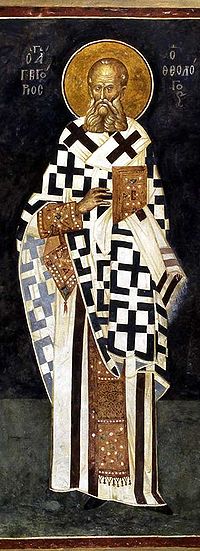
It is easy to forget the magnitude of the event of the Nativity of Jesus Christ. This was an act of God akin to Creation itself.
Here is how Saint Gregory the Theologian views it:
Again the darkness is past; again Light is made; again Egypt is punished with darkness; again Israel is enlightened by a pillar. The people that sat in the darkness of ignorance, let it see the Great Light of full knowledge. Old things are passed away, behold all things are become new. The letter gives way, the Spirit comes to the front. The shadows flee away, the Truth comes in upon them. The laws of nature are upset; the world above must be filled. It was an event to give rebirth to all of mankind. It was God's gift so we could return to the union with Him we enjoyed at the time of our creation.
Saint Gregory says,
This is our present Festival; it is this which we are celebrating, the Coming of God to Man, that we might go forth, or rather (for this is the more proper expression) that we might go back to God -that putting off the old man, we might put on the New; and that as we died in Adam, so we might live in Christ, being born with Christ and crucified with Him and buried with Him and rising with Him. As we prepare for this mystical event we need to be sober, to prepare with prayer and fasting, so we can be appreciative of this gift God has given us and give thanks out of our unrestrained love for God. We need this so we are not distracted from all the noise that surrounds this season.
Saint Gregory says,
Let us not adorn our porches; nor arrange dances, nor decorate the streets; let us not feast the eye, not enchant the ear with music, nor enervate the nostrils with perfume, not prostitute the taste, nor indulge the touch, those roads that are so prone to evil and entrances for sin; let us not be effeminate in clothing soft and flowing, whose beauty consists in its uselessness, nor with the glittering of gems or the sheen of gold or the tricks of colour, belying the beauty of nature, and invented to do despite unto the image of God. Not in rioting and drunkenness, with which are mingled, I know well, chambering and wantonness, since the lessons which evil teachers give are evil. Let us not appraise the bouquet of wines, the kickshaws of cooks, the great expense of unguents; and let us not strive to outdo each other in temperance, and this while others are hungry and in want, who are made of the same clay and in the same manner. Finally he asks us to leap with joy as did John the Baptist in his mother's womb.
Now then I pray you accept His Conception, and leap before Him; if not like John from the womb, yet like David, because of the resting of the Ark. Revere the enrolment of account of which you were written in heaven, and adore the Birth by which you were loosed from the chains of your birth, and honour little Bethlehem, which has led you back to Paradise; and worship the manger through which you, being without sense, was fed by the Word . . . If you are one of those who are as yet unclean and uneatable and unfit for sacrifice, and of the gentile portion, run with the Star, and bear your Gifts with the Magi, gold and frankincense and myrrh, as to a King, and to God, and to One Who is dead for you. With Shepherds glorify Him; with Angels join in chorus; with Archangels sing hymns. Let this Festival be common to the powers in heaven and to the powers upon earth. For I am persuaded that the Heavenly Hosts join in our exultation and keep high Festival with us today . . . because they love men, and they love God ... just like those whom David introduces after the Passion ascending with Christ and coming to meet Him, and bidding one another to lift up the gates. This is the time to focus all our actions on the glorification of God and avoid the degrading commercialization of this most important event for the salvation of mankind. All we do during this time preceding the feast of the Nativity should be to heighten our appreciation of the great gift and glorify Him.
St Gregory the Theologian

With the God-man Christ, all that is God’s has become man’s, human, ours, so that each of us individually and all of us assembled together in the Divine-human body of Christ, the Church, might become god-men, having attained ‘to the perfect man, to the measure of the stature of the fullness of Christ’ (Eph 4:12-13). Therefore Christmas, the day of the birth of the God-man, the Lord Jesus Christ, is the greatest and most important day in the history of all the worlds in which man moves and lives.
St. Nikolas Velimirovic

ΔΕΝ ΕΙΝΑΙ ΣΟΦΙΑ, γράφει ο Αββάς Ησαίας ο Αναχωρητής, να ξέρη κανείς να συζητή αριστοτεχνικά. Σοφία είναι να ξέρης πότε πρέπει να μιλήσης και τί πρέπει να πης. Δείχνε πως είσαι αμαθής, για ν’ αποφύγης πολλούς κόπους. Πολλές ανώφελες σκοτούρες έχει εκείνος που παρουσιάζει τον εαυτό του πολυμαθή. Μη καυχάσαι για πολυμάθεια, γιατί είναι περισσότερα εκείνα που δεν ξέρεις από κείνα που έχεις μάθει.
Αββάς Ησαίας ο Αναχωρητής

In his first epistle to the Corinthians Saint Paul mentions that the “Jews seek a sign” (I Cor. 1, 22), that they wanted a supernatural sign, such as the resurrection of the dead, cure of the possessed, and so on that would allow them to believe in the teaching concerning the Cross. So they looked for some supernatural sign, ignoring and overlooking the signs and wonders that God had already shown them in the past, every time they were in danger. Of course, the sign they were seeking could hardly have been anything other than that of the Cross, which, on the one hand, was prefigured throughout the Old Testament and, on the other, was permanently present and saved the people of Christ from destruction and annihilation.
The Cross is prefigured many times in the Old Testament, but we shall quote here six cases which are particularly apposite.
Perhaps the most important example of the sign of the Cross in the history of the Jewish people is that made by Moses with his staff when he parted the waters of the Red Sea, at God’s command, so that the Israelites, who were being pursued by the Egyptians, could cross and be saved, before Moses returned the waters to their original state. (Ex. 14, 1-31). Because of this event, at the feast of the Elevation of the Honourable Cross, the Orthodox Church declares: “With his rod, Moses inscribed the Cross directly on the Red Sea and parted it for Israel on foot (Irmos of the 1st ode of the canon at Mattins).
When the Israelites arrived at Refidim, Moses made the sign of the Cross twice. The first was when he smote the rock to allow water to flow from it and quench the thirst of the people, and the second when he raised his arms and his staff to the heavens to strengthen the Israelites, who were making war against the Amalekites (Ex. 17, 1-16). According to Saint Gregory Palamas, ( P. G. 133-6) it was the sign of the Cross that strengthened the Israelite warriors and encouraged them, while, according to Theodoritos Kyrou (P. G. 80, 260-1) it was not only the sign of the Cross which was prefigured, but also the crucified Lord.
Moses prefigured this holy sign one more time, when he led the people of Israel into the land of Edom. There they lost heart and their faith in God, with the result that God sent poisonous and deadly snakes to bite them, so that many of them died. When they had repented, the Lord ordered Moses to construct a snake of copper and raise it up on a pole so that all those who had been bitten and then looked upon it would immediately be healed Num. 21, 4-9). Even though the Biblical text does not give a detailed description of the manner in which the elevation of the copper snake was performed, Saint Gregory gives a very clear picture, relating that Moses raised the serpent in a horizontal position against a vertical pole, so that it formed the arms of a cross (P. G. 133-6). Besides, in the narrative in Saint John’s Gospel, Christ Himself is presented as foretelling the manner of His death, which He equates with the elevation of the copper serpent in the desert: “As Moses raised the serpent in the desert, so must the Son of Man be raised” (3, 14).
In the Old Testament, the sign of the Cross also saved the prophets Daniel and the three “children” [=young men] from extermination. Together with Daniel, the three young men, Hananiah, Azariah and Mishael [Shadrach, Meshach and Abednego are simply the Chaldean names which were assigned to them, perhaps by the Chief Official, Ashpenaz] were active in Babylon at the time of the exile and captivity of the Jews there. When they were placed in the fiery furnace, they were saved, thanks to the miraculous intervention of God (Dan. 3, 23), just as Daniel himself was saved when he was thrown into the lion’s den (Dan. 16, 23).
Of course, in these cases the Biblical text does not present an image of the survival of the three young men, but this is given by Saint Andrew of Crete, who states that they, and thereafter Daniel the prophet, were saved because they formed the shape of the cross with their arms, raising them to the heavens (P.G. 97, 1040-1). The hymnology of the Church preserves the same tradition: on the Sunday of the Veneration of the Cross we sing: “Having once been thrown into the lion’s den the great prophet Daniel extended his arms in the form of a cross and was saved unharmed from being devoured by them” (Ode 8 of the canon at Mattins).
It is not only Christ’s Cross which is prefigured in the Old Testament, but other events, too, such as the Nativity, the Passion and the Resurrection. But the Cross of Christ is the means by which Christ vanquished the primeval enemy and was glorified. He defeated death and, through the Resurrection, brought people into a new condition of life, liberated from the bonds of death and decay.
Even though the cross was a symbol of death and damnation in the era before Christ, (because, according to the provisions of Deuteronomy, anyone dying upon the tree [pole] was considered to be cursed. 21, 23), once Christ had been crucified, it became the symbol of victory over death, of glory and majesty. The Cross lost the attributes of degradation, wretchedness, obloquy and humiliation, and became an expression of sanctity, benediction, honour, glory and magnificence.
But how did this radical change, this miracle, this transformation occur? Naturally, through the incarnation of the Son and Word of God, when “the Word became flesh” (Jn. 1, 14) and through His crucifixion by which He “died for us” (Rom. 5, 8), “and in the appearance of a man, humbled himself
by becoming obedient unto death, even death on a cross” (Phil. 2, 8), ransoming “us from the curse of the law by becoming a curse for our sakes” (Gal. 3, 13).
Christ’s crucifixion and resurrection opened the way to paradise and rescinded the fiery sword which barred the way to the tree of life (Gen. 3, 24). If we look at the hymnography of the feast of the Veneration of the Cross, we observe the praise lavished upon it. It is called: guardian of the gate of paradise, victory-sign of kings, boast of priests, support of the faithful, guardian of the world, glory and boast of the Church, the much-vaunted boast of Christians, particular teaching of the Apostles, diadem of the martyrs and priceless adornment of the prophets (Vespers, Sunday of the Veneration of the Cross [Third Sunday in Great Lent]).
http://agapienxristou.blogspot.ca/2013/12/the-sign-of-cross-in-old-testament.html
- See more at: http://pemptousia.com/2013/10/the-sign-of-the-cross-in-the-old-testament/#sthash.R9kMWcrM.dpuf
Tinian people preserve their local manners and customs as sacred. Besides, many of those stem from ancient religious traditions. These customs survive mostly in the villages, although the Main Town also has its own traditions. In addition, the locals often combine their deep religious faith with their love for dancing and singing, regularly organizing local festivities and fairs.
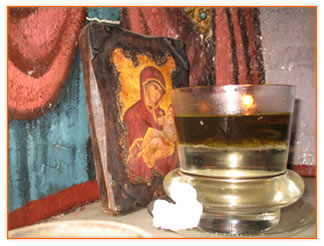
A custom that proves the deep religious faith of Tinians is the lighting of Vigil Lights. It is an unwritten law, binding the locals to light all the country chapels this way every Saturday afternoon and on the eve of the celebration of a saint’s memory. Every chapel has a permanent or temporary owner, responsible for keeping the custom. Non-fulfillment of this obligation is considered a moral offence not tolerated by the locals.
This custom sometimes takes the form of a solemn religious promise. Thus, many Tinians often as a token of gratitude, supplication or thanks to a Saint, vow to go to the chapel dedicated to the Saint’s name. The pilgrims arrive at the chapel early in the morning. If the oil lamps are already lit, they add some oil to keep them burning and they leave the oil bottle they brought with them next to the candelabrum so it can be used later.
In every case, the ritual includes candle lighting and incense burning. These three ritual elements are the only material sacrifice that has survived since the early Christian years. Its nature is symbolic. Its value is not measured by the materials offered, but by the pilgrim’s devoutness. In general, oil lamp lighting represents the light in their souls. The flame symbolizes the light of the Holy Spirit and the resplendence of all the Saints who are deep in the locals’ hearts.
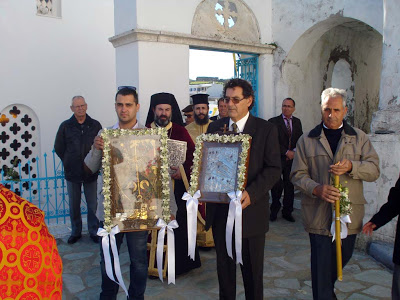
An old Christian custom, of monastic origin, is held during the Christmas season in Tripotamos. Every year, one family, whose leader receives the title of ‘Kavos’, takes on the responsibility of taking care of the village church, which is dedicated to the Presentation of the Virgin Mary. Among their responsibilities is to keep the oil lamp (vigil light) hanging over the Icon of the Nativity lit all year round. In addition, they keep the church clean, they pay the costs for the Christmas Divine Liturgy, the provision of candles, while they are also responsible for the making of a huge candle for the New Year’s Day Service.
On Christmas day, at noon, the Kavos invites the priest and the men – the head of families of the village – for lunch. Each one of the guests has to bring his own fork, spoon, bread and wine, all wrapped in a napkin. The Kavos has to make provisions for a lavish meal, with soup, veal stew, and braised meat with tomato sauce, stuffed vine leaves and several other local specialties. Wine is served in goblets, special mugs of hemispherical shape made of brass that are used only on this occasion.
After the meal, the priest and some of the table-companions carry the Icon of the Nativity from the church to their host’s house chanting Christmas hymns. The Icon is placed on the table, the priest hands out the holy bread, while everyone lights candles, similar to those used in the morning service. This is the moment when the priest appoints the next ‘Kavos’. After eating the traditional sweets, the Icon is taken back to church while the crowd chants Christmas hymns.
On the next day (26th of December) all the men of the village gather again in the house of the former Kavos, to finish up the leftovers from the previous day. Typically, the responsibilities of the former Kavos end with the Christmas meal. However, the oil lamp has to remain lit till the last day of the year. After Divine Liturgy on the 31st of December, there is a procession of the Icon around the houses of the village according to the custom of ‘podariko’ (= first visitor at a house on New Year’s Day is considered to bring good luck).
Today the list for the title of Kavos runs till 2025, which means that this custom is very popular with the locals. In earlier days though, the Kavos would be a last-minute choice, since most of the families were not well-off.
http://agapienxristou.blogspot.ca/2013/12/a-christmas-tradition-on-island-of-tinos.html

'Ετσι και εμείς με επιμονή και υπομονή παραμένουμε στην προσευχή μέχρι να μας ακούση ο Θεός. 'Ετσι και εσείς, κατά το Ευαγγέλιο, που λέει να επιμένετε στην προσευχή και να μην αποκάμνετε, πρέπει να προσεύχεσθε συνεχώς και ασταμάτητα μέχρι να κερδίσετε αυτό που θέλετε, ενώ ταυτοχρόνως μαθαίνετε να προσεύχεσθε και να επικοινωνήτε με τον Θεόν. Από την επίμονη προσευχή έχουμε οφέλη, γιατί μας παραχωρεί ο Θεός αυτό που ζητούμε, ενώ ταυτοχρόνως μαθαίνουμε να προσευχώμαστε.
Γεροντας Παϊσιος


