
Οι σκέψεις είναι σαν τα αεροπλάνα που πετούν στον αέρα. Αν τα αγνοήσετε, δεν υπάρχει κανένα πρόβλημα. Αν δώσουμε προσοχή σε αυτά, δημιουργείτε ένα αεροδρόμιο μέσα στο κεφάλι μας και τους επιτρέπουμε να προσγειωθουν!
Άγιος Παΐσιος
Thoughts are like airplanes flying in the air. (St.Paisios )

Thoughts are like airplanes flying in the air. If you ignore them, there is no problem. If you pay attention to them, you create an airport inside your head and permit them to land!“
St.Paisios of Mount Athos
http://agapienxristou.blogspot.ca/2014/08/thoughts-are-like-airplanes-flying-in.html
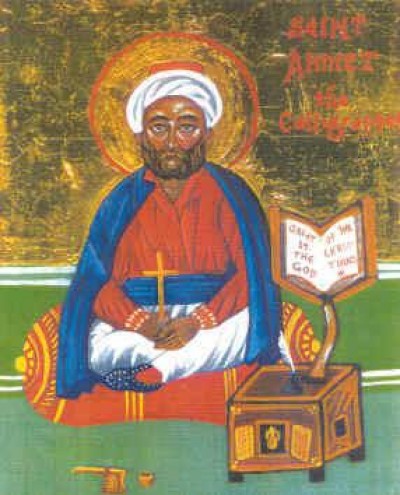 Ahmed was born in the seventeenth century to a Muslim family in Constantinople. By profession he was a copyist in the Great Archives. In accordance with Ottoman law, since he did not have a wife, he had a slave instead, a Russian woman. There was also another captive from Russia that lived together with her. She was an old woman. Both of these women were very pious.
On the feast days of the Orthodox Church, the old woman would go to Church. Taking the blessed bread or antidoron* from the priest, she would bring it home to give to the young woman to eat. The old woman would also bring her Holy Water to drink. Whenever this occurred and Ahmed was close to her, he would smell a beautiful and indescribable fragrance coming out of her mouth. He would ask her what she was eating that made her mouth smell so fragrant. Not realizing what was happening, the slave woman would say that she was not eating anything special. However, Ahmed persisted in asking her about this phenomenon that was happing. Eventually she told him that she was eating the bread which had been blessed by the priests which the old woman brought her whenever she returned from Church.
On hearing this, Ahmed was filled with longing to see the Orthodox Church and how Orthodox faithful received the blessed bread. Therefore he summoned an Orthodox priest and told him to prepare a secret place for him so that he could go when the Patriarch was serving the Divine Liturgy. When the appointed day arrived and dressed as an Orthodox Christian, he went to the Patriarchate and attended the Divine Liturgy. While he was in Church, he saw the Patriarch shining with Light and lifted up off of the floor as he came out of the altar and through the holy doors to bless the people. As he blessed, rays of Light came from his finger tips, but though the rays fell on the heads of all the Orthodox faithful, they did not fall on Ahmed’s head. This happened two or three times and each time Ahmed saw the same thing. Thus, Ahmed came to believe in the Orthodox Faith. Without hesitation he then sent for an Orthodox priest to baptized in the faith. Ahmed kept his conversion to the Orthodox faith secret for some time, concealing his baptismal name which is why it is unknown to us today.
However, one day Ahmed and certain noblemen were eating together. Afterwards they sat talking and smoking, as is the custom amongst Muslims. In the course of the conversation they began to discuss what they thought was the greatest thing in the world. Each gave his opinion. The first guest said that the greatest thing in the world was for a man was to have wisdom. The second guest maintained that women were the greatest thing in the world. And then the third guest said that the greatest thing in the world, and by far the most delightful, was good food—for was this not the food of the righteous in paradise?
Then it was Ahmed’s turn to give his opinion on the matter. Filled with holy zeal, Admed cried out that the greatest thing in the entire world was the Orthodox Faith of the Christian people. And then confessing himself to be a Christian, he boldly censured the falseness and deception of the Muslim faith. At first, on hearing this, the Muslims were aghast. Then, filled with unspeakable rage, they fell on Ahmed and dragged him off to the Muslim judge to be judged by sharia law so that he could be sentenced to death. He was beheaded, receiving the crown of martyrdom on the orders of the ruler on May 3, 1682.
*Antidoron or bread offering for the Divine Liturgy is the bread that is used at the Eucharistic service. What is not consecrated in the Liturgy is cut up into small squares and is distributed to the faithful at the conclusion of the Divine Liturgy. The word antidoron literally means in place of the Gifts. In other words, all the faithful who attend the Divine Liturgy receive something that has been blessed at the service whether they receive Holy Communion or not. The Gifts is in reference to the Body and Blood of Christ, Holy Communion, so those who do not receive Holy Communion on that particular day still receive something that has been blessed at the service.
http://agapienxristou.blogspot.ca/2013/08/ahmedthe-muslim-who-encountered-power.html

It would be a gross understatement to say that much has been written about the Feast of the Dormition of the Theotokos. Yet very little has been written about the fast that precedes it.
Every Orthodox Christian is aware and generally knows the reason behind the fasts for Pascha and Christmas. But while they may know of the Dormition Fast, few follow it, and more than a few question why it is there, neither knowing its purpose. First, given the pervasive misunderstanding of the purpose of fasting itself, a refresher on its purpose is always a good idea.
There is a perception that we should fast when we want something, as though the act of fasting somehow appeases God, and seeing us “suffer” gets Him to grant our request. Nothing can be further from the truth. It is not our fasting that pleases God, it is the fruits of our fast (provided we fast in the proper mind set, and do not merely diet) that please Him. We fast, not to get what we want, but to prepare ourselves to receive what God wants to give us. The purpose of fasting is to bring us more in line with another Mary, the sister of Lazarus, and away from their sister Martha, who in the famous passage was “anxious and troubled about many things.” Fasting is intended to bring us to the realization of “the one thing needful.” It is to help us put God first and our own desires second, if not last. As such it serves to prepare us to be instruments of God’s will, as with Moses in his flight from Egypt and on Mt. Sinai, as well as our Lord’s fast in the wilderness. Fasting turns us away from ourselves and toward God. In essence it helps us become like the Theotokos, an obedient servant of God, who heard His word and kept it better than anyone else has or could.
So why do we fast before Dormition? In a close-knit family, word that its matriarch is on her deathbed brings normal life to a halt. Otherwise important things (parties, TV, luxuries, personal desires) become unimportant; life comes to revolve around the dying matriarch. It is the same with the Orthodox family; word that our matriarch is on her deathbed, could not (or at least should not) have any different effect than the one just mentioned. The Church, through the Paraklesis Service, gives us the opportunity to come to that deathbed and eulogize and entreat the woman who bore God, the vessel of our salvation and our chief advocate at His divine throne. And as, in the earthly family, daily routines and the indulgence in personal wants should come to a halt. Fasting, in its full sense (abstaining from food and desires) accomplishes this. Less time in leisure or other pursuits leaves more time for prayer and reflection on she who gave us Christ, and became the first and greatest Christian. In reflecting on her and her incomparable life, we see a model Christian life, embodying Christ’s retort to the woman who stated that Mary was blessed because she bore Him: blessed rather are those who hear His word and keep it. Mary did this better than anyone. As Fr. Thomas Hopko has stated, she heard the word of God and kept it so well, that she of all women in history was chosen not only to hear His Word but give birth to it (Him). So while we fast in contemplation of her life, we are simultaneously preparing ourselves to live a life in imitation of her. That is the purpose of the Dormition Fast.
When the assumption of thine undefiled body was being prepared, the Apostles gazed on thy bed, viewing thee with trembling. Some contemplated thy body and were dazzled, but Peter cried out to thee in tears, saying, I see thee clearly, O Virgin, stretched out, O life of all, and I am astonished. O thou undefiled one, in whom the bliss of future life dwelt, beseech thy Son and God to preserve thy people unimpaired.
(Sticheron after the Gospel, Orthros)

Η Παναγία, κατά τον άγιο Ιωάννη τον Δαμασκηνό, τον μεγαλύτερο δογματικό πατέρα της Εκκλησίας μας, "κατέχει τα δευτερεία της Αγίας Τριάδος".
Δηλαδή εμείς οι ορθόδοξοι χριστιανοί μετά την Αγία Τριάδα τιμάμε την Παναγία. Μεγάλη όντως τιμή. Στο πρόσωπο της Παναγίας τιμάται το γυναικείο φύλο. Ο πιστός ελληνικός λαός τιμά ιδιαίτερα κι ευλαβείται πολύ την Παναγία.
Αυτό φαίνεται και στο ότι από τις 30.000 εκκλησίες, παρεκκλήσια κι εξωκλήσια όλης της Ελλάδος οι 6.000 είναι αφιερωμένες σε εορτές της Παναγίας και οι περισσότερες στην Κοίμηση της Θεοτόκου. Μάλιστα από τα 1.000 μοναστήρια της Ελλάδος τα 300 τιμώνται σ' εορτές της Παναγίας· Γέννηση, Ευαγγελισμός, Ζωοδόχος Πηγή, Τιμία Ζώνη, Κοίμηση. Τα στοιχεία αυτά λαμβάνουμε από τα επίσημα Δίπτυχα της Εκκλησίας της Ελλάδος του 2008.
Στο Άγιον Όρος, τα ωραία προσωνυμούμενο "Περιβόλι της Παναγίας", από τον πολύπλαγκτο Σκοπελίτη Ξηροποταμηνό μοναχό Καισάριο Δαπόντε, ονομασία που επεκράτησε, η τιμή της Παναγίας πλησιάζει τα όρια της λατρείας. Από τις 20 μονές οι 5 τιμώνται στην Παναγία. Από τις 12 σκήτες οι 3 είναι αφιερωμένες στην Παναγία. Από τα 300 κελιά περίπου τα 50 πανηγυρίζουν σ' εορτές της Παναγίας.
Κέντρο του θεομητορικού εορτασμού τον Αύγουστο στον ιερό Άθωνα είναι ο πάνσεπτος ναός του Πρωτάτου στις Καρυές. Αφιερωμένος στην Κοίμηση της Θεοτόκου. Η πολυπρόσωπη και κατανυκτική μεγάλη εικόνα του τέμπλου παρουσιάζει κατά τη βυζαντινή παράδοση τη σύνταξη των αποστόλων και πρώτων επισκόπων γύρω από τη νεκρική κλίνη της Θεοτόκου. Ο Χριστός ψηλά μετά αγγέλων να παραλαμβάνει την ψυχή της. Η ίδια εικόνα σε μικρό μέγεθος στο προσκυνητάρι. Μεγάλη και ωραιότατη ίδια παράσταση σε τοιχογραφία από τον χρωστήρα του Θεσσαλονικέως Πανσέληνου και της συνοδείας του στα τέλη του 13ου αιώνος.
Η θαυματουργή εικόνα του Άξιον Εστί δεσπόζει και λάμπει στο προσκυνητάρι της, με την κεντητή ποδιά, τα' ασημένια καντήλια, τα άνθη, τα θυμιάματα, τα' αφιερώματα, τις λαμπάδες, τις μετάνοιες, τους μύριους ασπασμούς. 15 Αυγούστου 2008 και όλο το Άγιον Όρος αγρυπνεί εκ βαθέων ψάλλοντας: "Και σε μεσίτριαν έχω προς τον φιλάνθρωπον Θεόν μη μου ελέγξη τας πράξεις ενώπιον των αγγέλων· παρακαλώ σε Παρθένε βοήθησόν μοι εν τάχει".
Η θεοτοκοφιλία μοναχών και λαϊκών είναι δικαιολογημένη, δίκαιη, πηγαία, αυθόρμητη και ειλικρινής. Η Παναγία είναι το καλύτερο που είχε να δώσει όλη η ανθρωπότητα στη θεότητα. Είναι η ωραιότερη, σεμνότερη, ταπεινότερη και ιερότερη γυναίκα του κόσμου
Μοναχός Μωϋσής, αγιορείτης
http://agapienxristou.blogspot.ca/2013/08/blog-post_3.html

By St. Nikolai Velimirovich (Written in 1956)
You ask me, why is the Orthodox Church against cremation. First of all, because it considers it violent. The Serbs still shudder with the crime of Sinan Pasha, who burned the dead body of St. Sava in Vratsa.
Do people burn dead horses, dogs, cats and monkeys? I have not heard of this. I have heard of and seen them buried. Why should the dead bodies of people who are the lords of all animals on earth endure violence? Would it not be in all respects much more reasonable to incinerate dead animals, especially in big cities, than people?
Second, because this pagan and barbaric habit disappeared from Europe thanks to Christian civilization two thousand years ago. Anyone who wants to reinstate it doesn't do anything else, neither civilized nor modern nor new, but something ancient which has long expired.
In England, which one can hardly call uncivilized, this form of Neopaganism is very much hated by the people. To tell you a case: during the years of World War II a famous Yugoslav lost his mind. When asked before he died, he said his only desire was to have his body burned.
In our day, our little Yugoslavian community was reduced in the incinerator of Golders Green. When the dead bodies entered the burning furnace we began to tremble with horror. Then they shouted to us on the opposite side of the furnace, "wait a quarter of an hour to see your compatriot in the form of ashes". We waited over an hour and were mystified why the fire struggled with the dead body, and we asked the stoker about this. He apologized saying the furnace was cold, "it is not heated every day, since rarely do volunteers get handed over to the fire". Listening to this we were dissolved, unable to wait at the edge for our compatriot. And we know that in London over a thousand human beings die every day.
I am in America, I saw the graves of the great Presidents Wilson, Roosevelt, Lincoln and many other important persons. None of them are cremated. Now this surprised me, that among the descendants of Saint Sava there could be found those who are like-minded with Sinan Pasha!
But why create an issue that has already been solved? If we want to be loaded with unnecessary worries, then someday we could be troubled by the question on whether to kill our decrepit men and women as do some primitive tribes? And we will create clubs to propagate this "idea"!
Finally, what sense is there in fighting the cemeteries, particularly in this country where the cemetery serves as a national pride, as a source of inspiration, and if you will as the book of the state?
Peace to you and health from God.
St. Nikolai Velimirovich
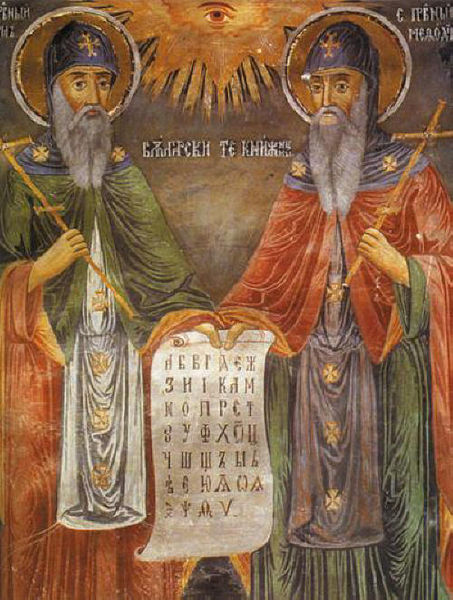
Sts Cyril and Methodius
We must invite our friends and neighbors to “taste and see” the great treasure that is Orthodoxy, for it is our responsibility, as Christians, to reach out in kindness, and with a welcoming smile, when we see strangers enter our temples.
Two Byzantine brothers, Saints Cyril and Methodius, brought Orthodox Christianity to the Slavs in the ninth century. The brilliance of Eastern Orthodox missionary outreach, as opposed to that of the Latin Church, was in the very use of the vernacular. These great saints who became known as the Apostles to the Slavs, left the Slavs with a liturgical language that was understandable to them. The services were not imparted in the Greek language, as though it alone was sacred enough to be used in Divine Worship, but helped them understand their new faith by worshiping in their own language.
http://agapienxristou.blogspot.ca/2013/07/sts-cyril-and-methodius-on-great.html

Μου είπε κάποτε προ ετών ο σεβαστός γέρων Γεράσιμος ο Υμνογράφος.
Ο άγιος Γρηγόριος ο Παλαμάς λέει ότι το μόνο το οποίο αδυνατεί να πράξει ο Παντοδύναμος Θεός είναι το να ενωθεί με τον ακάθαρτο άνθρωπο.
Σε αυτό αδυνατεί.
Αγιος Γρηγόριος ο Παλαμάς

Almost all illnesses are caused by our lack of trust in the Lord. This creates stress. Stress is caused by the negation of the religious sentiment. Unless you love the Lord and preoccupy yourself with holy deeds, you will certainly have depression and nasty feelings.
There is one thing which helps someone who is depressed: work and showing an interest in living: For example having a garden, some plants, flowers, trees, or getting outside, going for a walk in the countryside, or for a simple walk. All these create an interest and stop a person’s apathy. They act like medicine.
Moreover, being interested in music or the arts is very beneficial. But I specially emphasize the need to show an interest for the Church, for the Gospel and the liturgical services. Just by studying the Lord’s word one is healed without realizing it.
We ought not to be discouraged or be in a hurry. We ought not to judge things superficially or by their external appearance. If for example you happen to see a naked woman or one who is dressed inappropriately, do not criticize her but try to enter her soul. She may have a good heart and may express her existential worries through her wild appearance. She may process an inner strength and wish to show off arousing interest. She may have a distorted view of things because of her ignorance. Imagine what will happen if she does actually come to know Christ. She will become a believer and will direct all this passion towards Christ. She will do anything to attract divine grace. She will become a saint.
Because of our anxiety and our fears we often cause harm to someone without meaning to and without realizing it, even if we love him very much, like a mother does her child. A mother may transfer to the child all her anxiety about his life, his health and progress, even though she does not express it with words. This kind of love, this natural love, may sometimes cause harm. However, this does not happen with the love of Christ which is coupled with prayer and a careful way of life. This love sanctifies and calms a person, since God is love.
Translation of excerpts from the book «ΓΕΡΟΝΤΟΣ ΠΟΡΦΥΡΙΟΥ ΙΕΡΟΜΟΝΑΧΟΥ Ανθολόγιο Συμβουλών»
Published by Η ΜΕΤΑΜΟΡΦΩΣΙΣ ΤΟΥ ΣΩΤΗΡΟΣ ΜΗΛΕΣΙ ΑΤΤΙΚΗΣ
http://agapienxristou.blogspot.ca/2013/07/dealing-with-depression-elder-porphyrios.html
 ΤΟ ΣΥΜΒΟΛΟ ΤΗΣ ΠΙΣΤΕΩΣ
1. Πιστεύω εἰς ἕνα Θεόν, Πατέρα, Παντοκράτορα, ποιητὴν οὐρανοῦ καὶ γῆς, ὁρατῶν τε πάντων καὶ ἀοράτων.
2. Καὶ εἰς ἕνα Κύριον Ἰησοῦν Χριστόν, τὸν Υἱὸν τοῦ Θεοῦ τὸν μονογενῆ, τὸν ἐκ τοῦ Πατρὸς γεννηθέντα πρὸ πάντων τῶν αἰώνων· φῶς ἐκ φωτός, Θεὸν ἀληθινὸνἐκ Θεοῦ ἀληθινοῦ, γεννηθέντα οὐ ποιηθέντα, ὁμοούσιον τῷ Πατρί, δι' οὗ τὰ πάντα ἐγένετο.
3. Τὸν δι' ἡμᾶς τοὺς ἀνθρώπους καὶ διὰ τὴν ἡμετέραν σωτηρίαν κατελθόντα ἐκ τῶν οὐρανῶν καὶ σαρκωθέντα ἐκ Πνεύματος Ἁγίου καὶ Μαρίας τῆς Παρθένου καὶ ἐνανθρωπήσαντα.
4. Σταυρωθέντα τε ὑπὲρ ἡμῶν ἐπὶ Ποντίου Πιλάτου, καὶ παθόντα καὶ ταφέντα.
5. Καὶ ἀναστάντα τῇ τρίτῃ ἡμέρα κατὰ τὰς Γραφάς.
6. Καὶ ἀνελθόντα εἰς τοὺς οὐρανοὺς καὶ καθεζόμενον ἐκ δεξιῶν τοῦ Πατρός.
7. Καὶ πάλιν ἐρχόμενον μετὰ δόξης κρῖναι ζῶντας καὶ νεκρούς, οὗ τῆς βασιλείας οὐκ ἔσται τέλος.
8. Καὶ εἰς τὸ Πνεῦμα τὸ Ἅγιον, τὸ κύριον, τὸ ζωοποιόν, τὸ ἐκ τοῦ Πατρὸς ἐκπορευόμενον, τὸ σὺν Πατρὶ καὶ Υἱῷ συμπροσκυ-νούμενον καὶ συνδοξαζόμενον, τὸ λαλῆσαν διὰ τῶν προφητῶν.
9. Εἰς μίαν, Ἁγίαν, Καθολικὴν καὶ Ἀποστολικὴν Ἐκκλησίαν.
10. Ὁμολογῶ ἓν βάπτισμα εἰς ἄφεσιν ἁμαρτιῶν.
11. Προσδοκῶ ἀνάστασιν νεκρῶν.
12. Καὶ ζωὴν τοῦ μέλλοντος αἰῶνος.
Ἀμήν.
THE CREED (Αγγλικά)
1.I believe in one God, the Father Almighty, Creator of heaven and earth, and of all things visible and invisible. 2.And in one Lord, Jesus Christ, the only begotten Son of God, begotten of the Father before all ages. Light of Light, true God of true God, begotten, not created, of one essence with the Father, through whom all things were made.
3.For us and for our salvation, He came down from heaven and was incarnate by the Holy Spirit and the Virgin Mary and became man.
4.He was crucified for us under Pontius Pilate, and He suffered and was buried.
5.On the third day He rose according to the Scriptures. 6.He ascended into heaven and is seated at the right hand of the Father.
7.He will come again in glory to judge the living and the dead. His kingdom will have no end.
8.And in the Holy Spirit, the Lord, the Giver of Life, who proceeds from the Father, who together with the Father and the Son is worshiped and glorified, who spoke through the prophets.
9.!n one, holy, catholic, and apostolic Church.
10. I acknowledge one baptism for the forgiveness of sins.
11. I expect the resurrection of the dead.
12.And the life of the age to come.
Amen.
LE SYMBOLE DE FOI (Γαλλικά)
1.Je crois en un seul Dieu. Père tout-puissant, Créateur du ciel et de la terre, de toutes les choses visibles et invisibles. 2.Et en un seul Seigneur Jésus-Christ, Fils unique de Dieu, engendré du Père avant tous les siècles. Lumière de lumière, vrai Dieu de vrai Dieu, engendré, non créé, consubstantiel au Père, et par qui tout a été fait.
3.Qui, pour nous, hommes, et pour notre salut est descendu des cieux et a pris chair du Saint-Esprit et de la Vierge Marie, et s'est fait homme.
4.Qui a été crucifié pour nous, sous Ponce Pilate, a souffert et a été enseveli.
5.Qui est ressuscité le troisième jour, selon les Écritures. 6.Qui est monté aux cieux et est assis à la droite du Père. 7.Et qui reviendra avec gloire, juger les vivants et les morts et dont le règne n'aura pas de fin.
8.Et en l'Esprit Saint, Seigneur, donateur de vie, qui procède du Père, qui est adoré et glorifié avec le Père et le Fils et qui a parlé par les Prophètes
9.En l'Église une, sainte, catholique et apostolique.
10.Je confesse un seul baptême pour la rémission des péchés.
11.J'attends la résurrection des morts.
12.Et la vie du siècle à venir.
Amen.
II SIMBOLO DI CREDO (Ιταλικά)
1.Credo in un solo Dio, Padre onnipotente, creatore del cielo e della terra, di tutte le cose visibili ed invisibili.
2.Credo in un solo Signore, Gesù Cristo, unigenito Figlio di Dio, nato dal Padre prima di tutti i secoli: Luce da Luce, Dio vero da Dio vero, generato, non creato, della stessa sostanza del Padre; per mezzo di lui tutte le cose sono state create.
3.Per noi uomini e per la nostra salvezza discese dal cielo
e per opera dello Spirito Santo si è incarnato nel seno della Vergine Maria e si è fatto uomo.
4.Fu crocifisso per noi sotto Ponzio Pilato, morì e fu sepolto.
5.Il terzo giorno è risuscitato, secondo le Scritture,
6.è salito al cielo, siede alla destra del Padre.
7.E di nuovo verrà, nella gloria, per giudicare i vivi e i morti, e il suo regno non avrà fine.
8.Credo nello Spirito Santo, che è Signore e dà la vita,
e procede dal Padre, e con il Padre e il Figlio è
dorato e glorificato, e ha parlato per mezzo dei profeti.
9.Credo la Chiesa una, santa, cattolica e apostolica.
10.Professo un solo battesimo per il perdono dei peccati.
11.Aspetto la risurrezione dei morti
12.e la vita del mondo che verrà.
Amen.
DAS GLAUBENSBEKENNTNIS (Γερμανικά)
1.Ich glaube an den einen Gott, den Vater, den Allherrscher, Schöpfer des Himmels und der Erde, alles Sichtbaren und Unsichtbaren.
2.Und an den einen Herrn Jesus Christus, den Sohn Gottes, den Einziggeborenen, den aus dem Vater Gezeugten vor allen Äonen, Licht vom Lichte, wahrer Gott vom wahren Gott, gezeugt, nicht geschaffen, eines Wesens mit dem Vater, durch den alles erschaffen ist.
3.Der für uns Menschen und um unseres Heiles willen von den Himmeln hernieder gestiegen ist und Fleisch angenommen hat aus dem Heiligen Geiste und Maria der Jungfrau und Mensch geworden ist.
4.Der sogar für uns gekreuzigt worden ist unter Pontius Pilatus, gelitten hat und begraben worden ist.
5.Und auferstanden ist am dritten Tage gemäß den Schriften.
6.Und aufgefahren ist in die Himmel und sitzet zur Rechten des Vaters.
7.Und wiederkommen wird in Herrlichkeit, zu richten die Lebendigen und die Toten; dessen Reiches kein Ende sein wird.
8.Und an den Heiligen Geist, den Herrn, den Lebensschaffenden, der vom Vater ausgeht, der mit dem Vater und dem Sohn angebetet und verherrlicht wird, der gesprochen hat durch die Propheten.
9.An die eine, heilige, katholische und apostolische Kirche. 10.Ich bekenne die eine Taufe zur Vergebung der Sünden.
11.Ich harre der Auferstehung der Toten.
12.Und des Lebens des kommenden Äons.
Amen.
CREIO (Πορτογαλικά)
1.CREIO EM UM SΣ DEUS,Pai Todo-Poderoso, Criador do Cιu e da terra, de todas as coisas visνveis e invisνveis. 2.Creio em um sσ Senhor, Jesus Cristo, Filho Ϊnico de Deus, nascido do Pai antes de todos os sιculos:
Luz da Luz, Deus verdadeiro de Deus verdadeiro;gerado, nγo criado, consubstancial ao Pai, por quem todas as coisas foram feitas.
3.E por nσs, homens, e para nossa salvaηγo desceu dos Cιus. E encarnou pelo Espνrito Santo, no seio de Maria Virgem e Se fez Homem.
4.Tambem por nσs foi crucificado sob Pτncio Pilatos; padeceu e foi sepultado.
5.Ressuscitou ao terceiro dia, conforme as Escrituras;
6.e subiu aos Cιus,onde estα sentado ΰ direita de Deus Pai.
7. De novo hα-de vir cheio de glσria, para julgar os vivos e os mortos; e o Seu Reino nγo terα fim.
8.Creio no Espνrito Santo, Senhor e Fonte de Vida que procede do Pai e com o Pai e o Filho recebe a mesma adoraηγo e a mesma glσria, Foi Ele que falou pelos Profetas.
9.Creio na Igreja Una, Santa, Catσlica e Apostσlica.
10.Reconheηo um sσ Bαptismo para a remissγo dos pecados. 11.Eespero a ressurreiηγo dos mortos
12.e a vida do mundo que hα-de vir.
Amen!
CREO (Ισπανικά)
1.Creo en un solo Dios, Padre todopoderoso, Creador del cielo y de la tierra, de todo lo visible y lo invisible.
2.Creo en un solo Señor, Jesucristo, Hijo único de Dios,
nacido del Padre antes de todos los siglos: Luz de Luz,
Dios verdadero de Dios verdadero, engendrado, no creado, de la misma naturaleza del Padre; por quien todas las cosas fueron hechas;
3. que por nosotros los hombres, y por nuestra salvación
descendió del cielo, y por obra del Espíritu Santo se encarnó de María, la Virgen, y se hizo hombre;
4.y por nuestra causa fue crucificado en tiempos de Poncio Pilato, padeció y fue sepultado,
5.y resucitó al tercer día, según las Escrituras,
6.y subió al cielo, y está sentado a la derecha del Padre;
7.y de nuevo vendrá con gloria, para juzgar a vivos y muertos, y su reino no tendrá fin.
8.Creo en el Espíritu Santo, Señor y dador de vida,
que procede del Padre, que con el Padre y el Hijo recibe una misma adoración y gloria, y que habló por los profetas.
9.Creo en la Iglesia que es Una, Santa, Católica y Apostólica.
10.Reconozco que hay un solo bautismo para el perdón de los pecados,
11.espero la resurrección de la carne
12.y la vida del mundo futuro.
Amén.
CREDO (Λατινικά)
Credo in unum Deum, Patrem omnipotentem, factorem caeli et terrae, visibilium omnium et invisibilium.
2.Et in unum Dominum Iesum Christum, Filium Dei unigenitum, et ex Patre natum ante omnia saecula. Lumen de lumine, Deum verum de Deo vero, genitum, non factum, consubstantialem Patri, per quem omnia facta sunt.
3.Qui propter nos homines et propter nostram salutem descendit de caelis et incarnatus est de Spiritu Sancto ex Maria Virgine, et homo factus est.
4.Crucifixus etiam pro nobis sub Pontio Pilato; passus et sepultus est
5.et resurrexit tertia die secundum Scripturas,
6.et ascendit in caelum, sedet ad dexteram Patris.
7.Et iterum venturus est cum gloria iudicare vivos et mortuos, cuius regni non erit finis.
8.Et in Spiritum Sanctum, Dominum et vivificantem: qui ex Patre procedit. Qui cum Patre et Filio simul adoratur et conglorificatur: qui locutus est per prophetas.
9.Et unam, sanctam, catholicam et apostolicam Ecclesiam.
10.Confiteor unum baptisma in remissionem peccatorum.
11.Et expecto resurrectionem mortuorum
12.et vitam venturi saeculi.
Αmen.
SERBIAN (Σερβικά)
Верујем у једнога Бога Оца, Сведржитеља, Творца неба и земље и свега видљивог и невидљивог.
И у једнога Господа Исуса Христа, Сина Божијег, Јединородног, од Оца рођеног пре свих векова; Светлост од Светлости, Бога истинитог од Бога истинитог; рођеног, а не створеног, једносуштног Оцу, кроз Кога је све постало; Који је ради нас људи и ради нашег спасења сишао с небеса, и оваплотио се од Духа Светога и Марије Дјеве, и постао човек; и Који је распет за нас у време Понтија Пилата, и страдао и погребен; и Који је васкрсао у трећи дан, по Писму; И Који се вазнео на небеса и седи са десне стране Оца; И Који ће опет доћи са славом, да суди живима и мртвима, Његовом царству неће бити краја.
И у Духа Светога, Господа, Животворног, Који од Оца исходи, Који се са Оцем и Сином заједно поштује и заједно слави, Који је говорио кроз пророке.
У једну, свету, саборну и апостолску Цркву. Исповедам једно крштење за опроштење грехова. Чекам васкрсење мртвих. И живот будућег века.
Амин.
ALBANIAN (Αλβανικά)
Besoj në një Perëndi, Atë të tërëfuqishëm, krijues të qiellit e të dheut dhe të gjithë të dukarave dhe të padukurave.
Dhe në një Zot, Jisu Krishtin, Birin e Perëndisë, të vetemlindurin, që lindi prej Atit përpara gjithë shekujve. Dritë prej Drite, Perëndi të vërtetë prej Perëndie të vërtetë, të lindur, jo të bërë, që ka të qënët një me Atin, me anën e të cilit u bënë të gjitha. Që për ne njerëzit dhe për shpëtimin tonë zbriti prej qiejve dhe u trupëzua prej Shpirtit të Shejtë dhe Virgjëreshës Mari dhe u bë njeri. Dhe u kryqëzua për ne në kohën e Pontit Pilat dhe pësoi e u varros. Dhe u ngjall të tretën ditë sipas Shkrimeve. Dhe u ngjit në qiejt dhe rri në të djathtën e Atit. Dhe do të vijë përsëri me lavdi të gjykojë të gjallët e të vdekurit, mbretëria e të cilit nuk do të ketë mbarim.
Dhe në Shpirtin e Shejtë, Zot jetëbërës, që buron prej Atit, që adhurohet e lavdërohet bashkë me Atin e me Birin, që foli me anën e Profetëve.
Në një Kishë të shejtë, katholike dhe apostolike. Pohoj një pagëzim për ndjesën e mëkateve. Pres ngjalljen e të vdekurve. Dhe jetën e ardhshme të amëshuar.
Amin.
RUMANIAN (Ρουμανικά)
Cred întru Unul Dumnezeu, Tatăl atotţiitorul, Făcătorul cerului şi al pământului, al tuturor celor văzute şi nevăzute.
Şi întru Unul Domn Iisus Hristos, Fiul lui Dumnezeu, Unul-Născut, Care din Tatăl S-a născut mai înainte de toţi vecii: Lumină din Lumină, Dumnezeu adevărat din Dumnezeu adevărat, născut iar nu făcut, Cel de o fiinţă cu Tatăl, prin Care toate s-au făcut; Care, pentru noi oamenii şi pentru a noastră mântuire, S-a pogorât din ceruri şi S-a întrupat de la Duhul Sfânt şi din Fecioara Maria şi S-a făcut om; Şi S-a răstingit pentru noi în zilele lui Ponţiu Pilat şi a pătimit şi S-a îngropat; Şi a înviat a treia zi după Scripturi; Şi S-a înălţat la ceruri şi şade de-a dreapta Tatălui; Şi iarăşi va să vină cu slavă să judece viii şi morţii, a Carui împărăţie nu va avea sfârşit.
Şi întru Duhul Sfînt, Domnul de viaţă Făcătorul, Care din Tatăl purcede, Cela ce împreună cu Tatăl şi cu Fiul este închinat şi slăvit, Care a grăit prin prooroci.
Întru una, sfânta, sobornicească şi apostolească Biserică. Mărturisesc un botez spre iertarea păcatelor. Aştept învierea morţilor. Şi viaţa veacului ce va să vie.
Amin.
RUSSIAN (Ρωσικά)
Верую во единого Бога, Отца всемогущего, Творца неба и земли, видимого всего и невидимого.
И во единого Господа Иисуса Христа, Сына Божия Единородного, от Отца рожденного прежде всех веков, Бога от Бога, Свет от Света, Бога истинного от Бога истинного, рожденного, несотворенного, единосущного Отцу, через Которого все сотворено. Ради нас, людей, и ради нашего спасения сошедшего с небес и воплотившегося от Духа Святого и Марии Девы, и ставшего Человеком; распятого за нас при Понтии Пилате, страдавшего и погребенного, воскресшего в третий день по Писаниям, восшедшего на небеса и сидящего одесную Отца, вновь грядущего со славою судить живых и мертвых, и Царству Его не будет конца.
И в Духа Святого, Господа животворящего, от Отца исходящего; Которому вместе с Отцом и Сыном подобает поклонение и слава; Который вещал через пророков.
И во единую Святую Вселенскую и Апостольскую Церковь. Исповедую единое крещение во отпущение грехов. Ожидаю воскресения мертвых и жизни будущего века. _
Аминь.
UKRANIAN (Ουκρανικά)
Вірую в єдиного Бога, Отця Вседержителя, Творця неба і землі, і всього видимого і невидимого.
І в єдиного Господа нашого Ісуса Христа, Сина Божого, Єдинородного, від Отця народженого перед усіма віками. Бога від Бога, Світло від Світла, Бога істинного від Бога істинного, родженого, несотвореного, єдиносущного з Отцем, що через Нього все було створене. Він задля нас людей і нашого ради спасіння зійшов із небес, і воплотився з Духа Святого і Марії Діви, і став чоловіком. І був розп'ятий за нас за Понтія Пилата, і страждав, і був похованій. І воскрес у третій день згідно з Писанням. І вознісся на небо, і сидить праворуч Отця. І вдруге прийде зі славою судити живих і мертвих, а Його царству не буде кінця.
І в Духа Святого, Господа животворящого, що від Отця ісходить, що з Отцем і Сином рівнопоклоняемий і рівнославимий, що говорив через пророків.
Вірую в єдину, святу, вселенську й апостольську Церкву. Ісповідую одне хрещення на відпущення гріхів. Очікую воскресіння мертвих і життя майбутнього віку.
Амінь.
CZECH (Τσεχικά)
Věřím v jednoho Boha, Otce všemohoucího, Stvořitele nebe i země, všech bytostí viditelných a neviditelných.
I v jednoho Pána Ježíše Krista, Syna Božího jednorozeného. A zrozeného z Otce před všemi věky. Boha z Boha, Světlo ze Světla, Boha pravého z Boha pravého. Zplozeného, nestvořeného, téže podstaty s Otcem, skrze něhož všecko učiněno jest. Jenž pro nás lidi a pro naši spásu sestoupil s nebes. A vtělil se duchem svatým z Marie Panny; a člověkem se stal. Ukřižován také za nás pod Pontským Pilátem, trpěl a pohřben byl. A vstal z mrtvých třetího dne podle Písem. A vstoupil do nebe; sedí na pravici Otcově. A zase přijde se slávou soudit živých i mrtvých, jehož království nebude konce.
I Ducha svatého, Pana a Oživovatele, jenž z Otce vychází. Jenž z Otcem i Synem zároveň jest uctíván a oslavován, jenž mluvil skrze proroky.
A jednu, svatou, obecnou a apoštolskou Církev. Vyznávám jeden křest na odpuštění hříchů. A očekávám vzkříšení mrtvých. A život příštího věku.
Amen.
CHINESE 東正教信經 (Κινεζικά)
一,我信惟一上帝,父,普持者,天地及可見不可見一切之造化者。
二,又信惟一主伊伊穌斯合利斯托斯,上帝之子獨生者,諸世前由父所生。由光者光,由真上帝者真上帝,受生而非被造,與父同元,萬有藉彼而受造。
三,彼為我等眾人並為我等之救恩自天降來,又由聖神及童貞瑪利亞取肉軀且成人。
四,為我等被釘十字架於彭提彼拉托時,受難乃瘞。
五,及第三日復活符於經典。
六,昇於諸天且坐於父右。
七,將偕榮光復來,審判生者死者,其國將無終。
八,又信聖神,主,施生命者,由父所發,與父及子同受敬拜尊榮,藉眾先知嘗諭。
九,我信惟一聖而公及宗徒之教會。
十,我宣認惟一浸禮以赦諸罪。
十一, 我望諸亡者之復活。
十二, 並來世之生命。
阿民。

On July 28th we celebrate the memory of Saint Irene from Cappadocia whose earthly remains now lie in the monastery of Chrysovalantou, near Constantinople.
After the death of the apostate Theophilus, his wife Theodora occupied the throne of Byzantium. She freed the church from the iconoclasts, restored the Holy Icons and re-established a true spirit of holy Orthodoxy. This very blessed woman was to rule the empire until her son Michael came of age.
On Michael’s 12th name day messengers were dispatched by his mother, the empress, to find a suitably beautiful, virtuous and refined girl to be his wife. They found such a candidate in Irene, the daughter of an aristocratic family from the province of Cappadocia. She gladly accepted their proposal and the whole company proceeded to Byzantium greatly impressed by the presence of their future empress. Among the company was Irene’s sister who later married the Empress Theodora’s brother Vardas. While passing Mt. Olympos (near Asia Minor), Irene asked to visit Ioannikos, a saintly recluse of that mountain, to receive his blessing. As he was well known as one who only became visible to the most worthy pilgrims, her request had to be granted.
The hermit, through his gift of spiritual insight, not only foresaw the arrival of the company but also the young girl’s future merits, so as they approached he called out, “Welcome Irene, Servant of God. Proceed to the Imperial City in joy because the convent of Chrysovalantou needs you in the community.”
Irene was amazed at this prophetic power and fell to the ground imploring his blessing. Ioannikos lifted her up, gave her strength with spiritual thoughts and blessed her, so that she was able to continue her journey in great joy. On reaching Byzantium her relatives there, some poor, others patricians and senators, all came to meet her with great ceremony. However, the King of Kings Who created everything out of nothing and orders all things, had, only a few days before arranged for this earthly king to marry another girl so that He, the immortal, invisible, only-wise God could use Irene for His special purpose. Far from being upset, she gave thanks to Him Who had led the Emperor to take this course. Later many of the outstanding men of Byzantium, captivated by her grace and beauty, proposed marriage, but she refused all others, desiring only contemplation of the heavenly Bridegroom.
Remembering the hermit’s prophecy, she visited the great monastery of Chrysovalantou and was so impressed by the climate and the beautiful way of life led by the nuns that she freed her slaves, gave all inherited wealth (and her imperial dowry) to the poor and, rejecting any remnants of vanity and worldliness, entered the community. Dressed in a simple habit of sackcloth and gladly accepting the “easy yoke and light burden” of Christ our Lord (St. Matthew 11:30), the aristocratic young lady served the sisters with amazing humility and obedience. Never resorting to argument or thoughts of her past, she performed the most lowly and despised tasks with cheerful alacrity and an attentive consciousness. The very wise and virtuous abbess advised her that she was living our Lord’s words that “Without Me, you can do nothing. Anyone who remains in Me as I remain in him will bear much fruit.” (St. John 15:5.) So this young novice, like a fertile orchard, bore rich fruit in Christ, winning the admiration of all people through her obedience, humility and concern for all. Such was her enthusiasm that it was said by the community, who were united in love for her, that she had the spirit of a freed slave.
In her cell (the room of a nun or monk), she read the lives of the saints and from the great Arsenios she learned of the discipline of the night-long prayer. The abbess finally granted Irene’s request to attempt this arduous trial through a realization of her profound humility. Thus she embarked on this superhuman task before the end of the first year of her novitiate and was so blessed with divine grace that she was able to stand from morning to night with hands raised like the prophet Moses (on Mt. Sinai). She was so devoted to this exercise (to the abbess’ amazement) that she would even stand twenty-four hours without movement.
Three years of this practice caused the adversary great anguish (we speak of the evil-one) but his every effort failed to divert her, so greatly had she subdued all earthly thoughts. She was now totally free of worldly temptations through abstinence. For food she only took bread and water, occasionally supplemented by herbs or vegetables. For clothing she took a new habit every Easter –Holy Pasha-- and only cleaned it as a gift to the poor the following Great Lent. For her task in the house she chose to clean the toilets, never giving a thought to her noble past.
Thus the evil-one failed to sow spiritual tares in her soul because as soon as she recognized any sign of his activity, she confessed every wayward thought to her abbess and immediately recommenced her exercises. Then she had only to cross herself to render these satanic apparitions invisible. But on one occasion she was shaken with such powerful doubts that she fell to the ground shedding many tears of prayer to the Lord, His holy Mother and all the Saints, and particularly the Archangels to whom the monastery was dedicated. “O Blessed Trinity (Father, Son and Holy Spirit), everlasting God, at the intercession of Your most holy Mother and in the presence of the Archangels, their armies, the celestial powers and all Your Saints, help Your servant. Deliver me from the assaults of the devil.” She shed fervent tears for many nights in her prayers to God until under the shadow of His wings she found rest and shelter (Psalm 90:7).
So great was her renewed devotion that she became a chosen vessel of God. Blessed with the Holy Spirit in the manner of the holy Apostle Paul, living no more according to the flesh but so dwelling in Christ and Christ in her that she appeared transfigured to those many souls whom she led to the Lord. Public servants, senators, peasants and noble ladies alike experienced a renewal of faith and many unmarried women took vows and enriched the life of the convent.
At that time the abbess became very weak. Realizing that she would soon die, the community was filled with sorrow while the humble Irene shed many tears for her spiritual mother. One day when many of the nuns had gathered in her cell, noting that Irene was absent, the abbess offered them her last wishes. “Do not lament my departure for in my successor you have a leader who is wiser than I. Be obedient to her, this daughter of light, lamb of Christ and vessel of the Holy Spirit. Do not accept anyone but Irene.” Then with the words, “Glory to You, O Lord, in Your mercy,” she committed her soul to the care of the angels. To protect her humility, Irene wasn’t told of these disclosures. Meanwhile the community prayed that the Lord’s will would be done. Finally the Elders decided to go to the Patriarch and seek his advice.
At that time Methodios the Confessor was Patriarch. He was a leader of such courage that through the tortures of the Iconoclasts he bore on his body the stigmata of Our Lord. He was also blessed with the gift of foresight. After the community had paid their respects to this Holy Patriarch, he asked them to name whom they wished to be their superior. They could only reply that their one prayer was that he would be guided by the Holy Spirit. With no prior knowledge of the former abbess’ disclosure, the wise old Patriarch inquired as to whether there was one of their number of humble disposition called Irene. If so, he believed that she was the choice and that this choice was well pleasing in the sight of God. At his demonstration of the power of the Holy Spirit the whole company was so filled with joy that Methodios immediately rose from his throne, took incense and gave thanks to the Lord. He then ordained Irene deaconess in the Holy Church. After he had advised her in the ways of administering and guiding the community, the Patriarch clothed her as Abbess and dismissed them with his blessing.
On reaching the monastery they held a great celebration for all their friends and spiritual children from the city. Only Irene could feel no joy, so great was her sense of inadequacy. However, the sisters reassured her. Alone in her quarters she prayed constantly, “Lord Jesus Christ, Good Shepherd of Your sheep, help Your servant and this, my flock, because we have no power of our own to resist the assaults of the demons. Leave us not without Your grace.” In answer to her prayer Irene was told, “Watch and pray without ceasing for from this day you will have the responsibility of the spiritual welfare of many for whom our Lord was incarnate and shed His precious blood, souls that He has committed to your care. Take care that the ‘blind do not lead the blind’ so that both fall into the ditch.” So Irene redoubled her spiritual exercises and in return she was endowed with great wisdom and received many revelations as to how to lead the flock.
Thus strengthened, she addressed the community of nuns: “I know, beloved sisters in Christ, that it was not logical that I, your humble, unworthy and illiterate servant, should be called to teach you, but the ways of God are mysterious. If it is by His grace that I am your superior, then I pray that you will obey me. Surely if we do not obey the laws (promised before God and His angels) of the habit we wear, we achieve nothing. For it is said: ‘faith without works is dead’ (St. James 2:17). Why have we left the unreal and temporal world? To disobey His commandments? If so, like the foolish virgins we also will lose the eternal kingdom. The soul cannot be divided so as to have both pride and humility, unrestricted pleasure and abstinence. Therefore let us rid our soul of worldly desire and seek only purity, humility, patience and love (prayer of St. Isaac the Syrian-- this prayer is said only during Holy Great Lent) lest we lose not only ourselves but others also.”
It was with the instinct of a mother that the future saint taught her spiritual children. And in the same spirit she gave thanks for the immense fruit that it bore in their lives. These and other experiences instilled such assurance of the Lord’s presence in their work that Irene asked Him (our Lord God) for the most responsible charisma of all, that of foresight, so that she might be able to have knowledge of the sisters’ impending trials, not for the purpose of gaining fame but to be better able to advise them. In answer to this prayer, there appeared to her a guardian angle who greeted her, saying, “Hail, fruitful servant of God, the Lord has sent me that more might be saved through your guidance. I am to remain at your side and disclose the events of the future. He then disappeared, yet remained with her, continually revealing the hidden problems not only of the nuns but of all who sought her advice. Irene in no way used this knowledge to reprimand or humiliate people but corrected their confessions in such a way that they understood she had certain supernatural powers. Her fame spread to such an extent that rich and poor alike gathered to seek her advice and yet, continually offering thanks to God, she increased in humility.
Soon after, her sister, the wife of Prince Varda, sent her eunuch to see Irene who was thus able to inform him of a recent revelation that the Prince would soon die at the wish of the Emperor Michael, who would himself immediately lose his life and kingdom. Despite the obvious confidential nature of the information, the sister told her husband everything. Nevertheless, with characteristic pride and lack of faith, he dismissed the idea. The events took their course and as the saint predicted, the following week he was killed in battle, closely followed by the unworthy Emperor. Irene continued her very remarkable ministry in the reign of his successor, Basil the Macedonian.
At that time a young and beautiful novice came to the convent through a calling to follow the Lord rather than to be married and live in the world. But the devil incited her previous fiancé with such a passion that to retrieve her he had recourse to a magician (that most faithful servant of the adversary). Weaving his spells in distant Cappadocia, this wizard caused the young girl to lose her mind and threaten all the time to drown herself. Lamenting her neglect of this young lamb, the saint received the power to defy the devil in this struggle. So she assembled the community, explained the situation and ordered everyone to fast for a week, make 100 prostrations a day and pray continually for an understanding of God’s will. On the third night of this discipline, Irene had a vision of St. Basil the Great advising her to take the novice to the convent of Vlachernae where the Mother of God would heal her. Arriving at that place with two of the senior nuns, they were so exhausted that they all fell asleep during their first all-night vigil of prayer. While Irene slept, her vision continued. A pilgrim procession appeared all clothed in white and golden robes and shinning with a strange and unearthly light, scattering flowers and incense on the path behind them. When Irene inquired to their purpose, they replied that the Mother of God was approaching. At that moment Blessed Mary (the Theotokos) appeared surrounded by hosts of angels, with such a radiant countenance that no one could look at her. She first visited the sick and then came to Irene who fell at her feet in fear; while lying there she heard the All-Holy One first call to St. Basil of Caesarea (in Asia Minor) and from there to cure the young girl, for as she said, “My Son and God has given you this power. Irene then awoke with the message, “Return to your convent and within three days your novice will be healed.” So she disclosed her vision to the others and they all departed in great joy, arriving home just in time for Friday Vespers.
After Vespers she instructed the whole community to lift their eyes and hands to heaven and with all their heart to cry, “Lord, have mercy.” After many hours when the church was wet with tears, the voices of Basil and Anastasia said to Irene, “Stretch out your hand, accept the gift and do not trouble us any more.” The package which miraculously appeared contained all the evil magician’s aids, among them model idols of the nun and her ex-fiancé. They gave thanks to God during another all-night vigil and in the morning sent the sick nun back to Vlachernae with an offering of holy bread and all the magical aids. After the Divine Liturgy there, the priest anointed her and then solemnly burnt the satanic objects. As they were consumed by the flames the suffering patient was released from her invisible bonds, and the idols cried out from the fire like pigs anticipating slaughter. The nun and all who were present were filled with holy fear and gave thanks to the Lord Who had delivered her in such a wonderful way.
However, the more Irene was respected for her good judgment and sanctity, the more she humbled herself. Especially at the offering of the Holy Mysteries to God (Holy Communion) on His holy altar, she was so consumed by her identity with the unrepentant thief that she had to hide her face to prevent people seeing the tears she shed. Let us now relate another miracle.
A young man named Nicholas, who was responsible for the convent vineyard, fell so desperately in love with one of the nuns that he lay awake at night listening to the suggestions of the evil powers as to how he might satisfy his desire. So demented was he that one night he became unconscious. When the good abbess heard of this the following morning she said, "Blessed be God who has allowed us to be the objects of the devil’s attention." Then she immediately gave orders for the boy to be sent to the Church of Anastasia, (Resurrection) so as to avoid taking the credit for his future healing. During the night St. Anastasia appeared to Irene and told her that she should not so readily lay aside the responsibility for healing her own servant. And so it was decided to confine him in a straightjacket tied to one of the pillars of the church, so that he might hear the many prayers the sisters offered on his behalf. Once during the singing of the Cherubic Hymn in the Divine Liturgy, after the priest had placed the Holy Gifts on the Holy Altar, the possessed man became so furious that he broke the chains, rushed to the Holy Doors (also called the Royal Doors), seized the priest and began to bite the flesh so savagely that Irene had to leave her stall and order him to be still. The command was so powerful that he immediately became calm and wished to return to his place of confinement, but found himself rooted to the spot. After the liturgy the saint prostrated herself beside the boy and with all her strength prayed to God for his healing. Finally she stood up and ordered the demon to leave his victim, seized the boy and hurled him to the ground. At this moment he was cured. He was then sent back to work with a strict rule of life to follow, and advised always to pray for the protection of the holy angels, that he might avoid such disturbances in future. He went on his way praising the Lord our God. The wonder-worker continued her way of patience and humility.
Sometimes she would remain in prayer and contemplation for as long as a week without ceasing, taking only uncooked vegetables and water for sustenance. On great feasts she would keep vigil in the courtyard in the company of the stars, continually giving thanks for the awesome beauty of creation. During one such vigil a truly marvelous miracle was, by divine grace, witnessed by one of the nuns, who, unable to sleep, left her cell and entered the courtyard. There she saw her abbess motionless, totally absorbed in prayer and in a state of levitation about one meter above the ground. This was not only one miracle, but another, that the nun observed for the two nearby cypress trees had bent their heads to the earth in homage before her. When she left her state of prayer, Irene blessed the trees and they returned to their former state. The sister (nun) who witnessed the event trembled thinking that it was a vision from the tempter, but later when others of the community noticed handkerchiefs placed in the tops of these same trees, she related the whole story. At this the whole sisterhood became so excited that Irene had to rebuke them, emphasizing the need to concentrate on their own way of prayer and charging them not to relate any extraordinary events until after her death.
All her life she kept the feast of St. Basil the Great with special devotion as he was from her own country. After that day, during the third watch of the night, she heard a voice from the invisible saying, “Welcome the sailor who brings fruit to you today and eat it with joy; let your soul rejoice.” Later when they were singing Matins again she heard a voice saying, “Go to the door and bring in the sailor who is visiting you.” So she went and invited him to enter. They bowed to one another and remained in church until after the liturgy. Then she asked how it was that he had come to them. He said, “I am a sailor from Patinas and I joined a boat coming to this town for business. As we were passing the coast of that island, we saw a very old man on the shore who called to us to wait for him. We could not because we were near the rocks, so with a good wind behind us we left. He then shouted all the more loudly ordering the boat to stop. This it did at once. Then he came to us walking on the waves and soon entered the boat. Then taking three apples from beneath his cloak, he gave them to me saying, ‘When you go to the capital, give these to the Patriarch and tell him that the Almighty sends them to him from His beloved disciple, John.’ After that he took another three and asked that these be presented to you, the Abbess of Chrysovalantou. To you he said, ‘Eat these and all that your beautiful soul desires will be granted you because this gift comes to you from John in Paradise.’ Having said this he blessed God, wished us well and disappeared.” When she heard this, the saint shed tears of joy and offered a prayer of thanksgiving to God for His evangelist and most beloved disciple. The obedient sailor asked for a blessing and departed.
Irene then fasted for a week continually, thanking God for His most wonderful gift. Then, by His grace, she ate small pieces of the first apple daily without any other food or water for the next forty days. (As a further sign of God’s grace the remaining apples increased in beauty and aroma.) At the same time such fragrance came out of her mouth while eating that it seemed to all the nuns that she was always making myrrh. Then, on Holy Thursday, she directed the community to receive the Holy Mysteries and following the liturgy she took the second apple and gave each one a piece. When they tasted the amazing sweetness, it seemed as if their very souls were being fed. The third apple she kept until its purpose should be revealed. The presence of the apples was such a blessing that on Holy Friday the saint had a beautiful vision during the singing of the great passion hymns. She suddenly became aware of countless radiant angelic beings entering the church. Some had stringed instruments and sang most beautiful hymns to our Lord, while the others had goblets of Holy Myrrh, which they poured onto the altar, filling the whole convent with a wonderful fragrance. Among these beings was a particularly majestic man, his face shining like the sun. All the others treated him with great devotion when he approached and offered him a great shroud with which to cover the fragrant altar. Then the angel who stood by the altar cried out with great sadness to this great one saying, “Until when, O Lord?” A voice replied, “Until the second Solomon, when the heights will be united with the depths and all will be one. Then the Lord will be exalted and the memory of Irene will be glorified.” The good abbess immediately realized that the vision confirmed her most fundamental teaching, that neither she nor any of the sisters could be glorified until in death they achieved the Kingdom. So again she gathered the community and strongly re-emphasized the necessity to run from the honor of men because a soul who desires this honor will be blind to the glory of God. So let us now relate other wonderful events from her life before recording her blessed repose in the Lord.
A noble relative of Irene’s was falsely accused of plotting to take the Emperor’s life. The Emperor not only committed him to prison but was persuaded to order his death by drowning at sea. Various friends and relatives, unable to help, ran to the abbess to implore her intervention. So she comforted them and advised them to return home and have faith in the Lord. At the same time she retired to her cell to intercede for the unjustly condemned man. The good Lord who so readily does the will of His servants who call upon Him, intervened in a wonderful way by arranging for Irene to appear before the Emperor in a dream, threatening him and saying, “O King, get up immediately and release the prisoner condemned through jealousy. If you do not listen to me I will request the King of Kings to cause your death and the deliverance of your worthless body to wild animals. Naturally the Emperor became very angry and asked who it was who was threatening him so arrogantly. “I am the abbess of Chrysovalantou,” she said, “Irene is my name.” So saying, she hit him so hard that with pain he awoke. At that moment she disappeared. Thoroughly amazed, the Emperor summoned his guards to find out how the insolent woman had escaped. When all said they had seen nothing, he realized that he had experienced a vision from God. So the following day the condemned man was questioned concerning the accusation and quickly proved his loyalty to the Emperor’s satisfaction. Before releasing him the Emperor inquired if he knew of an Irene of Chrysovalantou. “Of course,” he replied, “She is a relative of mine, a most virtuous and God-fearing abbess, so humble that she never leaves her monastery and only rarely receives visitors.
Soon after, the Emperor sent his nobles with a skilled artist to pay a courtesy call on Irene, hoping that this artist might later paint a portrait of her to provide confirmation of the vision. By the grace of God all this was known to the saint, so shortly after Matins she returned to the church with the community and gave instructions to bring the visitors to her as soon as they arrived. As soon as the nobles approached to pay their respects to the saint, she became so radiant that they fell to the floor, unable to behold such a presence. Immediately Irene consoled them saying, “Do not be afraid. I am also a fallible creature. But why does your skeptical master put you to all this trouble? Tell him to do as I said and release the prisoner or else all that I prophesied will befall him.” Still overcome with awe, the nobles agreed to report this to the Emperor. But meanwhile they begged to be allowed to stay with her and hear more words of wisdom. (This they had planned to enable the artist to obtain a good impression of her appearance.) The portrait was later shown to the Emperor and once again the whole company was overwhelmed by a great light.
Temporarily blinded, the Emperor cried out in the words of Psalm 50, “Have mercy on me, O God, in Your great mercy." He was even more amazed when his blindness passed and he saw from the portrait that it was the very person he had seen in the vision. He immediately released the prisoner with full honors and sent a message of humble thanks to the saint for intervening in his irresponsibility. He also asked that at her convenience she would bless both himself and the Empress with her most holy hands. In reply she said, “Thanks be to God who desires not the death of a sinner but his repentance. Do not thank me, glorify Him.” With regard to the blessing, she said, “It is neither right for your Majesties to enter the convent nor for me to visit you. You do not need the blessing of a sinful woman when you have the Holy Patriarch and spiritual directors of the great monasteries to advise you. Do as they say and you will rule this empire with wisdom. Please attend to what I say and may the right hand of God watch over you.”
After this both the Royal Household and the family of the exonerated prisoner were very attentive to the example and teaching of the convent of Chrysovalantou. The convent in turn received numerous gifts. Among many other gifts of the Spirit, the holy abbess became known for her ability to predict death and was thus able to help strengthen many a soul during its last hours on earth. Despite all these wonderful gifts our future saint was, after all, only a mortal being and the angel’s prophecy that she would be called to the divine presence on the day following the commemoration of St. Panteleimon had to be fulfilled. They kept the day before St. Panteleimon as the feast of the foundation of their monastery. Irene spent the whole week before the feast preparing herself by remaining all day in meditation and fasting.
This meant taking only water with small pieces of that extraordinary holy apple sent from paradise by the beloved disciple of Christ our Lord. She ate it now because she felt that the time to join the bridegroom was near. From the time of eating the first fragment all enmity disappeared and the whole monastery was again filled with that extraordinary fragrance. Nevertheless, in a moment of doubt she cried out with great anguish and the sisters rushed to her aid. By the grace of God she immediately recovered her composure and said, “Today, my children, I depart from this world and you will see me no more. For the time has come for me to pass to eternal life. Therefore elect as your superior Sister Mary, for I know that she has already been chosen by God. I know that she will lead you according to His Will and keep you on the narrow path so that you will also attain to the broad avenues of paradise. Hate the world and all that is in it, for as our Lord and Master has said, ‘Do not love the world or the things in the world. If anyone loves the world, there is no love for the Father in him’ (I John 2:15), because all these temporal things are vanity (Ecclesiastes 1:2). Never follow the will of the flesh but only the Will of God because it is He who gave you all things that you may return them to Him in that day.”
So raising her hands and eyes to the heavens she prayed. “Lord Jesus Christ, Son of the living God, the Good Shepherd who has saved and fed us with Your own most precious Blood, I deliver in Your Holy Hands this little flock. Hide it under the shadow of Your wings (Psalm 90), protect it from the wiles of the devil for Yours is the Kingdom, the Power and the Glory and to You we give thanks for ever and ever.”
Having prayed thus she sat up and smiled at the sight of the holy angels who greeted her, and at once her face shone like the sun. Then she closed her eyes as if she wished to rest and her spirit was delivered to the Lord.
Such was the crowd of both peasants and nobles who flocked to keep the all-night vigil over her body that the monastery gates had to be closed by force. On the following day the entire congregation, now much larger, who came to pay their final respects were amazed at the beautiful features of one who was more than 102 years of age. Throughout the ceremonies of that day the convent was filled with an unexplainable and indescribable fragrance which persisted at the saint’s burial place for many years. Countless miracles occurred at that site and to this day many of those who, in faith, ask her prayers find that they are answered. All this the saint does to the continual frustration of the powers of darkness and to the eternal glory of the all merciful Lord to Whom alone is due all honor might, majesty, dominion and power, now and ever, and unto the ages of ages. Amen.
Holy St. Irene,
Pray To God For Us!
Glory Be To God For All Things!
http://agapienxristou.blogspot.ca/2013/07/the-life-of-saint-irene-chrysovalantou.html


