
Wednesday, October 7, 2015
Tuesday, October 6, 2015
Temptations on feast days ( St. Paisios )

Geronta, why do temptations often occur on feast days?
Don’t you know? On feast days, Christ, the Panagia, and the Saints are joyful. They treat people, giving blessings and spiritual gifts. If parents give gifts when their children celebrate their namedays and kings release prisoners when a prince is born, why shouldn’t the Saints care for us on special occasions, too? Certainly the joy they give greatly endures and our souls are greatly helped. Knowing this the devil creates temptations in order to deprive people of the Divine gifts: they neither rejoice nor benefit from the feast. Sometimes you even see when a family is preparing to commune on a feast day, that the devil will send them a temptation to fight and then not only do they not commune, but they don’t even go to church! That’s how the little demon does it, so as to be deprived of all Divine help.
The same thing can be seen in our own monastic life. Many times the little demon—tempter that he is, because he knows from experience that we will be spiritually helped on some feast—will, beginning on the eve of the feast, create an atmosphere of temptation. For example, he might get us to quarrel with another brother, and then afterwards torment us in order to overpower us both spiritually and bodily. In this way he doesn’t allow us to benefit from the feast, with its joyous atmosphere of doxology. But the Good God helps us when He sees that we had not given occasion, but that this happened only by the envy of the evil one. And God helps us even more when we humbly reproach ourselves, blaming neither our brother nor even the devil, who hates everything good. For his work is this: to create scandals and spread evil—while man, as the image of God, should spread peace and goodness.
The same thing can be seen in our own monastic life. Many times the little demon—tempter that he is, because he knows from experience that we will be spiritually helped on some feast—will, beginning on the eve of the feast, create an atmosphere of temptation. For example, he might get us to quarrel with another brother, and then afterwards torment us in order to overpower us both spiritually and bodily. In this way he doesn’t allow us to benefit from the feast, with its joyous atmosphere of doxology. But the Good God helps us when He sees that we had not given occasion, but that this happened only by the envy of the evil one. And God helps us even more when we humbly reproach ourselves, blaming neither our brother nor even the devil, who hates everything good. For his work is this: to create scandals and spread evil—while man, as the image of God, should spread peace and goodness.
St. Paisios


Monday, October 5, 2015
Akathist to St. Nektarios, Wonderworker of Aegina and Pentapolis

Kontakion 1
In joy of heart let us hymn with songs the newly revealed star of Orthodoxy, the newly erected bulwark of the Church; for, glorified by the activity of the Spirit, he pours forth the abundant grace of healings upon those who cry:
Rejoice, O Father Nektarios, model of patience and lover of virtue.
Ikos 1
In the world you were shown to be a man of heavenly mind, O Nektarios, heirarch of Christ; for having passed through life in holiness, you were shown to be blameless, venerable and God-pleasing in all things. Wherefore, you hear from us such praises as these:
Rejoice, you by whom the faithful are edified;
Rejoice, you of whom the enemy is afraid!
Rejoice, emulator of the venerable fathers;
Rejoice, divine teacher of the Orthodox!
Rejoice, you for whom the Church joins chorus;
Rejoice, you in whom Aegina rejoices!
Rejoice, O Father Nektarios, model of patience and lover of virtue.
Kontakion 2
Having adorned yourself with meekness of soul from your youth, O holy father, one fervent desire consumed your heart: to become a preacher of the Holy Gospel. From childhood you knew the Scriptures which are able to make man wise for salvation, teaching them to cry:
Alleluia.
Ikos 2
When you left your home and traveled to Constantinople, you labored in the midst of worldly distractions. Yet you did not forsake the Faith which dwelt first in your grandmother and mother and also dwelt in thee, steadfastly dedicating yourself to prayer and to the sayings of the Fathers, which you wrote on packages and wrappings so that others might read them and receive spiritual profit. Wherefore, to one who was in the world but not of it, we the faithful cry aloud in thanksgiving:
Rejoice, most holy temple of the activity of God;
Rejoice, divinely inscribed book of new morals!
Rejoice, for you made yourself like unto the saints in perfection;
Rejoice, for you wisely spurned material things!
Rejoice, splendid victory of the Faith;
Rejoice, honored clarion of grace!
Rejoice, O Father Nektarios, model of patience and lover of virtue.
Kontakion 3
As a fervent lover of the monastic life, you often visited the Monastery of the Holy Fathers, conversing there about the spiritual struggle with its holy founder, Elder Pachomios. As you aspired to the angelic habit, you were tonsured and dedicated yourself to prayer on behalf of the people as you sang:
Alleluia!
Ikos 3
Wholly consumed with the love of heavenly knowledge, you received a blessing to continue your theological education to which you devoted yourself with zeal and self-denial. While living in Athens, you studied day and night, knowing no other roads but that to the school and to the Church. Wherefore, as to our instructor in heavenly theology, we your children joyfully cry:
Rejoice, great pillar of piety;
Rejoice, city of refuge for the faithful!
Rejoice, firm stronghold of Orthodoxy;
Rejoice, venerable vessel and praise of the Holy Trinity!
Rejoice, you who shone forth in these latter times like a never-setting sun;
Rejoice, you who pour forth the nectar of grace upon all believers.
Rejoice, O Father Nektarios, model of patience and lover of virtue.
Kontakion 4
Arrayed in true holiness and pure morals, Patriarch Sophronios of Alexandria saw in you great potential for service to Christ’s Holy Church. You were ordained to the sacred priesthood and elevated to the office of Bishop. O wise one, you offered your life to Christ as a pure sacrifice, ever chanting:
Alleluia!
Ikos 4
In your position as Metropolitan of Pentapolis, you were deeply loved by the faithful, for clothed in the vesture of the hierarchy, you adorned your life with humility. Ever disdainful of material possessions, you opened your hand freely and distributed your alms to the poor. Like your Master, you willingly came not to be served but to serve and to give your life as a ransom for many. Conquered by your love, we who honor your holy memory cry unto you thus:
Rejoice, model of lambs and shepherds;
Rejoice, pure and honorable abode of holiness!
Rejoice, worthy converser with angels;
Rejoice, good guide of men!
Rejoice, for through you we are delivered from bodily passions;
Rejoice, for through you we are filled with spiritual delights!
Rejoice, O Father Nektarios, model of patience and lover of virtue.
Kontakion 5
When the enemy of our souls saw you laboring in humility, he could not abide your holy presence among the people. Raising up slanders, inciting rumors, he sought to destroy your good name and to lead you to bitterness and anger. But you overcame all of his devices, for in all things you didst meekly chant unto God:
Alleluia!
Ikos 5
Lacking even your daily bread, slandered on all sides, you prayed for your accusers, begging the Father to forgive them. Refusing to speak one word in your defense, you joyfully suffered according to the will of God, committing yourself to Him in doing good, as to a faithful Creator. Wherefore, amazed by your long-suffering and steadfast endurance, we your children exclaim:
Rejoice, treasury of great mercy;
Rejoice, inexhaustible bread for the hungry!
Rejoice, container of great virtues;
Rejoice, model of spiritual meekness!
Rejoice, you who said, “Father, forgive them, for they know not what they have done;”
Rejoice, you who repaid evil with good!
Rejoice, O Father Nektarios, model of patience and lover of virtue.
Kontakion 6
Having within you a strong desire for the life of stillness on the Holy Mountain, you could not abandon the people but heeded their call to remain in the world and to proclaim the words of salvation. Freely you received and freely you gave, calling all men to exclaim:
Alleluia!
Ikos 6
With the words of your mouth you dropped heavenly sweetness into the hearts of those who accepted your words with faith, directing the minds of the faithful to seek those things which are above. The sacred writings of your teachings continually gladden the souls of the pious; for moved by the Holy Spirit, O Father, you wisely recorded words of grace and instruction for those who cry to you:
Rejoice, faithful servant of the Most Holy Trinity;
Rejoice, habitation adorned of the Holy Spirit.
Rejoice, light that illumines all the ends of the earth;
Rejoice, you who delivers people from the abyss of sin!
Rejoice, you who exalts truth;
Rejoice, you who dispells falsehood!
Rejoice, O Father Nektarios, model of patience and lover of virtue.
Kontakion 7
Invited to assume the direction of the Rizarios Ecclesiastical School, you brought peace where there once existed confusion, for you treated all as a loving father. Wherefore your students in gratitude sang to God:
Alleluia!
Ikos 7
Strong in the grace that is in Christ Jesus, having received the words of Life, you committed these to faithful men who, because of your good instruction and spiritual example, were enabled to teach them to others. Enduring hardships as a good soldier of Christ, you did not entangle yourself in the affairs of this life but thought only how to please the Master. Therefore, as to a worker who does not need to be ashamed, rightly dividing the word of truth, we cry out to you in words such as these:
Rejoice, teacher of the divine commandments;
Rejoice, you who makes wise the unwise by your teachings!
Rejoice, new Paul, who has bequeathed to us the pattern of sound words;
Rejoice, new Jude, who has given us the exhortation to contend earnestly for the faith!
Rejoice, new Chrysostom, who has poured forth upon the Church the heavenly nectar of piety;
Rejoice, new Damascene, who has defended the faithful from impious doctrines!
Rejoice, O Father Nektarios, model of patience and lover of virtue.
Kontakion 8
Wisely adorned with understanding and meekness, you brought together venerable virgins in godliness, leading them to Christ by your words and the works of your blameless life, teaching them to sing:
Alleluia!
Ikos 8
Listening to your prayers and earnest supplications, the Lord Who does the will of those who fear him, led you to the island of Aegina where you rebuilt the monastery which had been abandoned. Who can describe your labors and toils? Exercising vigilance in all things, you showed forth a model of divine virtue. Your spiritual daughters in thanksgiving cry to you thus:
Rejoice, pure and honorable abode of holiness;
Rejoice, all-luminous lamp, beloved by all!
Rejoice, worthy converser with angels;
Rejoice, good guide of men!
Rejoice, pious rule of faith;
Rejoice, holy purification of mortals!
Rejoice, O Father Nektarios, model of patience and lover of virtue.
Kontakion 9
Worldly-minded men cannot understand your patience, for despite the many cares of the monastery, you did not cease writing edifying books for Christians living in the world. Wherefore, amazed at the great wisdom which you were given, we cry to God:
Alleluia!
Ikos 9
Having settled at the Monastery in Aegina, you became all spirit and led an altogether spiritual life. Venerable, meek, kindly, humble, extremely compassionate and charitable, you carried on the good fight in order to lay hold of that which for which Christ Jesus laid hold of you. In your pious ways you blamelessly followed Dionysios, the godly pastor of Aegina. Now as you partake of heavenly glory with him, receive from us these praises:
Rejoice, you who despised the world and its delusive pleasures;
Rejoice, you who received in exchange heavenly blessings!
Rejoice, you who completely subdued your flesh to your spirit;
Rejoice, you who subjected your spirit to your sweetest Lord Jesus!
Rejoice, lover of the holy Fathers;
Rejoice, instructor in the prayer of the heart!
Rejoice, O Father Nektarios, model of patience and lover of virtue.
Kontakion 10
Never neglecting mental prayer but always crying from the depths of your heart, “Lord Jesus Christ, have mercy on me,” all bore witness that you had become completely spiritualized. Noticing in you an exceptional sweetness which radiated from your serene countenance, the faithful joyfully exclaimed:
Alleluia!
Ikos 10
Knowing that the Most Holy Virgin is a bulwark for all saints and a joy to monastics, you often offered your intercessions to her with tears and commited yourself to her motherly protection. Writing beautiful hymns, you gave to the faithful the gift of your love teaching them to sing, “
Rejoice, O unwedded Bride!” Therefore, we cry to you:
Rejoice, precious chosen one of Christ;
Rejoice, unblemished fragrance of God!
Rejoice, you who showed flaming love for the Lord;
Rejoice, you who always honored His Holy Mother!
Rejoice, boast of the Orthodox Church;
Rejoice, you who work many miracles through the power of God!
Rejoice, O Father Nektarios, model of patience and lover of virtue.
Kontakion 11
When the time came for you to depart to Christ to receive the Crown of righteousness laid up for thee in heaven, you endured severe pain and suffering with exemplary patience. Always thanking the Heavenly Father and blessing His all-holy name, you continually cried:
Alleluia!
Ikos 11
The Lord, Who always glorifies those who glorify Him, did not allow your virtue to be hidden but desiring that those on earth know the glory He has given you in the heavens has revealed your relics as a well-spring of healings and miracles. For immediately after your repose, as your body was being prepared for burial, the Lord worked wonders through your sweater, raising up a man who had been paralyzed for many years. Therefore, together with him we also gratefully cry to you:
Rejoice, speedy helper of those in need;
Rejoice, constant stream of mercy by which we are cleansed!
Rejoice, physician of soul and body;
Rejoice, new pool of Siloam, healing the infirm!
Rejoice, sweet myrhh of compassion;
Rejoice, miracle worker of the faithful!
Rejoice, O Father Nektarios, model of patience and lover of virtue.
Kontakion 12
Multitudes of the faithful from all lands continually flee to your shrine, O holy one, and from your precious relics faithfully obtain divine grace and answers for their every petition. O Father, as you know how, fulfill you also the petitions of those who now cry:
Alleluia!
Ikos 12
Singing praises we glorify you, O all-praised Nektarios; for in you God Who is glorified in the Trinity is wonderfully glorified. But even if we were to offer you a multitude of psalms and hymns composed from the soul, O holy wonderworker, we should do nothing to equal the gift of your miracles, and amazed by them we cry unto you:
Rejoice, you who conquered all the snares of the Evil One;
Rejoice, you who were sanctified both in soul and body!
Rejoice, speedy helper of those in need;
Rejoice, restoration of health to the sick!
Rejoice, healer of diseases by the Grace of God;
Rejoice, helper of those that suffer cruelly!
Rejoice, O Father Nektarios, model of patience and lover of virtue.
Kontakion 13 [3 times]
As a partaker in the life of heaven and a dweller with the angels, O Father Nektarios, in that you labored to please God, accept our present offering, and unceasingly intercede for your flock and for all the Orthodox who honor you, that we may be healed of all diseases of both body and soul, that together with you in the eternal Kingdom we may unceasingly cry:
Alleluia!
Ikos 1 Repeated
In the world you were shown to be a man of heavenly mind, O Nektarios, heirarch of Christ; for having passed through life in holiness, you were shown to be blameless, venerable and God-pleasing in all things. Wherefore, you hear from us such praises as these:
Rejoice, you by whom the faithful are edified;
Rejoice, you of whom the enemy is afraid!
Rejoice, emulator of the venerable fathers;
Rejoice, divine teacher of the Orthodox!
Rejoice, you for whom the Church joins chorus;
Rejoice, you in whom Aegina rejoices!
Rejoice, O Father Nektarios, model of patience and lover of virtue.
Kontakion 1 Repeated
In joy of heart let us hymn with songs the newly revealed star of Orthodoxy, the newly erected bulwark of the Church; for, glorified by the activity of the Spirit, he pours forth the abundant grace of healings upon those who cry:
Rejoice, O Father Nektarios, model of patience and lover of virtue.
Sunday, October 4, 2015
Love for the person with AIDS ( St. Porphyrios )

At one time, I took a sick person to him who was diagnosed with AIDS. Some of my friends who knew that I was friendly with the Elder asked me to help this sick person who was extremely depressed. The AIDS victim was in really bad shape and he wanted to commit suicide. When I heard that he wanted to commit suicide, I sent him to another priest who was also a doctor. His name is Fr. Stamatis. The sick person went to this priest but the priest advised him to go and see Elder Porphyrios.
I took him to the Elder. He was a person who did not appear to look like a Christian. He had a very worldly look about him. I left him in the cell with the Elder. The Elder kept him there for a long time. When he finished, he came out of the cell crying but he was very serene with a prayer rope in his hand that the Elder had given him. He was crying but not in a way that made him appear helpless. His eyes were filled with light. The Elder called me into his cell. “Come in here so that I can speak to you. What was that soul that you brought to me? What a marvelous soul that was!”
The person from that encounter repented and he truly lives in a spirit of penance. I have seen him many times since then as a doctor. I see that he has been reborn. He visits monasteries. He goes to confession. He receives Holy Communion and he thanks Christ for AIDS because this has become for him the reason for his true salvation.
From the book: “Miraculous Occurences and Counsels of Elder Porphyrios
Σχολικός εκφοβισμός: ψυχολογικές διαταραχές παρουσιάζουν θύτες & θύματα
 Σοβαρά συμπτώματα ψυχολογικών διαταραχών ,σε υψηλότερο ποσοστό από τους υπόλοιπους εφήβους, εμφανίζουν τόσο οι μαθητές-θύτες όσο και οι μαθητές-θύματα του σχολικού εκφοβισμού, σύμφωνα με επιστημονικές μελέτες.
 Μάλιστα, τα αποτελέσματα των μελετών, τόσο ελληνικών όσο και ξένων, είναι αποκαλυπτικά για το προφίλ θυτών και θυμάτων αλλά και των οικογενειών από τις οποίες προέρχονται.
«Πράγματι τόσο οι θύτες όσο και τα θύματα του σχολικού εκφοβισμού εμφανίζουν σοβαρά συμπτώματα ψυχολογικών διαταραχών κι αν αυτά δεν αντιμετωπιστούν έγκαιρα από παιδοψυχιάτρους, τότε μπορεί το πρόβλημα να τους ακολουθήσει στην υπόλοιπη ζωή τους» τονίζει χαρακτηριστικά η παιδοψυχίατρος κ. Μερσύνη Αρμένακα (www.armenakamersyni.com), με την ευκαιρία της «Παγκόσμιας Ημέρας του Δικαιώματος του Παιδιού».
Σύμφωνα με τις μελέτες ο εκφοβισμός μαθητών από άλλους μαθητές τείνει να γίνει μάστιγα στους σχολικούς χώρους σε παγκόσμιο επίπεδο αλλά και στη χώρα μας, καθώς πολλοί είναι εκείνοι οι γονείς που αγνοούν την ύπαρξη του, ενώ εκείνοι που γνωρίζουν το υποβαθμίζουν ή προσπαθούν με ημίμετρα να το αντιμετωπίσουν.
«Το πρόβλημα δεν είναι ούτε απλό ούτε και εύκολο. Αντίθετα είναι σύνθετο και δύσκολο, λόγω της ψυχοσύνθεσης θυτών και θυμάτων .Η αντιμετώπιση του απαιτεί την συνεργασία μαθητών, γονιών, καθηγητών και ειδικών ψυχικής υγείας» συμπληρώνει η κ. Αρμένακα.

H παιδοψυχίατρος κ. Μερσύνη Αρμένακα
Όπως αναφέρουν οι παιδοψυχίατροι για να αντιμετωπιστεί το πρόβλημα πρώτα θα πρέπει να γίνει γνωστό στους γονείς ή στους καθηγητές πράγμα δύσκολο καθώς τα θύματα δύσκολα μιλάνε. Υπάρχουν όμως τρόποι οι γονείς να αντιληφθούν τι συμβαίνει στο παιδί τους αρκεί να είναι παρατηρητικοί.
Οι γονείς θα πρέπει να έχουν συχνές συζητήσεις, καλή σχέση , καθημερινή επικοινωνία με το παιδί τους και να ενημερώνονται για θέματα θυματοποίησης.
ΤΙ ΠΡΕΠΕΙ ΝΑ ΠΡΟΣΕΧΟΥΝ ΟΙ ΓΟΝΕΙΣ ΤΩΝ ΘΥΜΑΤΩΝ
Αν κάποιοι γονείς διαπιστώσουν ότι το παιδί τους:
• Έρχεται σπίτι με σκισμένα ,βρώμικα, τσαλακωμένα ρούχα, κατεστραμμένα βιβλία ή του λείπουν πράγματα χωρίς να δίνονται λογικές εξηγήσεις
• Έχει μελανιές ή/και γδαρσίματα
• Δεν φέρνει συμμαθητές στο σπίτι
• Φαίνεται φοβισμένο να πάει στο σχολείο και δεν συναντιέται αργότερα με συμμαθητές
• Διαλέγει παράλογη διαδρομή για το σχολείο
• Παρουσιάζει τώση επιδόσεων και αδιαφορία για το σχολείο
• Φαίνεται στεναχωρημένο, απογοητευμένο, έχει διακυμάνσεις στο συναίσθημα του με ξαφνικά ξεσπάσματα θυμού.
• Έχει λίγη όρεξη για φαγητό, πονοκεφάλους ή στομαχόπονο
• Έχει ανήσυχος ύπνος με εφιάλτες και πιθανά κλάματα στον ύπνο του
• Κλέβει ή ζητά έξτρα χρήματα (για να καλοπιάνει τους θύτες)
θα πρέπει να επικοινωνήσουν άμεσα με το σχολείο και τους καθηγητές και να συμβουλευτούν παιδοψυχίατρο για το πώς θα διαχειριστούν το ζήτημα.
ΤΙ ΠΡΠΕΙ ΝΑ ΠΡΟΣΕΧΟΥΝ ΟΙ ΓΟΝΕΙΣ ΤΩΝ ΘΥΤΩΝ
Αν κάποιοι γονείς διαπιστώσουν ότι το παιδί τους είναι:
• Επιθετικό, αντιδραστικό, εκφράζει εκδικητικά αισθήματα
• Νιώθει την ανάγκη να χειραγωγεί και να κυριαρχεί στους άλλους
• Του αρέσει να προσβάλλει, να σπρώχνει ή να πειράζει άλλα παιδιά
• Έχει ελάχιστη ευαισθησία στον πόνο των άλλων
• Παρορμητικό
θα πρέπει να επικοινωνήσουν άμεσα με το σχολείο και τους καθηγητές γιατί το σχολείο έχει την κύρια ευθύνη. Επίσης θα πρέπει να συμβουλευτούν παιδοψυχίατρο για το πώς θα διαχειριστούν το ζήτημα.
Αν δεν βρεθεί λύση, τότε θα πρέπει να επιμείνουν, να μιλήσουν και με άλλους γονείς ώστε μαζί να αντιμετωπίσουν το πρόβλημα. Ποτέ δεν εγκαταλείπουν την προσπάθεια αν το πρόβλημα δεν αντιμετωπιστεί ριζικά.
ΠΡΟΦΙΛ ΘΥΜΑΤΟΣ
• Ήσυχος, προσεκτικός, ευαίσθητος, κλαψιάρης
• Ανασφαλής, με χαμηλή αυτοπεποίθηση
• Σωματικά αδύναμος
• Με λίγους ή καθόλου φίλους
ΠΡΟΦΙΛ ΘΥΤΗ
• Δεν του αρέσει το σχολείο, γι αυτό και έχει πολλές απουσίες
• Ευέξαπτος και παρορμητικός
• Προσελκύεται αποτην βία
• Φαίνεται σκληρός και δείχνει ελάχιστη ευαισθησία στα θύματα
• Δυσκολεύεται στο να ακολουθεί τον κανόνα
• Συχνά είναι επιθετικός προς τους ενήλικες
• Είναι πιο δυνατός από τους συνομηλίκους και ιδίως από τα θύματα
• Έχει εσωτερική ανάγκη να υπερισχύει και να καταπιέζει άλλους μαθητές με απειλές και δύναμη
• Είναι καλός στην κουβέντα και στο να πείθει, ώστε να ξεφεύγει από δύσκολες καταστάσεις
• Έχει χαμηλά επίπεδα άγχους και ανασφάλειας
Οι μαθητές-θύματα εκφοβισμού αναφέρουν ότι έχουν δύσκολη επικοινωνία με τους γονείς τους σε υψηλότερο ποσοστό, συγκριτικά με τους συνομηλίκους τους και οι μαθητές-θύτες αναφέρουν σε υψηλότερο ποσοστό ότι έχουν αυστηρούς/αυταρχικούς γονείς. Ο σχολικός εκφοβισμός Ο σχολικός εκφοβισμός είναι η επαναλαμβανόμενη επιθετική συμπεριφορά που μπορεί να έχει την μορφή απειλών,σωματικής επίθεσης,γελιοποίησης και είναι σκόπιμη. Πάντα υπάρχει ανισορροπία δύναμης μεταξύ θύτη και θύματος. Ο σχολικός εκφοβισμός ή το νταηλίκι είναι συχνό φαινόμενο και το έχουν υποστεί μεγάλο μερίδιο των παιδιών. Έρευνες έδειξαν ότι σχεδόν το 50% των μαθητών έχει εκφοβισθεί σε κάποια στιγμή της μαθητικής τους πορείας. Τουλάχιστον το 10% των μαθητών εκφοβίζεται σε καθημερινή βάση . Ο εκφοβισμός μπορεί να γίνει με σωματικά, λεκτικά ή ηλεκτρονικά μέσα. Ανάλογα με το φύλο υπάρχουν διαφορετικές μορφές εκφοβισμού. Το νταηλίκι επηρεάζει την κοινωνική και συναισθηματική ανάπτυξη των παιδιών-θυμάτων, όπως και τις σχολικές τους επιδόσεις.Τα παιδιά αυτά υποφέρουν, ενω έχουν αναφερθεί ακόμα και απόπειρες αυτοκαταστροφής σε συνεχιζόμενες μορφές σχολικού εκφοβισμού.
http://agapienxristou.blogspot.ca/2013/11/blog-post_1034.html
http://www.pemptousia.gr
Saturday, October 3, 2015
Parents are responsible for the upbringing of their children ( St. Paisios )

Most of us parents are very proud of our children. We are continually reinforcing their accomplishments with praise and telling them how wonderful they are. But is this heathy for them? This is a question that surely will draw much discussion and differing viewpoints.
Here is what St. Paisios has to say,
Many parents, thinking they dearly love their children, end up destroying them without realizing it. For example, a mother, who excessively loves her daughter, tells her while holding her in her arms: "I have the best chid in the world." Therefore, from a very young age (when a child is unable to realize it and react against it) the child acquires a haughty mind-set and believes she is a nice person. As a result, she is unable to sense the lack of God's presence and his benevolent power in her life and of course, cannot learn to ask for Him. Consequently, she develops a self-confidence as stiff as marble, which often never goes away, since, as the time goes by, it becomes very difficult to get rid of it.The challenge of a parent is to help their child develop a healthy self-esteem which includes humility, while teaching them that all comes from God. Truly, we are all God's children and everything we have and can do comes from Him. It is important to remember to thank Him for the gifts He gives us and out ability to develop and apply them. Pride develops when we think our accomplishments are all our doing or that we are inherently better than others.
How about the extreme emphasis on sports and it competitiveness? A recent survey showed that those who participate in the major sports of baseball, basketball or football are more likely to cheat in school. These activities which emphasize personal accomplishment independent of God can lead our children away from God making it more difficult for them in later life to repent and come closer to God.
We as parents have an awesome responsibly. First we have to develop humility ourselves.
St.Paisios says,
Parents must look after their spiritual life, because apart from themselves, they are also responsible for their children. Of course, they have the excuse of having inherited their negative traits from their own parents; they have no excuse, however, for not trying to get rid of them, once they become aware of their existence.Work continually on your own relationship with God and you will continually become a better parent.
Friday, October 2, 2015
Θαύματα του Αρχαγγέλου Μιχαήλ ( π. Δημήτριος Γκαγκαστάθης )

Τό παρακάτω περιστατικό στό οποίο θά αναφερθούμε, συνέβει στόν π. Δανιήλ Σάπικα, κάτοικο Αθηνών, Αρχιμανδρίτη καί γιατρό. Τό 1976 αποφοίτησε από τήν Θεολογική Σχολή Αθηνών, καί τό 1978 χειροτονήθηκε κληρικός. Τό 1992 αποφοίτησε από τήν Ιατρική Σχολή τού Πανεπιστημίου Αθηνών, καί τό 1992 εκλέγεται ενεργό μέλος τής Ακαδημίας Επιστημών Νέας Υόρκης. Μάλιστα είναι καί ό πρώτος Ορθόδοξος κληρικός μέλος τής Ακαδημίας Επιστημών.
Στίς 19.2.01 σέ πανηγυρική εκδήλωση ενώπιον τού Αρχιεπισκόπου Αθηνών, εκπροσώπου τού Προέδρου τής Ελληνικής Δημοκρατίας καί μελών τής Κυβέρνησης, τού απονεμήθηκε πλατινένιος κόττινος γιά τίς υπηρεσίες του στόν Οικουμενικό Ελληνισμό.
Διηγείται ό ίδιος “Στίς 22 Απριλίου 1994 εισήχθηκα στό Ευγενίδειο Θεραπευτήριο μέ 4,5 κιλά εμπύημα δεξιού ημιθωρακίου, μέ συμπτώματα απολύτου άπνοιας, αδυναμία βάδισης, 41,5 πυρετό, ενώ υπέστην καί διαβητικό σόκ αγνώστου αιτιολογίας…
Μέσα από ένα σύνεφο έβλεπα καί άκουγα τά συμβαίνοντα μέσα στό χειρουργείο, καί τό βάσανο τό μεγάλο ήταν, ότι, σάν γιατρός γνώριζα πολύ καλά τήν κρίσιμη κατάστασή μου…
Γνώριζα, ότι τό ποσοστό κατάληξης ( θανάτου μου ) ήταν γύρω στό 95%. Καί δέν είχα άδικο. Μάλιστα ήμουν καί επιεικής στήν κρίση μου, γιατί ή ιατρική ομάδα πού αποτελείτο από τόν Ιωάννη Μπελένη διευθυντή τού Ευαγγελισμού, τόν καθηγητή Χρυσόστομο Μελισσινό διευθυντή πνευμονολογικής κλινικής στό Νοσοκομείο Υγεία, καί μέ τήν Ειρήνη Μπατάλη αναισθησιολόγο νά φοβάται νά μού δώσει νάρκωση γιά τόν κίνδυνο ανακοπής τής καρδιάς λόγω βάρους μου, συζητούσαν δυνατά γιατί δέν πίστευαν ότι άκουγα τά λεγόμενά τους…
Τούς άκουγα νά μού δίνουν ζωή μόνο 2% !…
“Θά κάνουμε ό, τι μπορούμε, έλεγαν, γιατί οί πιθανότητες ζωής είναι ελάχιστες, μέ ποσοστό κατάληξης 98% ! Έτσι κι΄ αλλιώς καταδικασμένος είναι…”
Εκείνη τήν ώρα ένιωσα μόνος, κατάμονος…Έκανα μέ κόπο τόν σταυρό μου καί προσευχήθηκα στόν προστάτη μου, τόν Ταξιάρχη…
” Ταξιάρχη μου, Αρχάγγελε Μιχαήλ, μή μέ αφήνεις, μή μέ εγκαταλείπης. Εσένα μόνο έχω τώρα, σ΄εσένα εμπιστεύομαι τήν ζωή μου…” !
Ένας μεταλικός θόρυβος διέκοψε τήν νοερά προσευχή μου. Φοβήθηκα ότι μέ τήν κίνηση τών χεριών μου έριξα κάποιο εργαλείο, καί προσπάθησα νά γυρίσω τό κεφάλι μου πρός τήν κατεύθυνση τού θορύβου.
Καί τότε…ώ Θεέ μου !
Ό Αρχάγγελος Μιχαήλ, ό Ταξιάρχης, μέ τήν πανοπλία του καί τό σπαθί στό δεξί χέρι του, στεκόταν πλάϊ μου, χαμογελαστός καί ολοζώντανος !
” Δανιήλ, είμαι εδώ, μού είπε. Δέν σέ εγκατέλειψα. Σέ προστατεύω. Εγώ θά σέ χειρουργήσω, καί θά γίνεις καλά. Μή φοβάσαι ! “
Ήταν τά λόγια τού Αρχαγγέλου, καί καθώς μού μιλούσε ακούμπησε τό ξίφος στό στήθος μου !…
Σέ λίγο ήλθε ό καθηγητής Μπελένης. ” Άς προσευχηθούμε μαζί πάτερ Δανιήλ, μού είπε, καί μέ τήν βοήθεια τού Θεού όλα θά πάνε καλά “. Καί πράγματι πήγανε !
Ή εγχείρηση πέτυχε. Τό χέρι τού γιατρού πού τό οδηγούσε ό Αρχάγγελος, είμαι βέβαιος γιαυτό, μού ξανάδωσε πάλι τήν ζωή πού είχε αρχίσει νά φεύγει από μέσα μου. Καί σήμερα, όχι γιά πρώτη φορά, ήλθα καί πάλι εδώ, στό πανελλήνιο προσκύνημα τών Παμμεγίστων Ταξιαρχών στό Μανταμάδο τής Λέσβου, γιά νά ευχαριστήσω τόν Αρχάγγελο τού Θεού Μιχαήλ, γιά τήν σωτηρία μου…”
( απόσπασμα από τό τριμηνιαίο δελτίο επικοινωνίας ” Ό Ταξιάρχης ” , τού Ιερού προσκυνήματος Ταξιαρχών Μανταμάδου τής Λέσβου )
Ο ΑΡΧΑΓΓΕΛΟΣ ΜΙΧΑΗΛ…
Διηγείται σχετικά ό π. Δημήτριος Γκαγκαστάθης,
” Στίς 20 Οκτωβρίου 1945, Κυριακή πρωϊ, μόλις κτύπησα τήν καμπάνα τής Εκκλησίας, περικύκλωσε τό χωριό αντάρτικος στρατός μέ εντολή εκκαθαρίσεων…
Άρχισαν νά ρίχνουν πυρά πρός εκφοβισμό. Εγώ μόλις είχα μπεί στήν Εκκλησία, έκανα τόν σταυρό μου, παρακάλεσα τόν Άγιο Νικόλαο νά μάς φυλάξει καί σηκώθηκα νά φύγω. Μού ρίχνανε μέ τό πυροβόλο ταμπουρωμένοι σ΄ ένα φυλάκιο, όμως καμμιά σφαίρα δέν μέ εκτύπησε. Τόν Απόστολο Κατσιμπίρη πού ήταν δίπλα μου τόν έρριξαν κάτω. Έμεινα μόνος καί ακολουθώντας ένα ρέμα μέ έχασαν…
Όμως, κοντά στά σύνορα τών χωριών Ριζώματος – Βασιλικής μέ έφτασαν πάλι.
Ήσαν 10 άτομα καί μέ τόν αρχηγό 11 , τρέχοντας πάνω σέ άλογα γιά νά μέ πιάσουν. Έβριζαν καθώς μέ κυνηγούσαν, καί έρριχναν μέ τά Στέν, χωρίς νά μπορούν νά μέ σκοτώσουν. Οί σφαίρες τρύπαγαν τά ράσα μου, τίς καταλάβαινα, αλλά κυλούσαν στό χώμα χωρίς νά μέ τραυματίζουν…
Μέ πλησίασαν στά 50 μέτρα γύρω – γύρω, μέ περικύκλωσαν φωνάζοντας,
” κερατά τράγο, πού θά μάς πάς ; “ βρίζοντάς με χυδαία…
Καί τότε εγώ, ευρισκόμενος έν μέσω κινδύνου ζωής καί θανάτου, σταμάτησα, σήκωσα τά χέρια μου πρός τόν ουρανό, καί από τό βάθος τής ψυχής μου φώναξα,
” Μιχαήλ Αρχιστράτηγε τών Αγγέλων, σώσε με, κινδυνεύω !…”
Καί ώ τού θαύματος !
Σάν αστραπή παρουσιάσθηκε ό Αρχάγγελος Μιχαήλ στόν αρχηγό. Είδε έναν νέο μέ σπαθί, όπως ομολογούσε κι΄ ό ίδιος αργότερα, πού κόβοντας μέ μιά σπαθιά τά σχοινιά από τήν σέλα του, τόν έρριξε κάτω σπάζοντας τήν σπονδυλική στήλη του. Οί υπόλοιποι δέκα, έμειναν ακίνητοι, κεραυνόπληκτοι !…
Οί ενορίτες τού χωριού Βασιλική φύγανε από τήν Εκκλησία καί βγαίνοντας έξω κοιτάζανε τί θά γίνει.
Ακούω μιά φωνή. Ήταν τού αρχηγού τους,
” Νά μάς συγχωρέσεις παπά μου, είπε, καί νά πάς στό καλό. Έχεις όριο ζωής καί υψηλούς προστάτες…”
Ευχαριστώ, τούς απάντησα. Τούς συγχώρεσα, καί τούς ευχήθηκα ό Θεός νά τούς φωτίσει, νά μετανοήσουν καί νά γίνουν καλοί άνθρωποι. Νά λέτε τήν αλήθεια, τούς είπα, καί νά έχετε τόν Θεό βοήθεια. Πήραν τόν τραυματισμένο συντροφό τους καί έφυγαν μαζεμένοι…
Μού έκαναν μεγάλη υποδοχή οί χωριανοί σάν έφτασα στήν Εκκλησία.
Τούς λέγω, πρώτα νά προσκυνήσουμε καί νά ευχαριστήσουμε τόν Θεό, πού μέ έσωσε από τόν μεγάλο αυτό κίνδυνο. Είμαστε ευτυχείς, πού ή θρησκεία μας είναι ζωντανή…”
ΕΙΔΕ ΕΝΑΝ ΝΕΟ ΣΑΝ ΑΣΤΡΑΠΗ, ΜΕ ΕΝΑ ΣΠΑΘΙ ΣΤΟ ΧΕΡΙ ΤΟΥ…
Ή Ευαγγελία Γ. , ετών 28 , κάτοικος Βάνιας, στίς 6 Αυγούστου τό απόγευμα, έπαθε τά εξής,
Ή Ευαγγελία από τά μικρά της χρόνια είχε μία άστατη ζωή.
“Έκανε τήν ζωή της” μή έχοντας καμμία σχέση μέ τόν Θεό καί τήν Εκκλησία, καί τελευταία συζούσε παράνομα μέ έναν παντρεμμένο, τόν Ν.Κ. 54 ετών, πού είχε αφήσει τήν γυναίκα του…
Ό Θεός όμως περίμενε τήν μετάνοιά της…
Στίς 6 Αυγούστου τού 1958 , ημέρα Τετάρτη, στίς 7 τό απόγευμα πήγε φαγητό στόν φίλο της πού έβοσκε τά πρόβατα. Τό έδωσε, καί φεύγοντας από εκεί γιά τό σπίτι της, τής παρουσιάστηκαν στόν δρόμο κάποια άγνωστα, περίεργα πλάσματα…
Τήν φοβέριζαν, γιατί είχε έλθει πιά ή οργή τού Θεού επάνω της καί έπρεπε νά ξεκαθαρίσει τήν θέση της. Άλλοι τήν έδερναν, άλλοι τήν τραβούσαν νά τήν πνίξουν στό νερό, άλλοι τήν έσπρωχναν δεξιά καί αριστερά…
Τελικά τήν πήγαν σ΄ ένα μαντρί, καί εκεί όλη τήν νύκτα πέρασε αφάνταστη τιμωρία…
Τήν επόμενη μέρα, στίς 1 τό μεσημέρι, τήν βρήκαν σέ μιά καλύβα βασανιζόμενη από ακάθαρτα πνεύματα.
Είχε δαιμονισθεί !
Τήν πήραν καί τήν έφεραν στό σπίτι της, καί εκεί, δέν έπαψε νά φωνάζει δυνατά καί νά συνομιλεί μέ πονηρά πνεύματα δεχόμενη φοβερό ξύλο από αυτά…
‘Ολα τά παραπάνω τά διαβεβαιώνω σάν ιερέας τού χωριού καί σάν αυτόπτης μάρτυρας, μιά καί μέ κάλεσαν νά τής διαβάσω εξορκιστικές ευχές γιά νά ησυχάσει…
Στίς 6 τό απόγευμα φέραμε στήν δαιμονισμένη, τήν εικόνα τών Παμμεγίστων Ταξιαρχών, καί όπως ομολόγησε μετά ή ίδια, συνέβησαν περίεργα καί θαυμαστά πράγματα…
Μέ τήν είσοδο τής εικόνας τών Αρχαγγέλων στό σπίτι της είδε έναν αστραπόμορφο νέο μέ σπαθί πού τής είπε,
– ” Μή φοβάσαι, εγώ θά σέ απαλλάξω από όλα αυτά, αλλά θά σταματήσης τίς αμαρτίες πού μέχρι σήμερα έκανες καί θά μετανοήσεις. Εγώ θά είμαι μαζί σου ! Νά τό πείς αυτό παντού, ότι ή Εκκλησία έχει ζωντανή θρησκεία, γιά νά πιστέψει ό κόσμος καί νά μετανοήσει…”
Καί αμέσως, μέ τά τελευταία λόγια τού Αρχαγγέλου, τά πνεύματα τού σκότους διαλύθηκαν, έπαψαν τά φαινόμενα καί επανήλθε ατόν εαυτό της. Σηκώθηκε, προσκύνησε τήν εικόνα ευχαριστώντας τούς Αγίους γιά τήν προστασία τους καί υποσχέθηκε αλλαγή ζωής από τήν ίδια ώρα !…
Σήμερα είναι καλά, διηγούμενη όσα είδε καί έπαθε, καί ενθυμούμενη πάντα τόν Αρχάγγελο Μιχαήλ όμοιο μέ αστραπή μέ τό σπαθί στό χέρι, πού τήν έσωσε από τήν τιμωρία τών ακαθάρτων πνευμάτων…
Τά παραπάνω τά γράφω σάν αυτόπτης μάρτυς τών εν λόγω συμβάντων…
Ο ιερεύς τού χωριού
π. Δημήτριος Γκαγκαστάθης, Βάνια Τρικάλων, 1958 – Αυγούστου 10
Κύριε, ευλόγησε τους εχθρούς μου ( Άγιος Νικόλαος Βελιμίροβιτς )

Ευλόγησε τους εχθρούς μου, Κύριε! Ακόμη κι εγώ τους ευλογώ και δεν τους καταριέμαι.
Οι εχθροί με έχουν οδηγήσει στην αγκάλη Σου περισσότερο απ' ό,τι οι φίλοι μου. Οι φίλοι μου με έχουν προσδέσει στη γη, ενώ οι εχθροί με έχουν λύσει από τη γη και έχουν συντρίψει όλες τις φιλοδοξίες μου στον κόσμο.
Οι εχθροί με έχουν αποξενώσει από τις εγκόσμιες πραγματικότητες και με έκαναν ξένο από τη ζωή του κόσμου. Όπως ακριβώς ένα κυνηγημένο ζώο βρίσκει πιο ασφαλές καταφύγιο από ένα άλλο που ζει στην ησυχία, έτσι κι εγώ. Καταδιωγμένος από τους εχθρούς, έχω ανακαλύψει το ασφαλέστερο καταφύγιο και προφυλάσσομαι κάτω από «τη σκιά των πτερύγων Σου», όπου ούτε φίλοι ούτε εχθροί μπορούν να
απολέσουν τη ψυχήν μου.
Ευλόγησε τους εχθρούς μου, Κύριε! Ακόμα και εγώ τους ευλογώ και δεν τους καταριέμαι.
Αυτοί μάλλον, παρά εγώ, έχουν ομολογήσει τις αμαρτίες μου ενώπιον του κόσμου. Αυτοί με μαστίγωναν κάθε φορά που εγώ δίσταζα να τιμωρήσω τον εαυτόν μου. Με βασάνιζαν, κάθε φορά που εγώ προσπαθούσα να αποφύγω τα βάσανα. Αυτοί με επέπλητταν, κάθε φορά που εγώ κολάκευα τον εαυτόν μου. Αυτοί με κτυπούσαν κάθε φορά που εγώ είχα παραφουσκώσει από την αλαζονεία.
Ευλόγησε τους εχθρούς μου, Κύριε. Ακόμη και εγώ τους ευλογώ και δεν τους καταριέμαι.
Κάθε φορά που είχα κάνει τον εαυτόν μου σοφό, αυτοί με αποκάλεσαν ανόητο. Κάθε φορά που είχα κάνει τον εαυτόν μου δυνατό, αυτοί με περιγέλασαν σαν να ήμουνα νάνος.
Κάθε φορά που θέλησα να καθοδηγήσω άλλους, οι εχθροί με έσπρωξαν στο περιθώριο. Κάθε φορά που έσπευδα να πλουτίσω, αυτοί με εμπόδισαν με σιδερένια χέρια. Κάθε φορά που είχα σκεφθεί ότι θα κοιμόμουν πιο ειρηνικά, αυτοί άγρια με ξύπνησαν. Κάθε φορά που προσπάθησα να κτίσω ένα σπίτι για να ζήσω εκεί χρόνια πολλά καώ ειρηνικά, αυτοί το κατεδάφισαν και με έβγαλαν έξω. Στ' αλήθεια, Κύριε, οι εχθροί μου με έχουν αποσυνδέσει από τον κόσμο και άπλωσαν τα χέρια μου στο κράσπεδο του ιματίου Σου.
Ευλόγησε τους εχθρούς μου, Κύριε! Ακόμη κι εγώ τους ευλογώ και δεν τους καταριέμαι.
Ευλόγησέ τους και πλήθυνέ τους!
Πλήθυνέ τους και κάνε τους ακόμα πιο σκληρούς εναντίον μου! Ώστε η καταφυγή μου σε Σένα να μην έχει επιστροφή. Να διαλυθεί η κάθε ελπίδα μου στους ανθρώπους σαν ιστός αράχνης. Ν' αρχίσει απόλυτη γαλήνη να βασιλεύει στη ψυχή
μου. Να γίνει η καρδιά μου τάφος των δύο κακών διδύμων αδελφών μου: του θυμού και της αλαζονείας. Να μπορέσω να αποθηκεύσω όλους τους θησαυρούς μου «εν τοις ουρανοίς». Να μπορέσω για πάντα να ελευθερωθώ από την αυταπάτη, η οποία με περιέπλεξε στο θανατηφόρο δίκτυ της απατηλής ζωής.
Οι εχθροί με δίδαξαν να μάθω αυτό που δύσκολα μαθαίνει κανείς, ότι δηλαδή, ο άνθρωπος δεν έχει εχθρούς στον κόσμο, εκτός από τον εαυτό του! ...;
Είναι πράγματι δύσκολο για μένα να πω ποιος μου έκανε περισσότερο καλό και ποιος περισσότερο κακό: Οι εχθροί ή οι φίλοι μου;
Γι' αυτό, ευλόγησε Κύριε, και τους φίλους μου και τους εχθρούς μου ...;
Άγιος Νικόλαος Βελιμίροβιτς
Thursday, October 1, 2015
We must cry for the sins of others ( from the book The Art of Salvation )

Let us cry not only for our own sins, but also for the sins of others.
Has someone else sinned? Do not judge him; that is, do not criticize and condemn him. Cry for his mistake as if it was your own fall. We are “each other’s members”(cf. Rom. 12:5). The other person is a member of and belongs to the same body as you: he is a member of the body of
Christ. You should cry for this person just as the Apostle Paul would cry for others: “I did not cease to admonish everyone night and day with tears”
(Acts 20:31). Cry for your child who transgressed; for the Christian who slipped and fell.
Sin is like fire. The droplets that extinguish this fire are the droplets of repentance. If the house next door to you catches fire, won’t you run to
help put out the fire? If you remain indifferent, the fire will spread to your home as well. Similarly, you cannot remain indifferent when someone else
is being burned by the inferno of sin. Shed tears in order to put out the fire.
If you remain indifferent, you will also be at fault; you will also have a sin. If, however, you not only remain indifferent but also make fun of, criticize, and openly ridicule the other person’s sin, then God will permit you to fall as well, and the fire of your sin may turn out to be your initiation into Hell, according to Saint John Chrysostom.
The venerable Chrysostom insists that we must lament for the sins of others, if we truly love them. If the other person is about to be devoured by a wolf, will we allow him to perish? If another person is in danger of drowning, will we let him sink?
from the book The Art of Salvation- Elder Ephraim
http://www.stnektariosmonastery.org
Wednesday, September 30, 2015
Daily Prayer Basics - How to Pray
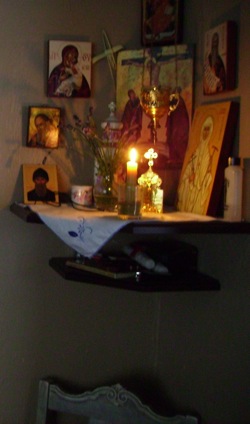
Daily prayer is essential to a healthy Orthodox Christian life. It is not an option. Why do we pray, How do we pray, When do we pray and Where do we pray are questions we address below.
 Why do we Pray?
• Christ asks us to pray. He tells us in the Gospel of Luke, How much more will
the heavenly Father give the Holy Spirit to those who ask him (Luke 11:13).
We pray so that God can help us to become more like Him in our actions.
• For renewal and the growth of our soul.
• To give thanks to God for all he provides for us.
• To seek forgiveness for our sinfulness as humility is a prerequisite for prayer.
We can also pray to seek help for others as well as ourselves. But we must not forget to pray for His help in our own spiritual growth. This is not selfish, but essential for us to better love and serve others and carry out God’s commandments. We can ask also for His help in supporting us in the various ascetic practices we choose to undertake.
Make your life a continuous prayerWe are asked to pray without ceasing. Here are the Scripture references to this idea.
Pray without ceasing (1Thess 5:17)
Praying always with all prayer and supplication in the Spirit (Eph 6:158)
He spoke a parable to them, that men always ought to pray and not lose heart.
(Luke 18:1)
God intends our life to become one of a constant prayer where we are continually in a relationship with Him. This is our main task, to draw nearer to God. How do we do this? Saint Isaac of Syria reminds us that it is impossible to draw near to God by any means other than unceasing prayer.
When Do We Pray?A Regular Time for Prayer
First, you need to establish a regular time to pray. You should have as a minimum a specific time in the morning and in the evening set aside for prayer. With our busy lives this means you will have to make some conscious changes to make time for prayer. Pick a time that you know you can keep no matter what. Strict discipline in this is important. The length of time is something that only you can determine in consultation with your spiritual father. You prayer time should not be less than ten minutes in the morning and then again in the evening. Your time in prayer will grow as your relationship with God grows. At first you will find it a struggle to maintain what seem like a simple discipline as there are negative forces that will try and keep you from regular prayer. But, there will come a time when you can’t wait for the time to pray. Expect a struggle in the beginning to maintain a strict schedule. As the popular saying goes, “Just do it!” Think of all the other things in your life that you do routinely like getting to work of school on time, or personal hygiene acts like brushing your teeth. Surely you can also make prayer a fixed routine..
Where Do We Pray?A Quiet Private Place For Prayer
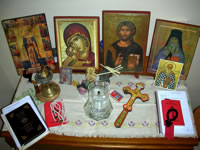
Next, you need to find a quiet private place where you will not be disturbed for your daily prayer. This may be a corner in the bedroom (a room divider can help make a special place), space in a walk-in closet, or, if you are fortunate to have an extra room, a special room that is only for prayer. It needs to be a place where you can be undisturbed and alone. Once you choose the place, you should set up a small home icon stand. On it place an icon of Christ, Theotokos, and your patron saint. Have an oil lamp or candle that you can light while you pray. Also an incense burner, a cross and a prayer book and Bible...
How Do We Pray?
"Prayer needs no teacher. It requires diligence, effort and personal ardor, and then God will be its teacher." St. Meletius the Confessor
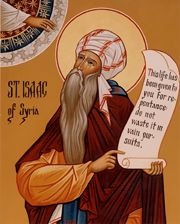
St Isaac the Syrian says we should:
• Pray with attention – so that we can have a true
encounter with God
• Pray with humility – because this sort of prayer goes straight to God’s ear
• Pray with affection and tears – with joy and
thanksgiving, but also with true repentance and purity.
• Pray with patience and ardor – ‘to deny oneself’ is courageously to persevere in prayer.
• Pray from the depths of the heart – even if we pray using ‘the words of another’ they should be uttered as if they are our own. St. Isaac says this is especially true of the Psalms.
• Pray with faith and absolute trust in God – because He knows our life.
Preparing to Pray
With a regular time and a special place, you are ready to begin. You begin praying by focusing your consciousness in your heart and forcibly gathering there all the powers of the soul and body. Take the time at the beginning of your prayer time to quiet your body and to concentrate your energies in your heart. Christ says, “Enter into thy closet and ... shut thy door” (Matt 6:6). Remove all activities that could disrupt your inner descent. Set aside, to the best of your ability, all of your problems of the day and your worries for tomorrow. This is not a time for thinking or worrying. When you are preparing to pray, stand, sit or walk a few minutes and steady your mind to concentrate on God.
Reflect on who it is that you will be addressing. Remember, it is God Himself who you are about to talk with. Try to bring about a feeling of humility and reverent awe. Make some prostrations before you begin....
Note: When we pray we should face East.
Follow a Prayer Rule and use written prayers in the beginning
You should have a specific rule for both morning and evening. Don’t try and wing it. You are developing a discipline that is beyond what you will feel like doing. This is not a relaxation exercise but a path to be in communion with your God. You will need to have a specific set of guidelines that you follow each time with no excuses for shortcutting them. In your rule, incorporate standing, prostrations, kneeling, making the sign of the cross, reading, and at times singing. Use prayer books and written prayers. The Orthodox prayer books are filled with prayers that have been well tested and used for hundreds of years. Prayer does not have to be a creative activity. You must be sincere. Keep your awareness in your heart and concentrate on the words of the prayer. Once you establish a rule, always keep it. Be sure to work with your spiritual Father on this....
Focus on each word - Don't rush your prayer
As you begin to pray enter into every word of the prayer. Bring the meaning of the words down into your heart. Do not rush through the prayers like you are in a hurry to get them over with. Let them slowly drop into the depths of your heart with humility and awe of God. Its like in driving a car. When you are going 90 miles per hour down the highway you may feel powerful and in control. But at high speeds things can go wrong fast. When driving at a speed of twenty-five miles per hour the car handles easy and if someone makes a dangerous maneuver you can easily avoid it. Well, the mind works the same way. We want to train it to slow down so we can become aware of God’s presence within us. So, in prayer we say the words slowly so we can gain the meaning of them and allow them to penetrate our consciousness and to bring to our heart feelings of love and reverence for our God. Let the words drop individually into your heart like pebbles dropping into a pond. You will eventually find the right pace for yourself. Beware of the tendency to rush to complete them hurriedly. When this tendency is present you have turned your prayer into an obligation and it is no longer true prayer. Don’t worry if you catch yourself doing this. It is normal at first. Just stop and slow down and proceed asking God’s forgiveness and help. Also, study the prayers before you use them so you know the meaning of each word. Eventually you will want to memorize them...
Concentrate
How Do We Pray?"Prayer needs no teacher. It requires diligence, effort and personal ardor, and then God will be its teacher." St. Meletius the Confessor
St Isaac the Syrian says we should:
• Pray with attention – so that we can have a true
encounter with God
• Pray with humility – because this sort of prayer goes straight to God’s ear
• Pray with affection and tears – with joy and
thanksgiving, but also with true repentance and purity.
• Pray with patience and ardor – ‘to deny oneself’ is courageously to persevere in prayer.
• Pray from the depths of the heart – even if we pray using ‘the words of another’ they should be uttered as if they are our own. St. Isaac says this is especially true of the Psalms.
• Pray with faith and absolute trust in God – because He knows our life.
Preparing to PrayWith a regular time and a special place, you are ready to begin. You begin praying by focusing your consciousness in your heart and forcibly gathering there all the powers of the soul and body. Take the time at the beginning of your prayer time to quiet your body and to concentrate your energies in your heart. Christ says, “Enter into thy closet and ... shut thy door” (Matt 6:6). Remove all activities that could disrupt your inner descent. Set aside, to the best of your ability, all of your problems of the day and your worries for tomorrow. This is not a time for thinking or worrying. When you are preparing to pray, stand, sit or walk a few minutes and steady your mind to concentrate on God.
Reflect on who it is that you will be addressing. Remember, it is God Himself who you are about to talk with. Try to bring about a feeling of humility and reverent awe. Make some prostrations before you begin....
Note: When we pray we should face East.
Follow a Prayer Rule and use written prayers in the beginningYou should have a specific rule for both morning and evening. Don’t try and wing it. You are developing a discipline that is beyond what you will feel like doing. This is not a relaxation exercise but a path to be in communion with your God. You will need to have a specific set of guidelines that you follow each time with no excuses for shortcutting them. In your rule, incorporate standing, prostrations, kneeling, making the sign of the cross, reading, and at times singing. Use prayer books and written prayers. The Orthodox prayer books are filled with prayers that have been well tested and used for hundreds of years. Prayer does not have to be a creative activity. You must be sincere. Keep your awareness in your heart and concentrate on the words of the prayer. Once you establish a rule, always keep it. Be sure to work with your spiritual Father on this....
Focus on each word - Don't rush your prayerAs you begin to pray enter into every word of the prayer. Bring the meaning of the words down into your heart. Do not rush through the prayers like you are in a hurry to get them over with. Let them slowly drop into the depths of your heart with humility and awe of God. Its like in driving a car. When you are going 90 miles per hour down the highway you may feel powerful and in control. But at high speeds things can go wrong fast. When driving at a speed of twenty-five miles per hour the car handles easy and if someone makes a dangerous maneuver you can easily avoid it. Well, the mind works the same way. We want to train it to slow down so we can become aware of God’s presence within us. So, in prayer we say the words slowly so we can gain the meaning of them and allow them to penetrate our consciousness and to bring to our heart feelings of love and reverence for our God. Let the words drop individually into your heart like pebbles dropping into a pond. You will eventually find the right pace for yourself. Beware of the tendency to rush to complete them hurriedly. When this tendency is present you have turned your prayer into an obligation and it is no longer true prayer. Don’t worry if you catch yourself doing this. It is normal at first. Just stop and slow down and proceed asking God’s forgiveness and help. Also, study the prayers before you use them so you know the meaning of each word. Eventually you will want to memorize them...
Concentrate
After you begin to recite your prayers you will find that your mind will want to wander. While you are reciting the words of the pray your mind can jump to something entirely different. Don’t be concerned about this as this is natural due to the forces that do not want us to pray to God. Work to learn to concentrate your attention. Recognize that when this happens you are no longer praying. When you mind does wander, be gentle with yourself and go back and recite again what you said while your mind was elsewhere. Make a concerted effort to bring yourself to concentrate on the words of the prayer. Sometimes it helps to say them out loud for a while. The mind is quite adept at doing more than one thing at a time. You need to bring yourself to a single focus on God. When you are talking to your best friend you don't think of other things when talking with them. When you go into the boss for a discussion you concentrate. God deserves better attention than anyone, so you must learn to concentrate, to focus on the words of the prayer. These wanderings of the mind show you the impact of your busy life that you need to find ways to make quieter so you can be always mindful of God no matter what you are doing. Prayer is not time to be distracted by these worldly activities, because this will only further distract you from prayer. Work to concentrate your attention more and more. Each day you will gain in your attentiveness during prayer. Learn how to lift you mind to be attentive to heavenly things...
Don't rush into other activities when finished with Prayer
When you finish your prayers, stand for a few moments. Consider to what your prayer life commits you. Try to hold in your heart what has been given to you. Treasure it for a few moments.
Pray EVERY Morning and Evening at a minimum
Remember to make your prayer life one that is a firm rule and not something that is done occasionally or sporadically. It must be done each day morning and evening at a minimum. You need to have specific prayers that are part of your prayer rule. You need to commit to doing you rule each and every day. Think about certain personal hygiene tasks such as brushing your teeth that you do each day out of habit. You don’t forget to do them each day. Your prayer rule needs o become a habit as strong as these. Prayer must become a daily habit that you never forget. Prayer is essential for the health of our soul Just like the hygiene activities that we do for the health of our body.
Don't rush into other activities when finished with PrayerWhen you finish your prayers, stand for a few moments. Consider to what your prayer life commits you. Try to hold in your heart what has been given to you. Treasure it for a few moments.
Pray EVERY Morning and Evening at a minimumRemember to make your prayer life one that is a firm rule and not something that is done occasionally or sporadically. It must be done each day morning and evening at a minimum. You need to have specific prayers that are part of your prayer rule. You need to commit to doing you rule each and every day. Think about certain personal hygiene tasks such as brushing your teeth that you do each day out of habit. You don’t forget to do them each day. Your prayer rule needs o become a habit as strong as these. Prayer must become a daily habit that you never forget. Prayer is essential for the health of our soul Just like the hygiene activities that we do for the health of our body.
Subscribe to:
Posts (Atom)