Translate

Sunday, April 8, 2018

The path of virtue is a path of effort and toil: ( Saint Nektarios of Egina )

The path of virtue is a path of effort and toil: 
"Straight is the gate, and narrow is the way, leadeth unto life, and few there be that find it;" whereas the gate of vice is wide and the way spacious, but lead to perdition.


Saint Nektarios of Egina

Wednesday, April 4, 2018

“Man is half love, half struggle” ( Elder Justin Pârvu )


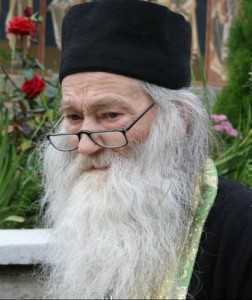
The newly departed servant of Christ,

Elder Justin (Pârvu) of Romania and his Words of Wisdom


Motto: “If we would be willing to descend into our selves to correct a bit this avalanche of wrongdoings, then our prayer will be heard, the world would be more at peace and our life would suit more the Lord’ liking.

We have become increasingly hostile towards each other by our own selfishness, we see no one but our selves… and when we reach this state of no longer caring for those near us, we encounter the greatest fall”.


Man’s freedom is at the measure of his genuine love


Freedom becomes precious only when it is lost. Or at least, this is how we think. All his life man seeks to be free, but does not appreciate the gift of his freedom until it is too late. Freedom is in our body but also in our heart. Freedom is in action but also in the mind and the intellect. Man is free by how genuinely he loves and is attached to the values of the faith.

We are free when we accept God’s plan for our life, and when we strive to achieve it. Being free does not mean lethargy and bliss, but the fulfillment of your human condition.

Freedom does not mean to do what I always wish, as many times by doing what I like I do the will of the devil. Freedom is at the measure of man discernment, and his capacity to choose between good and evil. Man must realize that only in Truth he can live freely and with so much confusion in this world, he should avoid deception. It was what Communists did not understand, that only on the Cross the human soul gains true freedom, that all their methods of torture and psychological pressure to re-educate us, have made more saints than slaves, have sanctified our land by the martyrs blood.

Freedom is hard to understand when one has not lived in those times [of persecution], and our Christians today barely reflect of this past.


The thirst for God and the love for all people

The thirst for God directs us towards the love of our neighbor and vice versa. So great is the power of love that one who reaches a genuine love for all people denying oneself, receives the gift of healing.

This is the true “follower” of Christ! Such man loves with the love of Christ all those fallen, thus partakes in Christ’ mission on earth and save himself.

Man is half love, half struggle

(Excerpt from an interview given by the Elder Justin in 2007)

Q: – Father Justin, from your experience of “burying yourself in man suffering”, what do you think, does man need: to be understood or to be loved?

Elder Justin: – Man needs to be loved. But to love him, you must first understand him. If you see him fallen down, then you must give him your hand. The love of neighbor is one’ measure of the love for God. If you cannot love the one near you, if you do not help him, you cannot say you love God.

The love of neighbor is the first step towards salvation, on this step one must labor until he reaches the greatest love for God.


Q: – During the communist regime, we have been [spiritually] poised by the slogan “new man”. Do you think we ended up with this “new man”?

Elder Justin: – You mean, in a materialistic sense? Maybe how the communists had imagine a man freed from the “bondage” of faith and of the Holy Spirit…! But a new man purified and renewed… not so.

But I want to speak more of the new man reborn in Christ, a man that’s quite rare in our present times. The renewal of man and of the world can happen only through the Resurrection of Christ, in its profound meaning. This is the new man, whom every mother preparing to bring babies into the world, must dream of modeling.

Q: – Einstein once said that “the progress made by man, compared with the development of his character, is enough to terrify …”

Elder Justin: - Yes… for a soul that’s at peace with itself can fit the whole world within; while in the soul that’s bitter, soured and distressed, nothing can enter…

Q: – How do you think man should be?

Elder Justin: - Man is – or should be! – Half love and half sacrifice, struggling to keep love undefiled.

Q: – A great thinker of the last century, Carl Gustav Jung said: “For a young man is almost a sin or at least a risk to be too much preoccupied with himself, while for the elder man, it is a duty and a necessity to commit to a more serious self study.” How do you see this?

Elder Justin: - At the end of this search man must find God. God made man in His own image, and God dwells in everyone. Young or old, man must clean up the inside of his being, for no one knows when the end comes…

Q: – Someone said that “in an empty mind, the devil finds shelter”…

Elder Justin: - He is speaking of the man who has the basket always full, for he cares for the wheat needed to be milled. And this wheat is our constant cry to God: “Lord Jesus Christ, Son of God, save us.” If the enemy finds our mind wandering in useless things, he will enter and find shelter directing it at his pleasure (…)

Q: – Is there a question that man is rendered to never find the answer in this life?

Elder Justin: - It depends on what someone wants to know. Man has all the answers within himself. About his birth, his life and the meaning of his salvation. But if he wants to find answers to meaningless questions, then he will be constantly miserable. If he seeks answers to questions related to his faith, his purpose in life, he will find happiness.


Q:- Is doubting a sin for the Christian?

Elder Justin: - Yes, but there are “permitted” doubts. A doubt that you’re still alive after a fervent prayer, when your whole being had burned in prayer… This kind of doubt is allowed.

Q: – Father, what is humility?

Elder Justin: - Humility is a fair self-assessment of our human dimensions in relation to the [universe] infinite. Humility accompanied by patience move mounts, that’s how powerful can become for any Christian…

Q: – What is Golgotha [Calvary] for today’ Christian?

Elder Justin: – Man’ unbelief makes every day into a Golgotha.

Q: – Man today is more skeptical than fifty years ago? What can you say to encourage him to go forward, to cope with the trials of life?

Elder Justin: – Our modern man puts too much heart into trifles and details, is assaulted by a lot of false things and does not know how to choose. If you choose wisely, things will become easy and the life beautiful. If you choose wrongly, you are struggling. If you doubt that you have chosen well, your heart is also troubled. Our contemporary man has become too materialistic, a subject to the new tyrant: money. Everywhere we look, we hear that money is everything, the master of this world. He, who makes money his master, makes himself a servant to the devil.

Today, many dramas arouse not from differences in ideas, but from the battle with money, with all that is material. Man bought by it losses his faith and his values and becomes a mare currency.

Q: – How do you define the word happiness? … What advice would you give to Christians who come to you and say they are unhappy?

Elder Justin – Happiness is when you meet with the love of Christ humbly in prayer.

People understand happiness differently. Some who want much may not get it, and feel unhappy. While others may desire less, receive it and are content….


Q: – So happiness is at the measure of man…

Elder Justin: – Happiness is the faith that dwells in us. We have seen people that have many riches, great social positions and they’re still unhappy, because they lock faith!

Q” – There is a story in the Egyptian Paterikon: it happened that a wise elder once sat at the table with several brothers; as they were eating, the elder saw in the spirit how some ate honey, others bread, and some others dung. And the elder marveled and prayed to God, saying, “Lord, reveal to me this secret, how is that the same food is on the table before all, but they seem to eat different food.” And a voice came, saying, “They who eat honey are those who with fear, trembling and spiritual joy sit at the table and pray unceasingly so their prayers go up to God as incense. Those that eat bread give thanks to God for the food, and they who eat dung, are those who complain: “this is good, this is rotten”….

Elder Justin: – Yes, gratitude for what one has received is after all, a measure of man’ faith.


We need to pray with our hearts


• We must honored with much gratitude the sacrificial love of our martyrs.

• It is very important to know how to pray. And often, we monks in monasteries do not pray, but we just seem to be praying. It’s not enough to go to church and to sit there like you did your duty or obligation. We must insist on inner prayer. In vain we say many prayers with our mouth or our mind, if we do not sail deeply, if we do not live what we pray.

• In our times, even the laity need to deepen the Jesus prayer, as it will become our only salvation – prayer into the heart; the heart is the root of all passions and there we must labor. In the past we were able to go by in a more easy – superficial way, but for the times awaiting us, this will not be enough. If we will not have the prayer rotted in our hearts, we will not resist the psychological persecution awaiting us, because soon they will come with [hidden] methods to re-educate our minds. (the elder had the gift of prophesy/ clairvoyance, tr. note).

• Today I find that indifference [acedia] is the hardest sin. Our hearts no longer move in prayer, we have no tears of repentance. There will come a time when only those who feel the grace of the Spirit will be able to distinguish good from evil, for on its own, the human mind cannot discern. There will be times of great confusion and only the Holy Spirit can save us.

So, pray my beloved, pray so you may not enter into [temptation] deception! For only through prayer we can receive God’s grace. If we do not pray and continue in laziness and carelessness, then it is possible to lose the instinct of repentance. God forbid that we may not lose conscious!


(Translated by EC)

Monday, April 2, 2018

A Prayer written by Elder Joseph the Hesychast


O Master, our sweetest Lord Jesus Christ,
send forth Your grace and free me from the bonds
of sin. Enlighten the darkness of my soul, so that
I may apprehend Your infinite mercy, and so that
I may love and thank You worthily, my sweetest
Savior, Who is worthy of all love and thanks.
Yes, my good Benefactor and most merciful
Lord; do not withdraw Your mercy from me, but
have compassion upon Your creature.

I realize, o Lord, the weight of my
transgressions, but I am also aware of Your
inexhaustible mercy. I behold the darkness of my
insensitive soul, but I have good hope and await
for Your divine illumination and the deliverance
from my evil deeds and destructive passions,
through the intercession of Your sweetest Mother,
our Lady the Theotokos and Ever-Virgin Mary,
and of all the Saints. Amen.

Elder Joseph the Hesychast
http://www.stnektariosmonastery.org/en/index.php

Tuesday, March 27, 2018

Have you noticed how some people are always grumbling? ( St. Paisios )


Have you noticed how some people are always grumbling? I have a good friend who always begins his story about his latest trip by telling me endlessly about all the problems he had with the airlines. Now, I have traveled a lot and have not normally had any particular difficulties other than an occasional delay or a lost bag, but generally I am thankful that the flight gets me from point A to point B in a very short time without much to be concerned about. But why is it that this person always has such dire troubles when he travels? My only conclusion is that he is simply a grumbler. It's the way he looks at the world and therefore experiences it an a negative way.

This attitude can be very dangerous for our spiritual well being. Negative thoughts can fill our minds and corrupt our view of the goodness that is all around us. We are not able to see and experience God's grace for us.

Elder Paisos tells a story about this issue.

I knew two farmers in Epirus. One of them was a family man who had a couple of small fields and who entrusted everything to God. He worked, as much as he could, without anxiety. He would say, "I'll do as much as I can manage." Occasionally, some of the hay bales would spoil in the rain because he didn't gather them in time, while other bales were scattered by the wind; and yet for all things he would say, "Glory to you, O God!" and everything went well for him. The other farmer had many fields, cows, and so on, but no children. If you asked him, "how are you doing?"; he would invariably respond, "Forget about it; don't even ask!" He never said, "Glory to You, O God"; he was always grumbling. And so that you will see -- sometimes a cow of his would die; sometimes one thing would happen to him, sometimes something else. He had everything, but he made no progress. So what is the spiritual message here? If we are bound up with negative thoughts all the time we will never recognize God's blessings. We become separated from God. As Elder Paisios puts it, "How are we to taste God's blessings, if He gives us, for example, bananas and we're thinking of whatever better things some ship-owner might be eating?" Those who accept what God's gives them with thanks, develop a spiritual sensitivity and are able to know and experience God's love for them. Those who continually grumble miss His energies that are always their to comfort and guide them. They live blind to God bound up by their own negative thoughts.

As the Elder puts its, "We don't understand that happiness is in eternity and not in vanity."

Reference: Elder Paisios of Mount Athos Spiritual Counsels IV: Family LIfe, p 158

Sunday, March 25, 2018

Will the Lord forgive those women who have had multiple abortions but have sincerely repented? . .( Elder Thaddeus of Vitovnica )


Q. Will the Lord forgive those women who have had multiple abortions but have sincerely repented? What can they do to redeem their sin?

A. A woman who destroys the fruit of her womb commits a great sin. She is destroying life itself, for God alone is the Giver of life and He makes possible the conception of a human being in the womb. He gives life and a woman destroys it. Great repentance is necessary, from the depths of her soul. She must change and never commit this sin again. Otherwise, she will be condemned as a murderess. No creature on earth kills its young–only man, the rational being. This is a great sin, and if a woman does not repent from the depth of her soul, she will be condemned as a murderess. Will she pass through the toll-houses? There is no sin that cannot be forgiven but the sin of unrepentance. True and sincere repentance is required for such a sin, and it must never be repeated again.

 Elder Thaddeus of Vitovnica

Friday, March 23, 2018

Are Passions Natural?


What is a passion? 
They are impulses that move us to action by overcoming our will. Because of this we say they enslave us. They are powerful because they are also desires which cannot be satisfied. They act as a force that goes against what we know to be the proper action and lead us to actions which are counter to the commandments of Christ. There is no single list of these passions, but the following is a common list used in early Christian literature: gluttony, unchastity, avarice, anger, dejection, listlessness, self-esteem and pride.


Their ultimate cause is the forgetting of God. Healing begins with faith.


Not all passions are bad. There are both natural and unnatural passions. Our natural passions are our appetite for food, enjoyment of food, fear and sadness. These are necessary for our the preservation of our nature. They are important animal aspect of our being given to by God. But we are more than animals as we are spiritual. Because of this we have an aspiration for the infinite. Often these natural passions which are intended for earthly preservation are transformed into unnatural passions. They are frequently transformed into a mistaken quest for the infinite in things of this material world. The soul loses control and the passions take over. Out task is to control them so they can be limited to their proper purpose. Then they can channeled to seek divine things.


Saint Maximus says,

The natural passions become good in those who struggle when, wisely unfastening them from the things of the flesh, use them to gain heavenly things. For example they can change appetite into the movement of a spiritual longing for divine things; pleasure into pure joy for the cooperation of the mind with divine gifts; fear into care to evade future misfortune due to sin and sadness into corrective repentance for present evil. So the natural passions are not necessarily bad. When we are thinking of God they are kept to their necessary biological functions. Our task is not to eradicate them but to control them, keeping them within the limits necessary for the preservation of the body. They must continually be watched and controlled. This is the basis of asceticism.


Thoughts from Fr. Dimitru Staniloae:

Asceticism means, in the spirit of Eastern thought, the restraint and discipline of the biological, not a battle for its extermination. On the contrary, asceticism means the sublimation of this element of bodily affectivity, not its abolition.... Natural passions can assume a spiritual character and give an increased accent to our love for God.... Now here is the most important point. By controlling them we increase our spiritual blessings.

Fr. Dimitru says,

By putting a bridle and a limit on the pleasure of material things, a transfer of this energy of our nature takes place, in favor of the spirit; pleasure in spiritual blessings grows. ... The challenge we face is not easy. Is difficulty is increased by our tendency to react in the wrong way. Once a pleasure leaves us we feel a loss. This can be painful. Pain or dissatisfaction always follows pleasure. This pain that follows does not lead us to take action to temper the pleasure, but does the opposite. We seek even more pleasure. The cycle continues without satisfaction.


Fr. Dimitru says,

The pain which follows pleasure, instead of making him avoid pleasure, as its source,...pushes his anew into pleasure as if to get rid of it, tangling him even more in this vicious chain. Asceticism is aimed at breaking this dysfunctional cycle of pleasure and pain, liberating us from the unnatural extension of passions that have a proper role in our bodily preservation. This bodily domination through uncontrolled passions is our main block to union with God.

Reference: Orthodox Spirituality, pp77 - 89

Tuesday, March 20, 2018

Little Dimitri with the gift of insight...( God's Grace )


In September of a certain year, there was a great deal of turmoil observed in the Department of Oncology of the University Hospital of Rion. Little Dimitri was asking urgently for the Hospital's priest. He was insisting on immediately receiving Holy Communion...
He was 13. He had been in that specific clinic for about one and a half years. A minor headache had led him there. The doctors had diagnosed brain cancer. His native town was Fieri of Albania; his parents unbaptized. They had lived in Patra for several years. Shortly after his admission to the Hospital, the young boy had asked to be baptized. He had heard about Christ, and wanted to become a "child" of His. He was baptized, "in the name of the Father, and of the Son, and of the Holy Spirit" - after the necessary catechesis of course. 

Everyone in the clinic was extremely fond of him. The cancer had progressed considerably, and had by now deprived him of his sight. He was entirely unable to see, anything and anyone. But he could listen, with the utmost and amazing patience. He never complained. He would say that God loved him very much. He prayed, and would ask his parents to do the same. 

All those who visited him could perceive that there was something different in that boy. He spoke constantly about God. He was always courteous and happy. His face shone. He wanted to partake of the Precious Gifts frequently. When his mother would sometimes be in another area of the clinic, he would shout out to her:
"Mother, come quickly! Papa is coming, with Christ! He is coming up the stairs! Come and get me ready!" 

And that was exactly what would happen: the priest would come, and he would find little Dimitri sitting upright in his bed, with his mouth wide open and crossing himself with reverence. Even though he never knew the exact time of the priest's arrival, he could "see" him coming, with his gift of insight - and despite the two closed doors that came between his room and the corridor that the priest was coming from. This has been verified by the pious Mrs. Maria Galiatsatou, who had volunteered to look after that boy.
"Mrs. Maria, I want to tell you something", he said to her one day. "When Papa comes together with Christ, I can see him approaching as he walks up the stairs, and next to him are two tall, beautiful people with pure white gowns, who lean towards the Holy Chalice to protect it, with their arms outstretched."
One time, when the doctor asked him: "How are you, my little Dimitri?"
He replied: "Mister Doctor, can I tell you something privately? I am just fine. But you shouldn't worry so much because your wife went away. God will be with you, because you are a good person." 

The doctor remained frozen for an instant. No-one else knew about the grievous incident that had occurred the previous day at his place: that his wife had abandoned him, to be with another man.....
"Now that is a child of God" was what those who had met him would say.
The last time that he received Holy Communion, he was unable to sit up in his bed, but he did receive Christ with joy and longing as he lay there.
"Thank you very much", he whispered and then went to sleep forever. When the priest went to the morgue the next day to read the Trisaghion Prayer over little Dimitri, he remarked:
«It's the first time in my life that I have seen a corpse like this. His face was smiling...it was aglow.... and it had the colour of amber».
His parents came to love Christ very much, and they now want to be baptized also.... 

* One of the signs that Orthodoxy acknowledges in a reposed saintly person is also the colour of the skin, which takes on a translucent amber appearance.


Taken from the book: "ASCETICS IN THE WORLD" , pp.378–380, ISBN: 978-960-89593-2-3,
Publications of the Sacred Retreat «Saint John the Forerunner», Metamorphosis, Chalkidiki

Saturday, March 17, 2018

Saint Patrick, the Enlightener of Ireland


Saint Patrick, the Apostle of the Irish, was seized from his native Britain by Irish marauders when he was sixteen years old. Though the son of a deacon and a grandson of a priest, it was not until his captivity that he sought out the Lord with his whole heart. 
 
In his Confession, the testament he wrote towards the end of his life, he says, "After I came to Ireland - every day I had to tend sheep, and many times a day I prayed - the love of God and His fear came to me more and more, and my faith was strengthened. And my spirit was so moved that in a single day I would say as many as a hundred prayers, and almost as many at night, and this even when I was staying in the woods and on the mountain; and I would rise for prayer before daylight, through snow, through frost, through rain, and I felt no harm." 
 
After six years of slavery in Ireland, he was guided by God to make his escape, and afterwards struggled in the monastic life at Auxerre in Gaul, under the guidance of the holy Bishop Germanus. Many years later he was ordained bishop and sent to Ireland once again, about the year 432, to convert the Irish to Christ. His arduous labours bore so much fruit that within seven years, three bishops were sent from Gaul to help him shepherd his flock, "my brethren and sons whom I have baptized in the Lord - so many thousands of people," he says in his Confession.
 
 His apostolic work was not accomplished without much "weariness and painfulness," long journeys through difficult country, and many perils; he says his very life was in danger twelve times. When he came to Ireland as its enlightener, it was a pagan country; when he ended his earthly life some thirty years later, about 461, the Faith of Christ was established in every corner.


Apolytikion in the Third Tone

O Holy Hierarch, equal of the Apostles, Saint Patrick, wonderworker and enlightener of Ireland: Intercede with the merciful God that He grant unto our souls forgiveness of offences.


Kontakion in the Fourth Tone

The Master revealed thee as a skillful fisher of men; and casting forth nets of Gospel preaching, thou drewest up the heathen to piety. Those who were the children of idolatrous darkness thou didst render sons of day through holy Baptism. O Patrick, intercede for us who honour thy memory

Thursday, March 15, 2018

Bearing the Shame of Confession..( Archimandrite Zacharias Zacharou )


From “Remember thy First Love” by Archimandrite Zacharias Zacharou

Question: In taking the steps which you have presented to us, the most difficult thing, I think, is to overcome the fear of shame. This is what I try to do in my parish. People will not come to confession although their souls are burdened and things are driving them crazy, because they cannot overcome the shame to admit their sins. How do you lead people in this direction?

Answer: I think that the strength to bear shame is a gift from God. When I was a young and inexperienced spiritual father, Elder Sophrony told me to encourage the young people to confess precisely the things of which they are ashamed, for if they learn to do so, shame is transformed into strength against the passions, and they will overcome sin. This is precisely what occurred in the person of Zacchaeus. He bore shame voluntarily, and the Lord, Who was on His way to Jerusalem in order to suffer the Cross of shame, saw Zacchaeus bearing shame for His sake and recognized in him a kindred spirit. Zacchaeus had put himself prophetically in the way of the Christ, in the way of the Cross, and in a prophetic way the mystery of the Cross and Resurrection of Christ was activated in the heart of Zacchaeus. His heart was enlarged and he was able to enter into the power of faith. Christ has saved us through the Cross of shame, so when we suffer shame for His sake He considers this as gratitude, and in return He transmits to us His grace which regenerates our life.

This is exactly what happens in confession. Those who confess sincerely and take upon themselves the shame for their sins are regenerated. But those who shrug their shoulders and say, ‘Nothing special, the usual things…’ they do not bear any shame, their heart remains unmoved, and they hardly receive any benefit. But those who, with shame and a contrite heart, strip their souls naked before God and before another mortal, ‘of like passions’ (Acts 14:15) with them—that shame of theirs really finds the heart, humbles it and brings it to the surface. This then, opens the heart to receive the grace of regeneration, of consolation. We see this in the life of many that come to us: the greater the shame they bear with contrition, accusing themselves before God, the greater the grace they receive to amend their lives and make a new beginning.


Source: Orthodox Heritage Vol. 10, Issue 11-12

Sunday, March 11, 2018

In order to be reconciled to someone with whom we are at odds, the first thing we are to do is to accuse ourselves.

The Holy Fathers tell us that, in order to be reconciled to someone with whom we are at odds, the first thing we are to do is to accuse ourselves, not the other person. If we do not accuse ourselves, we will never find rest, and we will never make true and lasting peace with our neighbor. We will always be holding onto our pride. 
Abba Dorotheus provides us with a good example of this from his own experience as the Superior of a monastery. He says: "Once there came to me two brothers who were always fighting. The older one was saying about the younger one, 'I arrange for him to do something and he gets distressed, and so I get distressed, thinking that if he had faith and love towards me he would accept what I tell him with complete confidence.' And the younger was saying, 'Forgive me, reverend father, but he does not speak to me with the fear of God, but rather as someone who wants to give orders. 
I guess this is why my heart does not have full confidence in him, as the Holy Fathers say.' Notice that each blames the other and neither blames himself. Both of them are getting upset with one another, and although they are begging each other's pardon, they both remain unconvinced 'because he does not from his heart show me deference and, therefore, I am not convinced, for the Fathers say that he should.' And the other says, 'Since he will not have complete confidence in my love until I show him deference, I, for my part, do not have complete confidence in him.' My God, do you see how ridiculous this is? Do you see their perverse way of thinking? God knows how sorry I am about this; that we take the sayings of the Holy Fathers to excuse our own will and the destruction of our souls. 
Each of these brothers had to throw the blame on the other.... What they really ought to do is just the opposite. The first ought to say: 'I speak with presumption and therefore God does not give my brother confidence in me.' And the other ought to be thinking: 'My brother gives me commands with humility and love, but I am unruly and have not the fear of God.' Neither of them found that way and blamed himself, but each of them vexed the other.

Hieromonk Damascene